

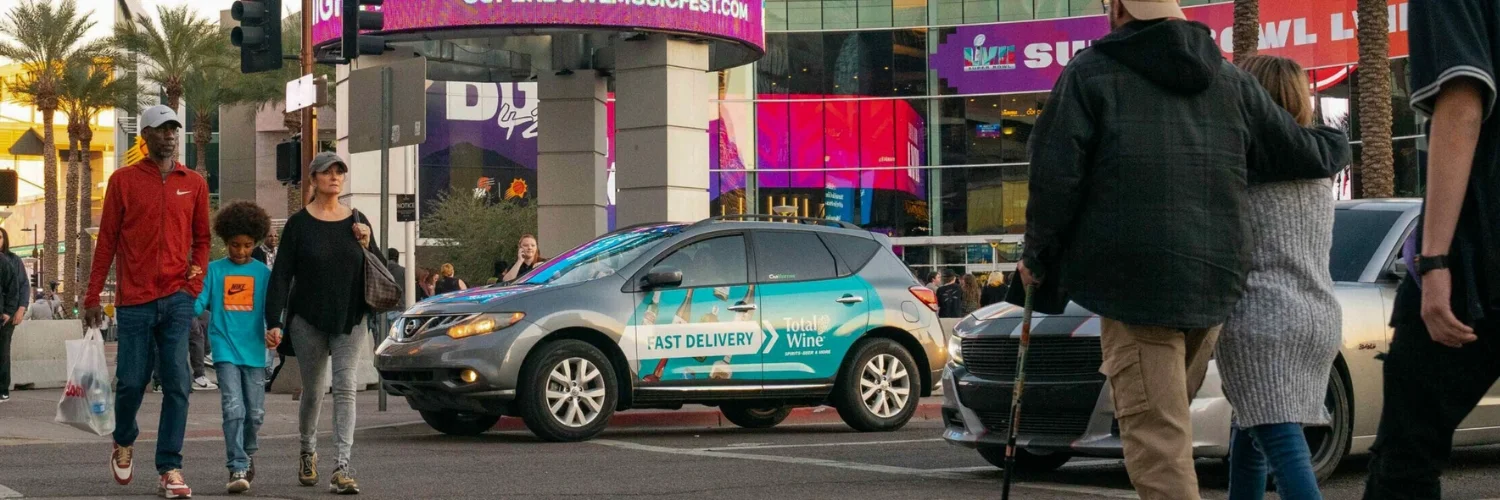
Tacoma billboards compete for attention in a market where the workforce doesn’t follow predictable commute patterns. With the Port of Tacoma handling nearly $76 billion in annual trade and logistics workers commuting across Pierce County from dozens of neighborhoods, reaching your target audience requires more than a single highway placement. You need advertising that follows them where they actually go.
With mobile vehicle fleets that circulate through industrial zones and worker neighborhoods, smart outdoor advertising adapts to Tacoma’s dispersed logistics economy.
Wrapped vehicles generate 30,000 to 70,000 daily impressions by traveling directly through port terminal areas, truck stops, and the residential communities where logistics professionals live. With over 41,000 port-related jobs scattered across Pierce County, mobile advertising delivers your message directly to decision-makers throughout their daily routines.
Why Tacoma’s Logistics Hub Creates Unique Advertising Opportunities
Port Economy Drives High-Value Demographics
Tacoma operates at the intersection of global commerce and regional growth, creating concentrated professional demographics that traditional advertising struggles to reach effectively. The city’s 220,000+ residents represent a robust economic foundation, with median household income reaching $83,857 as of 2023, a substantial 6.03% increase from the previous year.
The Port of Tacoma’s economic influence extends far beyond terminal operations. A 2025 analysis shows port activities support 41,095 jobs throughout Pierce County, generating $3.4 billion in total worker compensation.
The Northwest Seaport Alliance handled nearly $76 billion in trade volume during 2024, with container operations growing 12.3% year over year. This growth translates into expanding employment opportunities among skilled professionals in logistics, transportation, manufacturing, and trade services.
Major Transportation Corridors and Traffic Patterns
Tacoma’s position along the Interstate 5 corridor creates substantial daily traffic volumes, with State Route 16 west of Union Avenue handling 112,000 vehicles daily according to Washington State Department of Transportation data.
The challenge for advertisers lies in Tacoma’s dispersed geography. Traditional highway billboard placement captures only a fraction of these audiences during limited commute windows, missing opportunities to connect with decision-makers during their broader daily activities.
Traditional Billboard Landscape in Tacoma
Static and Digital Billboard Investment Levels
Tacoma’s billboard market offers 519 available placements according to AdQuick data, with pricing reflecting the city’s strategic position in the Pacific Northwest corridor. Average billboard costs reach $2,572 per four-week campaign, with median pricing at $2,000, providing accessible entry points for businesses targeting regional logistics audiences.
Billboard impressions average 241,000 per placement, with total market reach exceeding 115 million impressions across available inventory. Cost per thousand impressions averages $16.87, though median CPM drops to $8.90, indicating efficiency opportunities for strategic placement selection.
Key Placement Strategies Along Freight Corridors
Strategic billboard placement in Tacoma requires understanding the intersection of commuter and freight traffic. The region is undergoing significant infrastructure investment, the SR 167 Completion Project, is building six new miles of highway between Puyallup and the Port of Tacoma, completing critical freight links to manufacturing and industrial areas throughout Pierce County.
Locations near port access routes capture commercial vehicle operators and logistics professionals during peak activity periods. However, these placements miss the residential areas where target audiences spend significant portions of their time.
Mobile Advertising: Tacoma’s Strategic Marketing Advantage
How Vehicle Wrap Networks Navigate Tacoma’s Logistics Economy
Carvertise’s 550,000+ driver network includes comprehensive Pierce County coverage through thoroughly vetted local residents who navigate these dispersed communities daily.
This mobility matters because Tacoma’s billboard regulations restrict placement in industrial waterfront zones and port-adjacent districts, areas where mobile advertising operates freely.
SWARM campaign strategies concentrate multiple wrapped vehicles around specific locations or time periods for saturation coverage. For businesses targeting Tacoma, coordinated fleet deployments deliver sustained exposure during critical business periods.
Route optimization technology tracks vehicle movements and provides verified performance data, including heat maps by neighborhood, time-of-day exposure breakdowns, and port-area versus residential coverage ratios. This shift-based visibility measurement shows advertisers exactly which Pierce County communities received coverage during campaign periods.
Geographic Flexibility Traditional Billboards Cannot Match
Vehicle wrap campaigns adapt to changing business priorities and seasonal shipping patterns without requiring new lease negotiations or placement commitments.
Industrial zones often restrict traditional billboard placement due to safety regulations and zoning limitations. Wrapped vehicles access these restricted areas naturally, appearing in manufacturing districts, freight terminals, and logistics facilities where decision-makers spend significant portions of their professional time.
Mobile vs Traditional: Performance in Logistics Markets
Mobile advertising delivers strong cost-effectiveness compared to traditional billboard placement, particularly when targeting dispersed professional audiences. Vehicle wrap campaigns generate 30,000 to 70,000 daily impressions per wrapped vehicle based on traffic density, dwell time, and route frequency across urban and port-adjacent coverage areas.
Industry research indicates outdoor advertising generates strong returns, with OAAA data showing the sector exceeded $9 billion in 2024, reflecting sustained advertiser confidence in OOH effectiveness. Mobile formats can exceed traditional billboard benchmarks by reaching audiences where static placement faces restrictions or proves impractical for shift workers and off-peak schedules.
Carvertise campaigns provide GPS-verified tracking showing exact vehicle routes throughout campaign periods, transforming advertising from estimated impressions into verified performance metrics that logistics-sector advertisers can measure against business outcomes.
Best Practices for Mobile-First Tacoma Campaigns
Mobile advertising demands a creative approach that accounts for changing sightlines, distances, and shorter exposure windows than traditional billboards. Effective vehicle wrap design prioritizes immediate recognition over dense messaging, using bold typography and high-contrast color palettes that stay legible across Tacoma’s often overcast conditions.
For professional services targeting logistics audiences, clean, authoritative visuals signal reliability while consistent branding across multiple vehicles builds recognition through repeated exposure. Paired with strategic route planning that aligns with port activity and commuter movement, this approach keeps messaging visible throughout the day.
Ready to Leverage Tacoma’s Mobile Advertising Advantage?
Carvertise combines mobile advertising expertise with logistics market specialization, offering GPS-verified performance data and strategic route optimization tailored to Pierce County’s economic patterns. Whether you’re targeting port terminal workers, distribution center staff, or the broader professional community supporting Tacoma’s trade economy, mobile vehicle advertising delivers measurable results across the communities where your audience lives, works, and makes purchasing decisions. Contact Carvertise to get your Tacoma advertising strategy moving forward effectively.
Frequently Asked Questions
How much do billboards cost in Tacoma vs mobile advertising?
Traditional billboards in Tacoma average $2,572 per four-week campaign, with premium highway locations commanding higher rates up to $7,000 or more depending on traffic volume and visibility. Mobile advertising typically offers more cost-effective coverage with verified performance data and geographic flexibility that static placements cannot match, though pricing varies based on fleet size, campaign duration, and coverage area requirements.
Can mobile advertising reach port workers more effectively than billboards?
Mobile advertising excels at reaching port workers by following them throughout Pierce County communities—appearing in parking areas during shift changes, circulating through industrial districts during operating hours, and maintaining visibility in residential neighborhoods where they live and shop. This comprehensive approach addresses the fundamental limitation of fixed billboards: port workers commute from dozens of different neighborhoods across the region.
How do vehicle wrap campaigns target Tacoma’s logistics workforce?
Vehicle campaigns deploy strategically around industrial districts, port access routes, and professional gathering areas while extending into residential communities where logistics workers spend their off-hours. GPS tracking enables precise targeting based on workforce distribution patterns, with route optimization ensuring coverage across Lakewood, Puyallup, Federal Way, and other Pierce County communities where port-related employees reside.
What’s the geographic coverage advantage of mobile vs traditional advertising?
Mobile advertising accesses industrial zones where billboards face zoning restrictions, reaches residential areas beyond highway corridors, and adapts to changing business priorities without lease renegotiations. Tacoma’s billboard regulations specifically limit placement in port-adjacent and industrial waterfront districts—exactly the areas where mobile advertising operates without restriction.
How quickly can mobile advertising campaigns deploy in Tacoma?
Mobile campaigns typically activate within 3-4 weeks from concept to deployment, compared to 4-8 weeks for traditional billboards. This faster implementation enables responsive strategies aligned with port activity cycles, seasonal shipping patterns, and time-sensitive business opportunities that static billboard contracts cannot accommodate.
What ROI metrics apply to mobile advertising in logistics markets?
Industry research indicates outdoor advertising generates strong returns, with the OOH sector exceeding $9 billion in 2024. Mobile advertising can enhance these outcomes by reaching audiences in restricted industrial areas and residential communities that static billboards cannot access. GPS verification enables campaign optimization based on actual exposure data rather than estimated impressions.
How do I track mobile campaign performance vs billboard estimates?
Mobile campaigns provide GPS-verified tracking, route documentation, and analytics showing exact vehicle movements and exposure patterns throughout Pierce County. Carvertise’s partnership with StreetMetrics delivers heat maps by neighborhood, time-of-day breakdowns, and verified impression data—accountability that traditional billboard estimates based on traffic studies cannot match.
Can mobile advertising reach areas where billboards aren’t allowed?
Certainly. Mobile advertising naturally accesses industrial zones, port facilities, manufacturing districts, and restricted areas where zoning regulations prohibit traditional billboard placement. This capability makes mobile particularly valuable for B2B campaigns targeting logistics operators, equipment suppliers, staffing agencies, and professional services firms serving Tacoma’s maritime and freight sectors.