

Why does outdoor advertising feel harder to get right in Los Angeles than almost anywhere else? The answer lies in how people move through the city.
For outdoor advertisers, this presents both a challenge and an opportunity. Traditional billboards wait for traffic to pass fixed points along freeways. In a city where congestion has become an all-day phenomenon across dozens of distinct neighborhoods and business districts, static placements capture only fragments of actual audience movement.
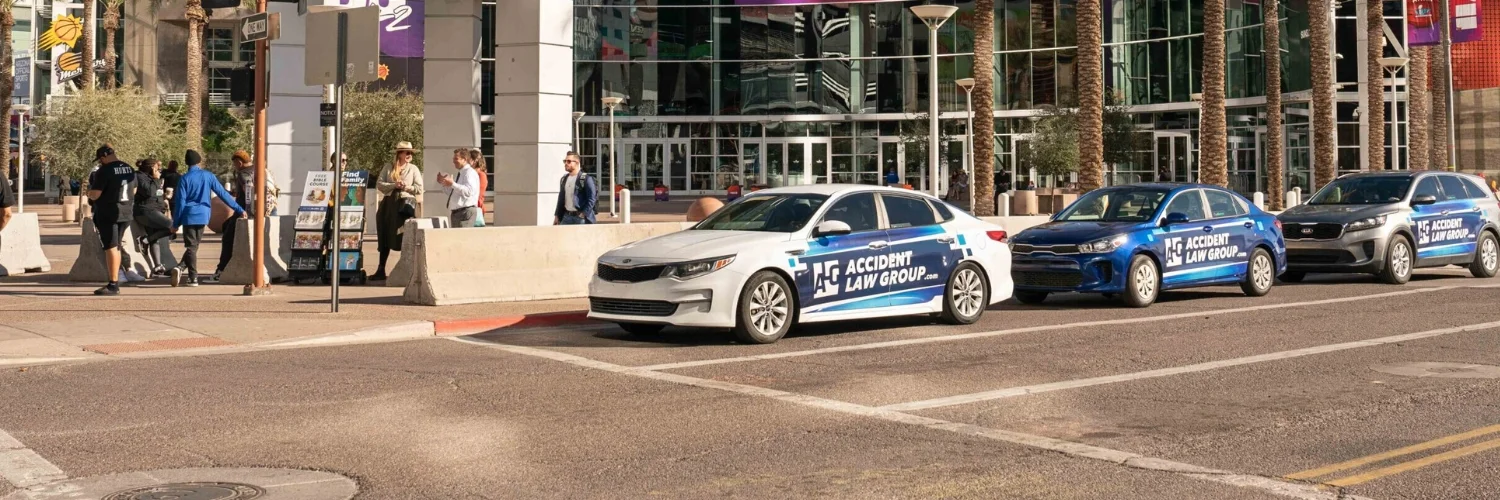
Car advertising and mobile vehicle campaigns operate differently. Instead of waiting for audiences to pass a single location, wrapped vehicles circulate through residential neighborhoods, commercial corridors, parking areas, and surface streets where Los Angeles residents actually spend their time. This distributed approach aligns with how people move through LA’s sprawling, polycentric geography rather than fighting against it.
Los Angeles Is a Polycentric Advertising Market
Los Angeles doesn’t function like cities built around a single downtown core. Los Angeles does not function like cities built around a single downtown core. Employment, entertainment, and commerce spread across multiple centers rather than funneling through one central business district.
The vast majority of jobs, businesses, and daily activities occur across multiple centers: the Westside’s tech and entertainment corridor, Burbank’s Media District, Century City’s corporate towers, South Bay’s aerospace and manufacturing zones, and the San Fernando Valley’s diverse commercial landscape.
Why LA’s Geography Changes Outdoor Advertising Reach
This geographic fragmentation shapes how advertising reach accumulates. A billboard along the 405 or I-10 captures traffic on that specific corridor during specific times, but commute patterns in LA don’t follow predictable spines leading to and from a single downtown. Instead, people move between scattered employment centers, residential neighborhoods, and commercial districts across irregular routes and varying schedules.
Carvertise’s network of wrapped vehicles doesn’t rely on capturing traffic at predetermined choke points. Instead, vehicles driven by local residents circulate naturally through the neighborhoods, business districts, and commercial areas where target audiences live, work, and spend time. Visibility accumulates through repeated exposure across multiple contexts rather than dominance at a single location.
When employment, shopping, dining, and entertainment spread across dozens of distinct areas, advertising effectiveness depends less on controlling premium freeway positions and more on building distributed familiarity across the places people actually frequent during daily routines.
How Traffic Congestion Shapes Outdoor Advertising Exposure in LA
Los Angeles drivers lost an average of 137 hours to traffic delays in 2024, more than any other U.S. city according to Texas A&M Transportation Institute research. But here’s what makes LA congestion different from other cities: it’s no longer confined to morning and evening rush hours. Traffic now spreads across midday, evenings, and weekends, creating constant stop-and-go conditions throughout the metropolitan area.
This creates extended exposure windows that static billboards can’t fully capitalize on. During stop-and-go freeway movement, drivers experience short, repeated attention windows rather than single glances. At surface street intersections, dwell time at signals creates opportunities for message processing that wouldn’t exist in free-flowing conditions. In parking areas, loading zones, and curbside pickup spots, vehicles sit stationary for minutes at a time, surrounded by pedestrians, other drivers, and rideshare passengers.
Where Attention Actually Occurs During LA Traffic
Mobile advertising operates effectively within these conditions because wrapped vehicles don’t just appear on freeways. They’re present in the exact contexts where congestion creates attention opportunities: residential streets with school drop-off traffic, commercial parking lots with extended dwell times, shopping districts with pedestrian activity, and surface roads where stop-and-go movement allows repeated viewing.
Static billboards face structural constraints in LA’s congested environment. Their reach doesn’t extend into surrounding neighborhoods or off-route movement patterns. A billboard on the 10 Freeway near downtown performs well for eastbound commuters during that specific segment of their journey, but provides zero visibility in Culver City, Pasadena, Long Beach, or the dozens of other areas where those same people spend the rest of their day.
Vehicle wrap advertising is often cited for delivering high daily visibility because vehicles appear across multiple contexts throughout the day rather than relying on a single placement. According to Nielsen research cited in Carvertise’s performance data, wrapped vehicles achieve the highest recall rates among transit advertising formats.
This performance stems from appearing repeatedly across varied contexts rather than competing for a single moment of attention on a cluttered freeway corridor. Congestion isn’t an obstacle for mobile advertising, it’s an environment where distributed, repeated exposure delivers familiarity that single-location dominance cannot match.
How Car Advertising Works Within Los Angeles Movement Patterns
Mobile outdoor advertising operates within LA’s actual movement patterns rather than waiting for audiences to pass predetermined points. Carvertise’s approach centers on deploying wrapped vehicles driven by local residents during their normal daily routines, creating organic brand presence across the areas where target audiences naturally circulate.
This means vehicles appear in residential neighborhoods during morning and afternoon routines, in commercial districts near offices and retail centers, along school and errand routes, in parking areas at shopping centers and entertainment venues, and throughout surface streets connecting these locations. The advertising doesn’t interrupt or compete—it integrates into the visual environment where people are already spending time.
The contrast with static billboards becomes clear when examining how exposure accumulates. Static placements wait for traffic to pass a fixed location, capturing audiences during a specific segment of their commute or travel. Mobile campaigns move with daily behavior, appearing wherever wrapped vehicles naturally travel: grocery store parking lots, gas stations, residential streets, coffee shop districts, gym parking areas, restaurant corridors.
This distributed presence matters in LA’s fragmented geography. Someone living in Santa Monica and working in Culver City might never pass a billboard positioned for Downtown commuters. But they’ll encounter wrapped vehicles in their own neighborhood, near their workplace, at the businesses they frequent, and along the surface streets they actually use. Exposure happens in relevant contexts rather than requiring audiences to pass through specific advertising corridors.
Why Location and Circulation Matter More Than Vehicle Count
Measurement advantages reinforce this approach. GPS verification through partnerships like StreetMetrics documents exactly where vehicles traveled, which neighborhoods received coverage, how routes aligned with target demographics, and how geographic distribution matched campaign objectives. This transparency allows strategic refinement based on actual movement data rather than estimated traffic counts at fixed locations.
Two campaigns with identical vehicle counts can perform very differently depending on where and how those vehicles circulate. A campaign concentrating vehicles in West LA’s commercial corridors reaches different audiences with different frequency than one distributed across South Bay residential neighborhoods or Valley business districts. Understanding these patterns allows strategic deployment aligned with specific business objectives rather than generic “LA coverage.”
Major Events Amplify Mobile Advertising Opportunities
In Los Angeles, major events do not create isolated traffic spikes. They temporarily reshape how people move across entire neighborhoods, corridors, and commercial zones. Los Angeles experiences periodic visibility surges tied to major sports, entertainment, and cultural events. The city’s event calendar for 2026-2028 includes FIFA World Cup matches at SoFi Stadium (eight games including the U.S. Men’s National Team opener), Super Bowl LXI in 2027, and the 2028 Olympic and Paralympic Games. Year-round, the region hosts professional sports across multiple leagues, major concert tours, film premieres, and city-scale cultural festivals tracked by the Los Angeles Sports & Entertainment Commission.
These events don’t concentrate attention at single venues. Instead, they generate distributed movement across adjacent neighborhoods, surface streets, parking areas, ride-share corridors, and dining and entertainment districts before and after events. A sold-out game at SoFi Stadium or Dodger Stadium creates traffic patterns extending miles from the venue, affecting dozens of surface streets, commercial areas, and residential neighborhoods as attendees arrive, park, gather, and disperse.
Mobile advertising captures this distributed movement in ways static placements cannot. SWARM campaign deployments concentrate multiple wrapped vehicles around event ecosystems, creating visibility along arrival and departure routes, in hotel districts where out-of-town attendees stay, throughout restaurant corridors before and after events, and across parking areas and ride-share pickup zones. Rather than competing for attention at one premium location near a venue, brands achieve repeated exposure across the entire event experience.
Planning and Measuring Mobile Car Advertising in Los Angeles
Effective mobile advertising in Los Angeles begins with understanding how visibility actually accumulates across the city. Daily movement patterns, neighborhood circulation, all-day congestion, and event-driven travel all influence where repeated exposure occurs. Because audiences do not move through a single corridor or schedule, planning mobile campaigns requires a more flexible, data-informed approach than traditional fixed-location outdoor advertising.
Planning Mobile Campaigns Around Real Movement Patterns
Strategic planning typically starts with movement analysis before format selection. Geographic targeting should align with business objectives rather than defaulting to blanket market coverage.
Audience targeting builds on this foundation. Instead of defining the market broadly as “Los Angeles,” planning focuses on specific neighborhoods, feeder markets, and activity zones where relevant audiences live, work, and spend discretionary time.
Timing also plays a critical role. Deployment schedules are aligned with peak visibility windows, such as commuting hours, major events, and high-activity evenings, when congestion and movement patterns naturally increase exposure.
Campaign planning further includes format selection based on objectives. Different vehicle types and wrap formats serve different roles within the market. Rideshare vehicles, local commuter cars, and fleet vehicles each circulate through distinct environments. Full wraps, reflective finishes, multi-vehicle swarms, or dimensional creative elements may be selected depending on whether the goal is broad awareness, neighborhood saturation, or event-aligned visibility.
How GPS-Verified Data Shapes Campaign Measurement
Measurement plays a central role in this process. Mobile car advertising platforms such as Carvertise use GPS-verified route data to document where vehicles actually travel, how frequently they circulate through defined areas, and how long they remain within specific neighborhoods or commercial zones.
Because performance data reflects actual circulation, campaigns can be refined over time. If early results show strong visibility in Santa Monica but limited presence in Culver City, routing can be adjusted in subsequent phases. If priorities shift from broad awareness to concentrated presence near specific locations, multi-vehicle deployments can be rebalanced accordingly. This flexibility allows mobile advertising to adapt to product launches, seasonal demand, and competitive activity without locking brands into static placements.
For brands considering mobile car advertising in Los Angeles, the next step is reviewing how GPS-verified coverage and neighborhood-level reporting align with specific visibility goals. Exploring how campaigns are planned, tracked, and adjusted in practice helps determine whether mobile advertising fits within a broader outdoor strategy for the LA market.
Considering Mobile Car Advertising in Los Angeles
Los Angeles requires outdoor advertising strategies grounded in how people actually move through the city. For brands evaluating mobile car advertising, the next step is reviewing how movement analysis, GPS-verified reporting, and neighborhood-level coverage align with specific visibility goals. Understanding where exposure occurs, how often it repeats, and how campaigns can adapt over time helps clarify whether mobile advertising fits within a broader outdoor mix for the LA market.
To explore how mobile car advertising campaigns are planned, tracked, and refined in practice, Carvertise provides detailed information on campaign structure, measurement, and geographic targeting across Los Angeles.
Frequently Asked Questions
The following questions reflect common considerations brands have when evaluating outdoor and mobile advertising in Los Angeles.
How does car advertising work during LA traffic?
Congestion creates repeated exposure opportunities rather than single glances. Wrapped vehicles appear multiple times during stop-and-go freeway movement, at surface street signals, in parking areas with extended dwell time, and throughout neighborhoods where audiences spend daily routines. The sustained presence across varied contexts builds familiarity that single billboard exposures cannot match.
What makes Los Angeles different for outdoor advertising?
LA’s polycentric structure means employment, commerce, and activity distributed across multiple centers rather than concentrating downtown. Traditional outdoor advertising assumes predictable commute flows toward central business districts. LA’s fragmented geography means audiences scatter across dozens of neighborhoods, business areas, and commercial corridors with irregular movement patterns that don’t follow single spines.
How is mobile advertising measured in Los Angeles?
GPS tracking verifies actual routes, documenting which neighborhoods received coverage, how vehicles moved through business districts, and where geographic concentration occurred. Performance reporting includes verified impressions based on real movement rather than estimated traffic counts at fixed locations, providing transparency into actual campaign delivery across the metropolitan area.
Can mobile advertising target specific LA neighborhoods?
Yes. Campaign deployment can concentrate vehicles in defined areas: Westside tech corridors, Downtown business districts, Valley residential neighborhoods, Beach Cities commercial areas, or around specific employment centers and event venues. Geographic targeting aligns vehicle routing with business objectives rather than broadcasting across the entire region.
How does event advertising work with mobile campaigns?
SWARM deployments concentrate multiple wrapped vehicles around event ecosystems—hotel districts, restaurant corridors, approach routes, parking areas, and entertainment zones. Rather than competing for premium placements immediately adjacent to venues, mobile campaigns reach attendees throughout their entire event experience from arrival through dispersal across surrounding neighborhoods.
What’s the difference between freeway billboards and car advertising in LA?
Freeway billboards capture specific corridors during limited timeframes, providing visibility to traffic passing that exact location. Car advertising circulates through neighborhoods, commercial areas, and surface streets where residents spend daily life, building familiarity through repeated contextual exposure across multiple locations rather than single-point dominance along one route.