

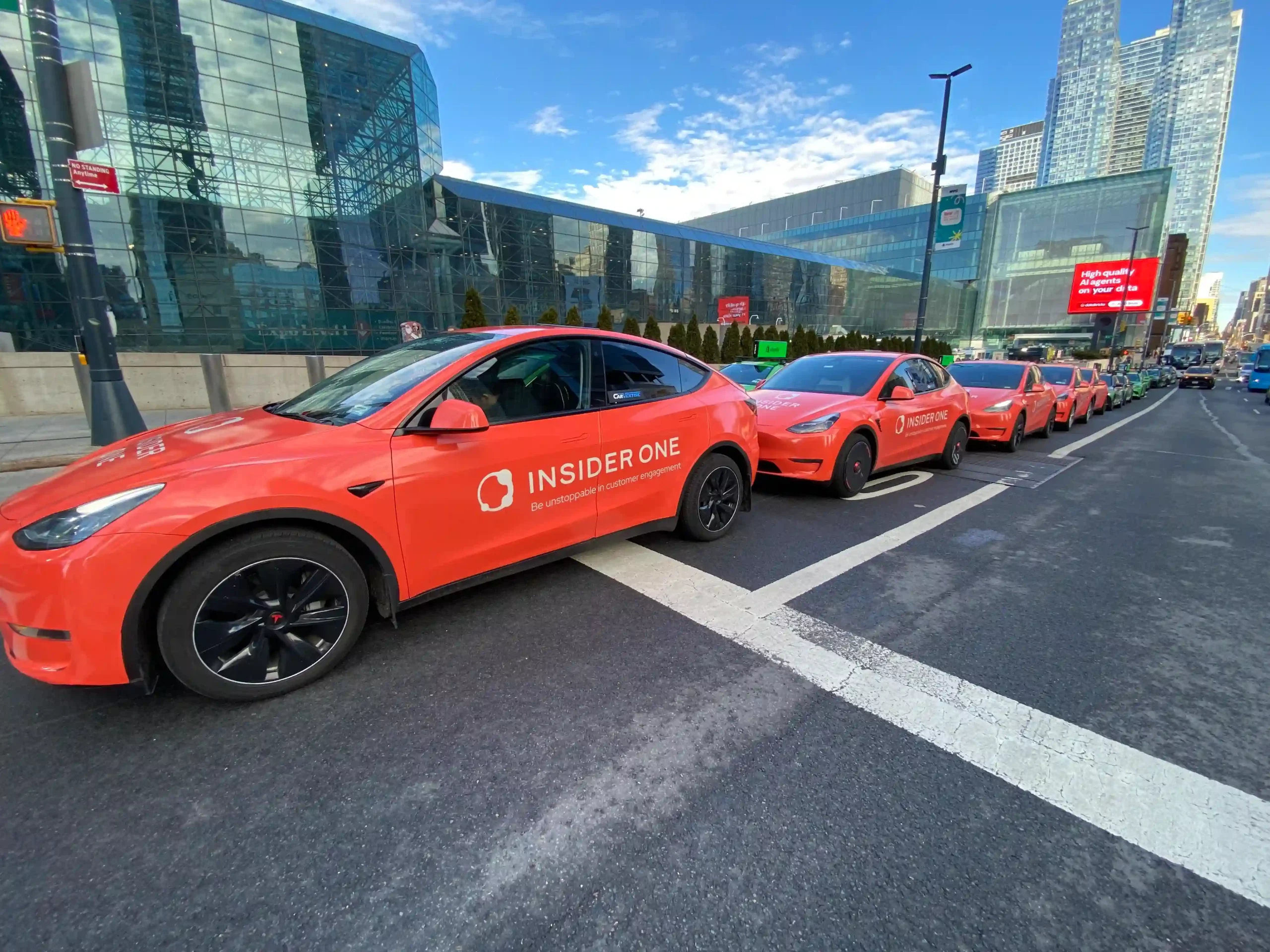
Event marketing is more competitive than ever. Brands need visibility before, during, and after an event to maximize audience reach, especially in the areas where attendees are already moving.
Branded Chauffeur is a premium rideshare advertising solution that pairs professionally wrapped vehicles with scheduled chauffeur service. Brands can use these vehicles to transport VIPs, clients, prospects, executives, or event guests while creating mobile brand visibility throughout the surrounding market.
With branded vehicles moving between convention centers, hotels, client dinners, retail locations, launch events, and high-traffic city areas, brands can create repeated exposure across the moments that matter. Carvertise manages the coordination, driver logistics, scheduling, and campaign execution, helping brands activate smoothly without adding operational lift to their event teams.
Each campaign is supported by GPS-verified reporting and rider documentation, giving marketers a clearer view of where vehicles traveled, who engaged with the branded experience, and how the campaign supported real-world event visibility.
What Makes Branded Chauffeur Campaigns Unique?
Branded chauffeur campaigns use professionally wrapped rideshare vehicles to promote a brand at a targeted event.
Unlike stationary advertising, these vehicles travel through event venues, airports, hotels, business districts, and entertainment areas where attendees spend their time.
Benefits include:
- Premium rider experience – Branded Chauffeur gives brands a more intentional way to transport VIPs, clients, prospects, executives, speakers, or guests. Instead of a standard ride, the vehicle becomes part of the brand experience and helps reinforce the campaign message during high-value moments.
- GPS-tracked visibility – Every participating vehicle can be monitored using GPS technology, allowing advertisers to verify routes, confirm campaign activity, and ensure vehicles are operating in targeted areas throughout deployment.
- Measurable campaign reporting – After the campaign concludes, advertisers receive detailed reports summarizing estimated impressions, route coverage, GPS activity, and other performance metrics. These insights help evaluate campaign effectiveness and optimize future campaigns.
- Smooth campaign coordination – Carvertise manages the operational details behind the campaign, including vehicle branding, driver coordination, scheduling, routing, pickup windows, and campaign logistics. This helps brands create a polished event experience without asking their internal teams to manage transportation execution.
- Wide geographic coverage – Unlike static billboards or venue signage, branded chauffeur vehicles travel throughout an entire city. They reach airports, hotels, convention centers, business districts, entertainment venues, and commuter routes, helping brands stay visible wherever attendees spend time.
- High daily impressions – Each wrapped vehicle generates thousands of visual impressions as it drives through busy streets, stops at intersections, and parks in high-traffic locations. A fleet of vehicles can collectively create significant brand exposure throughout the campaign.
- Flexible campaign scheduling – Campaigns can be customized to match event timelines, whether running for a single product launch, a multi-day conference, or a longer citywide marketing initiative. Brands can adjust deployment schedules based on audience activity and event calendars.
- Rider and lead documentation – For scheduled rides, hosted transportation, or VIP activations, brands can receive documentation of rider participation, guest movement, or lead engagement tied to the campaign. This gives sales and marketing teams a clearer record of who interacted with the branded experience and supports more informed post-event follow-up.
Brands can increase exposure across an entire city instead of relying on a single event location.
Why Event Marketers Are Investing in Rideshare Advertising
Traditional event advertising often depends on attendees visiting a specific booth, venue, or activation space.
Rideshare advertising extends campaign visibility beyond those limitations.
Advantages include:
- Reaching attendees before event arrival – Campaign vehicles circulate around airports, hotels, train stations, and popular visitor destinations before attendees even reach the venue, creating early brand awareness.
- Building awareness during the event – As attendees move between conference sessions, networking events, restaurants, and nearby attractions, branded vehicles continue displaying campaign messaging across multiple locations.
- Reinforcing messaging after the event – Vehicles remain active after conference sessions conclude, reminding attendees of the brand while they travel back to hotels, airports, or post-event activities.
- Creating repeated brand exposure – Seeing the same branded vehicle multiple times throughout the day helps improve brand recognition and message recall.
- Supporting citywide brand awareness goals – Instead of concentrating exposure around one venue, rideshare advertising allows brands to connect with event attendees and local consumers across an entire metropolitan area.
This expanded reach helps brands stay visible throughout the attendee journey.
For brands looking to maximize exposure during conferences and activations, Advertisers provides campaign solutions designed for measurable market coverage.
How Branded Chauffeur Advertising Works
Branded Chauffeur campaigns are designed to combine premium event transportation with measurable mobile advertising.
Campaign Planning
Brands work with Carvertise to define the event, market, audience, campaign goals, and priority locations. This may include convention centers, host hotels, client dinners, retail locations, product launch venues, airports, entertainment districts, or other high-traffic areas where the target audience is expected to move.
Brands select:
- Target cities based on upcoming events, audience demand, and marketing priorities.
- Campaign duration ranging from a few days to several weeks depending on campaign goals and budget.
- Event locations including convention centers, sports venues, entertainment districts, shopping centers, and business hubs where campaign visibility is most valuable.
- Audience demographics such as business professionals, conference attendees, local consumers, or industry-specific audiences to improve campaign targeting.
Vehicle Branding
Vehicles are professionally wrapped with campaign creative, turning each ride into a mobile brand touchpoint. Creative should be bold, simple, and readable from the street so the campaign can generate visibility while vehicles are driving, parked, or staged near key event locations.
Chauffeur Coordination
Carvertise coordinates the logistics behind the activation, including driver communication, scheduling, pickup and drop-off planning, routing, and campaign execution. This gives brands a more controlled, premium experience while reducing the operational burden on internal event, sales, or marketing teams.
Route Deployment
Branded vehicles move through priority event zones such as airports, hotels, convention centers, downtown districts, restaurants, retail corridors, and after-hours event locations. This helps brands stay visible throughout the attendee journey instead of relying only on booth traffic, signage, or a single venue placement.
Drivers naturally travel through high-traffic areas including:
- Airports, where campaigns reach business travelers, conference attendees, and visitors arriving in the city.
- Hotels, especially those hosting conference guests or event participants, providing repeated brand exposure throughout their stay.
- Convention centers, where vehicles maintain visibility before, during, and after major events.
- Downtown districts, generating impressions among office workers, commuters, tourists, and local residents.
- Retail corridors, helping brands reach shoppers visiting commercial districts, restaurants, and entertainment venues.
Reporting and Measurement
Campaign performance is supported by GPS-verified reporting, route coverage insights, estimated impressions, and campaign activity data. These reports help marketers understand where vehicles traveled, how the campaign showed up in-market, and how Branded Chauffeur supported broader event marketing goals.
Rider Documentation
For campaigns involving VIPs, clients, prospects, executives, speakers, or hosted guests, rider activity can be documented for the brand. This may help sales and marketing teams understand who participated in the branded experience, which rides were completed, and where follow-up may be needed after the event.
Key Metrics That Measure Advertising Performance
Modern rideshare advertising provides more accountability than many traditional out-of-home channels.
Important metrics include:
- Impressions – Estimated impressions measure how many people are likely to see campaign vehicles during normal driving activity, providing a benchmark for overall campaign reach.
- Route Coverage – Identifies neighborhoods, business districts, event venues, and major roadways reached during the campaign, helping advertisers understand geographic distribution.
- GPS Tracking Data – Confirms campaign activity by verifying that vehicles traveled through planned deployment areas and remained active throughout the campaign.
- Exposure Frequency – Estimates how often audiences may encounter branded vehicles, increasing opportunities for repeated brand recognition and message retention.
- Market Penetration – Measures how effectively the campaign covered targeted locations and whether important audience areas received sufficient advertising exposure.
These metrics help support stronger ad performance measurement and campaign optimization.
Real-World Example: Conference Promotion Campaign
A technology company launches a three-day conference campaign in a major city.
Campaign setup:
- 30 wrapped rideshare vehicles
- 5-day campaign duration
- Airport, hotel, and convention center coverage
Results:
- 1.8 million estimated impressions
- 95% convention district coverage
- 100% airport route participation
- 2,500+ GPS-verified route hours
The campaign generated visibility throughout the attendee journey rather than relying solely on venue traffic.
Brands interested in measurable campaign outcomes can explore examples through the Case Studies section.
Tools and Methods Used for Campaign Management
Several technologies support successful rideshare advertising campaigns.
Common tools include:
- GPS tracking platforms that record vehicle movement and verify campaign activity throughout deployment.
- Route verification systems that compare planned routes with actual travel patterns to ensure campaign objectives are achieved.
- Impression modeling software that estimates audience exposure using traffic data, roadway analytics, and campaign movement.
- Geographic coverage analysis that maps campaign reach across neighborhoods, event zones, commercial districts, and other target areas.
- Campaign reporting dashboards that consolidate campaign metrics into easy-to-understand reports for advertisers and stakeholders.
Together, these tools provide transparency and measurable campaign performance.
For additional insights on campaign measurement and strategy, explore the Blog.
Common Challenges With Event Promotion Advertising
While rideshare campaigns offer strong visibility, marketers should plan for several challenges.
Defining Success Metrics
Without clearly established KPIs such as impressions, geographic coverage, or brand awareness goals, it becomes difficult to accurately evaluate campaign performance and return on investment.
Geographic Planning
Selecting the wrong deployment areas can significantly reduce audience exposure. Campaign routes should focus on locations where target audiences naturally travel throughout the event.
Creative Visibility
Vehicle graphics should feature bold branding, high-contrast colors, and concise messaging that remains readable even while vehicles are moving through traffic.
Timing Coordination
Campaigns perform best when they begin before the event starts, remain active throughout the event, and continue briefly afterward to reinforce brand recognition.
Addressing these factors early improves overall campaign effectiveness.
Best Practices for Successful Citywide Campaigns
Follow these best practices to maximize results.
- Target high-traffic areas by focusing on airports, convention centers, hotels, entertainment districts, and major commuter routes where event attendees naturally spend time.
- Start before the event to build awareness several days in advance and increase recognition before attendees arrive at the venue.
- Use clear branding with bold visuals, minimal text, and a strong call to action so messaging remains visible while vehicles are moving.
- Monitor GPS reporting throughout the campaign to verify route coverage, identify optimization opportunities, and ensure campaign objectives are being met.
- Combine with other channels such as digital advertising, paid social media, email marketing, influencer campaigns, and on-site activations to create a more comprehensive omnichannel marketing strategy.
Many brands combine vehicle campaigns with broader awareness strategies available through the Carvertise homepage.
Frequently Asked Questions
Is rideshare advertising effective for conferences?
Yes. It allows brands to reach attendees across airports, hotels, event venues, and surrounding districts.
How is campaign performance measured?
Campaigns use GPS tracking, route verification, impression estimates, and reporting dashboards.
Can rideshare advertising support retail launch advertising?
Yes. Campaigns can target specific neighborhoods, shopping districts, and launch markets.
How does rideshare advertising compare with traditional transit ads?
Rideshare campaigns often provide more flexibility, targeted deployment, and GPS-verified reporting.
What industries use event promotion advertising?
Technology, retail, consumer products, healthcare, finance, entertainment, and B2B companies frequently use these campaigns.
How long should a campaign run?
Most event campaigns run from several days to multiple weeks depending on objectives and market size.
Bring Branded Chauffeur to Your Next Event
Your event audience is already moving between airports, hotels, convention centers, client dinners, retail locations, and after-hours experiences. Branded Chauffeur helps your brand show up across those moments with wrapped vehicles, scheduled transportation, coordinated execution, rider documentation, and GPS-verified reporting.
Whether you are planning a conference activation, product launch, VIP experience, retail event, or citywide brand campaign, Carvertise can help you turn event transportation into a measurable brand experience.
Contact Carvertise to plan a Branded Chauffeur campaign for your next event.