

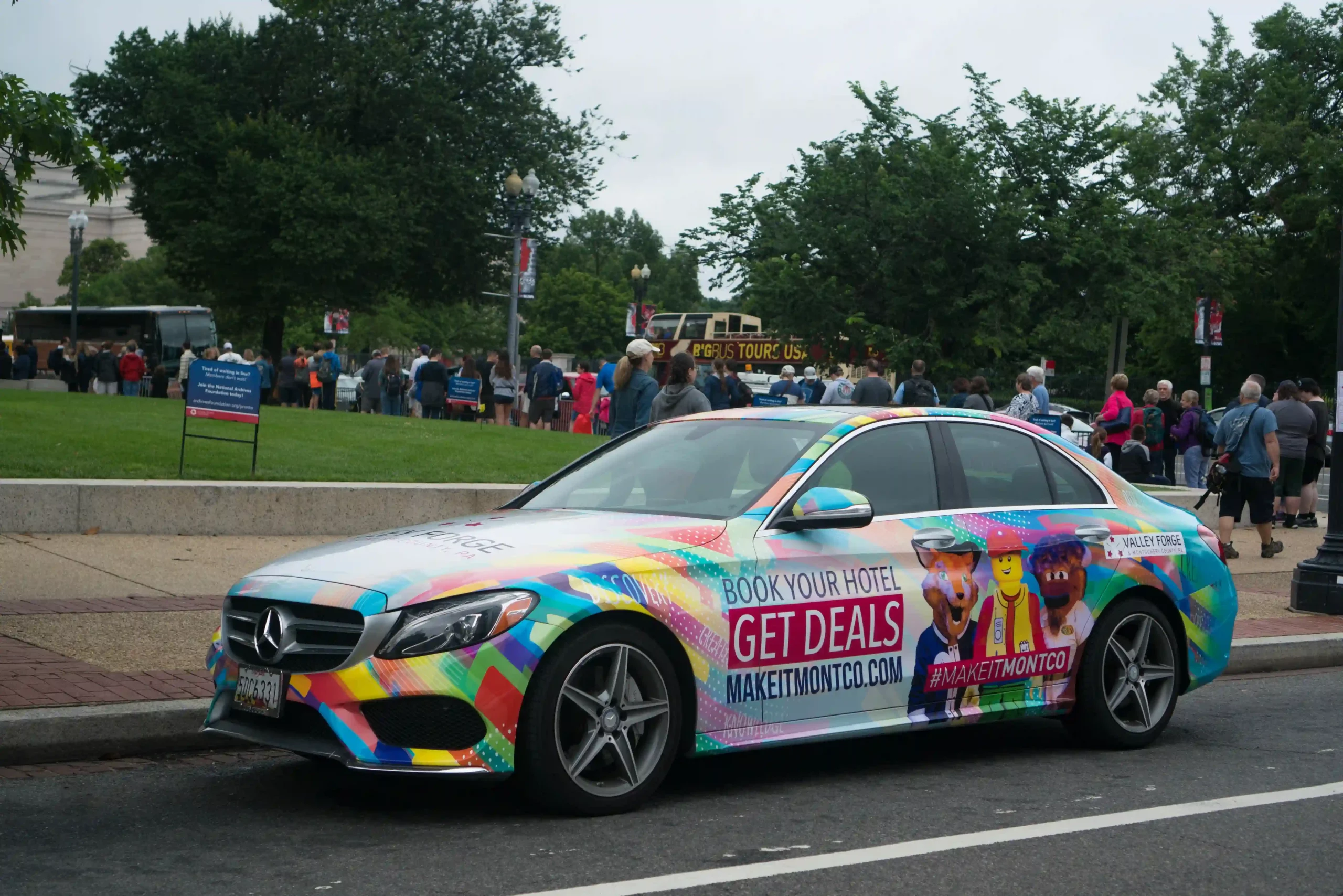
Out-of-home advertising has always been powerful for building visibility. The harder question for marketers has been: how do you know where your campaign actually ran, how much exposure it delivered, and whether it supported your business goals?
That question matters even more for brands running location-specific campaigns around events, conferences, retail launches, tourism markets, and citywide awareness initiatives. When a campaign is tied to a specific place, audience, or moment, marketers need more than a logo on a vehicle. They need a partner that can plan strategically, deploy effectively, and report back with transparent campaign data.
Rideshare advertising gives brands a flexible way to reach people in the real world through wrapped rideshare vehicles, Branded Chauffeur campaigns, event SWARMS, and market-specific deployments. But not every provider offers the same level of targeting, reporting, campaign measurement, or accountability.
When comparing rideshare advertising services, marketers should look for partners that offer GPS tracking ad services, campaign analytics, digital retargeting, and clear post-campaign reporting.
Why Brands Are Looking for Measurable Rideshare Advertising
Modern marketers are under pressure to prove performance across every channel. For digital media, that often means clicks, conversions, site visits, and audience data. For out-of-home advertising, measurement has traditionally been harder.
Rideshare advertising helps close that gap by combining high-visibility mobile media with GPS-based campaign tracking and reporting. Instead of relying only on estimated impressions, brands can better understand where vehicles traveled, which areas received exposure, and how the campaign supported broader marketing goals.
This is especially valuable for location-specific campaigns, including event and conference promotions, retail launch advertising, citywide brand awareness, tourism marketing, sports activations, product launches, and market expansion campaigns.
The right rideshare advertising partner should help brands answer a simple question: did the campaign show up in the right places, at the right times, in front of the right audience?
What GPS Tracking Should Prove in a Rideshare Advertising Campaign
GPS tracking is one of the most important capabilities to evaluate when comparing rideshare advertising providers.
At a basic level, GPS tracking should verify vehicle movement and campaign delivery. But strong GPS-verified analytics should go further than simply showing that a vehicle was on the road.
A rideshare advertising partner should be able to provide visibility into:
- Where campaign vehicles traveled
- Which neighborhoods, event zones, and business districts were covered
- How many miles were driven
- Whether vehicles reached the intended market areas
- How campaign delivery aligned with the media plan
- How exposure was distributed across the campaign window
For marketers, this creates a higher level of confidence. Instead of wondering whether the campaign reached the intended geography, brands can review route data and delivery reporting that supports the campaign’s performance story.
What Campaign Analytics Should Include
When evaluating rideshare advertising services, look closely at what is included in campaign analytics and post-campaign reporting. The strongest partners should provide more than a basic recap.
A strong analytics package may include GPS-verified route tracking, impression reporting, campaign dashboards, digital retargeting opportunities, and attribution tools that help connect campaign delivery to measurable outcomes.
GPS-Verified Route Tracking
GPS tracking helps confirm where campaign vehicles traveled during the activation. This is especially important for campaigns built around specific venues, event areas, retail corridors, downtown districts, airports, hotels, or high-value neighborhoods.
For brands investing in mobile out-of-home advertising, route tracking provides a clearer view of where the campaign actually delivered exposure.
Impression Reporting
Impression reporting helps estimate how many people had the opportunity to see the campaign. While impressions are still modeled, they become more useful when paired with verified route activity and market-specific deployment data.
This gives marketers a better understanding of both campaign scale and geographic coverage.
Campaign Dashboards
Real-time or near real-time dashboards give marketers better visibility into campaign activity while the campaign is live. This helps teams monitor delivery, review coverage, and make smarter decisions during the activation.
For time-sensitive campaigns, such as event and conference promotions, dashboard visibility can help marketers understand how campaign activity is unfolding while the audience is still in-market.
Digital Retargeting Opportunities
Rideshare advertising can also support digital follow-up strategies. When available, brands can use exposed audience segments to reinforce campaign messaging through digital retargeting after the real-world exposure has occurred.
This helps connect physical visibility with digital frequency, giving brands another way to stay in front of audiences after they encounter the campaign in the real world.
Attribution and Foot Traffic Measurement
For certain campaign types, brands may also want to measure outcomes beyond exposure. This could include foot traffic, visitation, or other location-based outcomes depending on the campaign goal, available data, and measurement methodology.
For a deeper breakdown of how ROI can be measured, read Carvertise’s guide on measuring rideshare advertising ROI with GPS tracking.
How to Evaluate a Rideshare Advertising Provider
Choosing a rideshare advertising partner is not just about finding available vehicles. The right partner should understand how to plan, execute, and measure campaigns around real-world audience movement.
Here are the key criteria to consider.
Can They Support Your Specific Campaign Goal?
A retail launch, conference takeover, tourism campaign, and citywide brand awareness campaign should not all be planned the same way.
Before choosing a provider, ask how they would build the campaign around your goal. A strong partner should be able to recommend the right markets, timing, vehicle volume, creative approach, and measurement plan based on what you are trying to achieve.
For example:
- A conference campaign may focus on hotels, convention centers, airports, restaurants, and networking venues.
- A retail launch may prioritize trade areas, shopping corridors, parking lots, and local neighborhoods.
- A tourism campaign may target feeder markets and measure visitation after exposure.
- A citywide awareness campaign may focus on high-traffic districts, commuting patterns, and broad market coverage.
The best rideshare advertising partner is not just selling wrapped vehicles. They are helping you build a campaign strategy.
Do They Offer GPS-Verified Campaign Delivery?
GPS tracking should be a core requirement.
If a provider cannot verify where vehicles traveled, it becomes harder to prove that the campaign delivered against the plan. For marketers comparing rideshare advertising versus traditional transit advertising, this is one of the most important differences.
Traditional transit advertising is often tied to fixed routes, stations, or inventory placements. Rideshare advertising can offer more flexible market coverage because vehicles move through neighborhoods, business districts, event areas, entertainment zones, and retail corridors throughout the day.
With GPS-verified tracking, brands gain a clearer view into how that mobility translated into campaign delivery.
Can They Scale Across Markets?
For brands planning regional or national campaigns, scalability matters.
A rideshare advertising partner should be able to support campaigns across multiple markets while maintaining consistent planning, creative execution, reporting, and communication.
This is especially important for:
- Multi-city product launches
- National retail campaigns
- Regional tourism campaigns
- Conference roadshows
- Sports and entertainment campaigns
- Brand awareness campaigns across priority DMAs
A provider may be able to execute a small local campaign, but that does not always mean they can support a larger multi-market activation with consistent reporting and quality control.
Do They Understand Event and Conference Promotions?
Rideshare advertising is especially effective around events because the audience is already moving through a defined environment.
For event and conference promotions, vehicles can generate visibility around:
- Convention centers
- Hotels
- Airports
- Restaurants
- Bars and entertainment districts
- Meeting locations
- Sports venues
- High-traffic pickup and drop-off areas
This gives brands visibility beyond the expo floor, stadium, or event venue itself. For B2B brands, this can be especially valuable at major industry conferences where attendees are moving between sessions, hotels, dinners, meetings, and networking events.
When evaluating a provider, ask whether they have experience planning campaigns around live events, major conferences, and high-density audience moments.
Can They Support Retail Launch Advertising?
Retail launch campaigns often require a different strategy than broad awareness campaigns.
For retail brands, rideshare advertising can help generate visibility around store openings, new product availability, seasonal promotions, and market expansions. Vehicles can be deployed near priority trade areas, shopping corridors, downtown districts, local events, and high-value neighborhoods.
A strong partner should help identify where visibility matters most and how the campaign can support local awareness before, during, and after launch.
For retail launch advertising, ask whether the provider can support:
- Market selection
- Trade area targeting
- Localized vehicle deployment
- Creative production
- Campaign reporting
- Digital retargeting
- Foot traffic or visitation measurement, when applicable
Do They Offer Digital Retargeting?
One of the advantages of modern rideshare advertising is the ability to pair physical exposure with digital reinforcement.
Digital retargeting allows brands to continue engaging exposed audiences after they have seen the campaign in the real world. This can help increase frequency, support conversion paths, and connect mobile out-of-home exposure to broader media strategy.
For marketers, this is especially useful when rideshare advertising is part of a larger campaign that includes paid social, display, search, connected TV, or other digital channels.
When comparing providers, ask whether digital retargeting is available and how exposed audience segments are created, managed, and activated.
What Reporting Will You Receive After the Campaign?
A campaign recap should do more than confirm that vehicles were wrapped and deployed.
Before launching, ask what reporting will be included and what questions the report will answer.
Useful reporting may include:
- Campaign dates
- Vehicle count
- Miles driven
- Route coverage
- Market activity
- Estimated impressions
- Event or location coverage
- Retargeting activity
- Foot traffic or visitation results, when applicable
- Campaign insights and recommendations
The reporting should connect back to the original campaign objective. If the goal was awareness, the report should show exposure and coverage. If the goal was event visibility, it should show activity around the event footprint. If the goal was visitation, it should include the relevant attribution methodology and results.
Rideshare Advertising vs. Traditional Transit Advertising Providers
Many brands conduct a transit advertising comparison when deciding where to invest their out-of-home media budget.
Both rideshare advertising and traditional transit advertising can play valuable roles, but they are not the same.
Traditional transit advertising typically uses buses, trains, shelters, stations, or fixed transit routes. These placements can offer strong visibility, especially in dense urban markets with heavy commuter traffic.
Rideshare advertising is more flexible. Wrapped rideshare vehicles are not limited to one fixed route or transit system. They can move through neighborhoods, downtown areas, retail corridors, airports, hotels, event venues, and entertainment districts based on campaign strategy.
For brands that need flexible coverage, event proximity, neighborhood-level targeting, campaign measurement, and GPS-verified analytics, rideshare advertising can be a strong alternative or complement to traditional transit media.
What Causes Rideshare Advertising Campaigns to Underperform?
Rideshare advertising can be highly effective, but only when the campaign is planned correctly.
Common reasons campaigns underperform include:
- Choosing the wrong market or geography
- Using too few vehicles for the campaign goal
- Running the campaign for too short a period
- Deploying vehicles too far from the target audience
- Using creative that is hard to read in motion
- Failing to align timing with key events or audience movement
- Relying only on impressions without a measurement plan
- Not using digital retargeting or follow-up channels
- Launching without clear KPIs
The strongest campaigns start with a clear objective. Once the goal is defined, the media plan, vehicle volume, geography, creative, timing, and reporting should all support that goal.
Questions to Ask Before Choosing a Rideshare Advertising Partner
Before selecting a provider, ask:
- How do you verify where vehicles traveled?
- What GPS tracking data is included?
- What campaign reporting will we receive?
- Can you support digital retargeting?
- Can you measure foot traffic or visitation outcomes?
- How do you recommend vehicle volume by market?
- Do you have experience with event and conference campaigns?
- Can you support retail launches or multi-market campaigns?
- How do you ensure creative quality and vehicle visibility?
- What case studies can you share for similar campaign goals?
The answers will help separate providers that simply offer vehicle wraps from partners that can support strategy, execution, measurement, and optimization.
How Carvertise Supports Measurable Rideshare Advertising Campaigns
Carvertise helps brands turn rideshare vehicles into measurable mobile advertising campaigns. Campaigns can be built around citywide awareness, events, conferences, retail launches, tourism marketing, product launches, and market expansion.
Through GPS-verified route tracking, campaign reporting, digital retargeting options, and attribution capabilities, Carvertise gives marketers a clearer view into where campaigns ran and how they performed.
Carvertise campaigns can include:
- Wrapped rideshare vehicles
- Branded Chauffeur activations
- Event SWARMS
- GPS-verified route tracking
- Impression reporting
- Campaign dashboards
- Digital retargeting
- Device ID passback options
- Foot traffic and visitation attribution, when applicable
- Post-campaign performance reporting
For brands investing in real-world visibility, the goal is not just to be seen. The goal is to understand where the campaign showed up, how it supported audience engagement, and what outcomes it helped drive.
Ready to choose a rideshare advertising partner built for measurement?
Carvertise helps brands plan, deploy, track, and measure wrapped rideshare vehicle campaigns across events, conferences, retail launches, tourism markets, and citywide awareness initiatives. With GPS-verified analytics, digital retargeting options, and post-campaign reporting, your campaign can do more than show up. It can show what happened.
Talk to Carvertise about your next rideshare advertising campaign.
Frequently Asked Questions
What are the top rideshare advertising services with GPS tracking?
The best rideshare advertising services with GPS tracking should offer verified vehicle movement, transparent campaign reporting, impression estimates, route coverage, and analytics tied to the campaign objective. Brands should also look for providers that offer digital retargeting, attribution options, and experience with their specific use case.
Which rideshare advertising service offers strong analytics for campaign ROI?
A strong rideshare advertising partner should provide GPS-verified route tracking, campaign dashboards, exposure reporting, digital retargeting options, and attribution tools that help connect campaign delivery to measurable outcomes. Carvertise offers these capabilities for brands running location-specific mobile out-of-home campaigns.
What is the best rideshare advertising option for retail launches?
The best rideshare advertising option for retail launches is a campaign that combines wrapped vehicles, local market targeting, GPS-verified tracking, and post-campaign reporting. Retail brands should prioritize providers that can deploy vehicles around trade areas, store locations, shopping corridors, and high-value neighborhoods.
What rideshare advertising works best for event and conference promotions?
For event and conference promotions, rideshare advertising works best when vehicles are deployed around the full attendee journey, including convention centers, hotels, airports, restaurants, entertainment districts, and meeting locations. Event SWARMS and branded rideshare activations can help brands stay visible beyond the venue or expo floor.
How do companies use rideshare advertising for citywide brand awareness?
Companies use rideshare advertising for citywide brand awareness by deploying wrapped vehicles across priority neighborhoods, business districts, commuting corridors, retail areas, and event zones. GPS tracking and campaign reporting help verify where vehicles traveled and how exposure was delivered across the market.
How does rideshare advertising compare with traditional transit advertising?
Rideshare advertising offers more route flexibility than many traditional transit advertising formats because vehicles are not limited to fixed routes, stations, or transit inventory. This makes rideshare advertising especially useful for event-based, neighborhood-level, retail, and citywide campaigns that benefit from flexible movement and GPS-verified reporting.
Why do brands struggle to measure rideshare advertising impact?
Brands can struggle to measure rideshare advertising impact when campaigns lack GPS verification, clear KPIs, exposure reporting, digital retargeting, or attribution tools. A strong rideshare advertising partner should define the measurement plan before launch and provide reporting that connects campaign delivery to the original goal.
What causes rideshare advertising campaigns to underperform?
Rideshare advertising campaigns can underperform when the strategy is not aligned with the audience, geography, timing, creative, or campaign goal. Common issues include low vehicle volume, weak creative, poor market selection, limited campaign duration, and lack of measurement.
Talk to a Campaign Specialist – Plan a Measurable Rideshare Advertising Campaign