

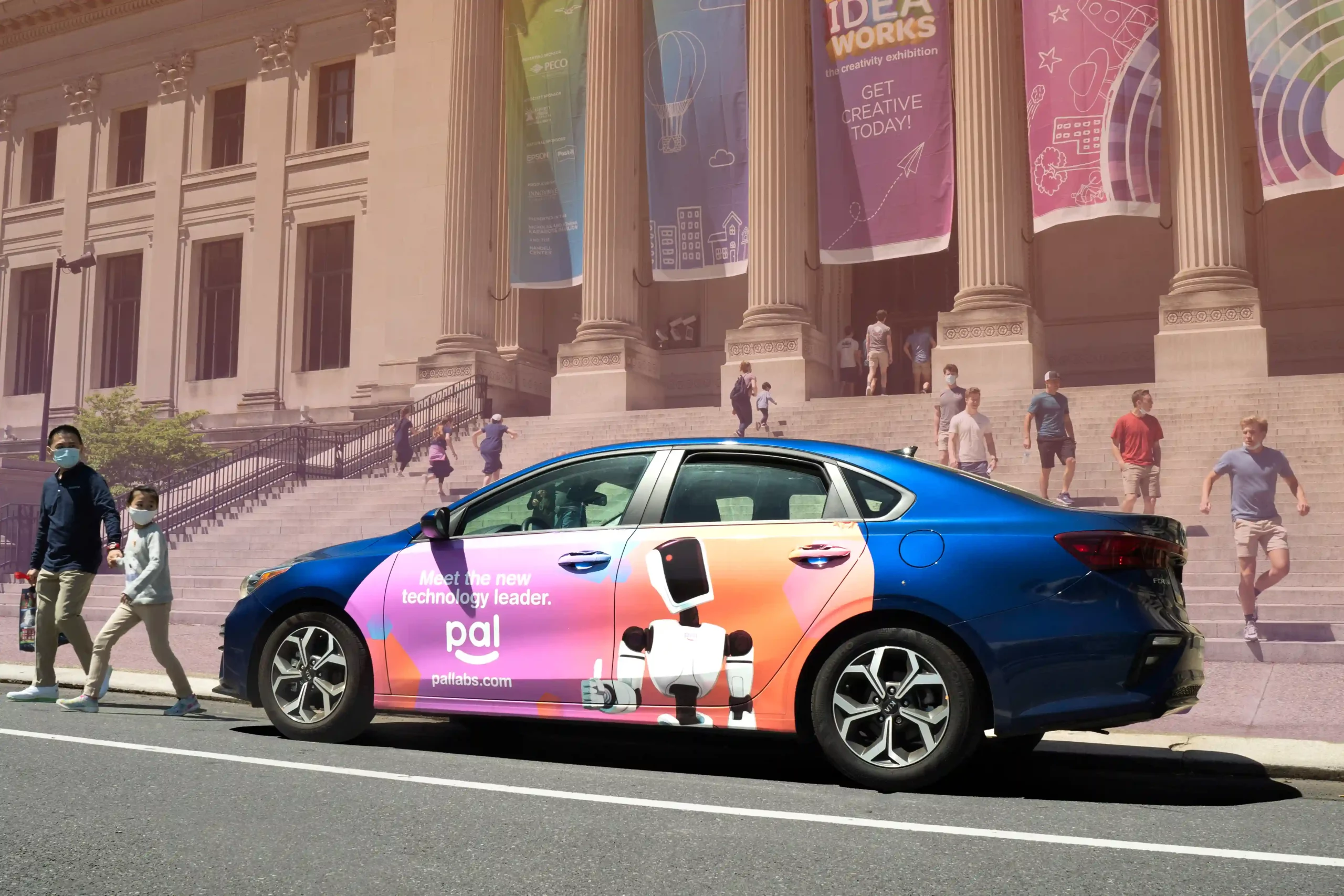
Major events create rare moments of concentrated attention. Thousands of people move through the same streets, pass the same hotels, gather near the same venues, and travel through the same arrival and departure areas. For brands, the challenge is not just being near the event. It is staying visible throughout the moments surrounding it.
Carvertise Event Swarms help brands show up across those high-attention moments with coordinated fleets of professionally wrapped vehicles from Carvertise’s rideshare and delivery driver network.
A branded vehicle swarm is a fleet of wrapped vehicles deployed around a specific event, venue, or high-traffic area during peak audience movement. The vehicles move through planned routes near arrival corridors, parking areas, nearby rideshare pickup and drop-off areas, hotel districts, entertainment zones, downtown streets, and post-event traffic.
Instead of relying on one static placement, an Event Swarm creates repeated street-level visibility as people arrive, leave, walk, wait for rideshare, sit in traffic, or move between nearby destinations.
For sporting events, music festivals, races, concerts, product launches, retail openings, tourism events, and citywide celebrations, Carvertise Event Swarms give brands a flexible way to build awareness where audiences are already moving.
Key Takeaways: Branded Vehicle Swarms for Events
- A branded vehicle swarm uses multiple wrapped vehicles to create concentrated visibility around a specific event or high-traffic location.
- Event Swarms are designed for moments with predictable crowd movement, including sporting events, concerts, festivals, races, parades, tourism events, retail openings, and product launches.
- Fleet size depends on event attendance, venue layout, timing, route access, and the number of priority areas a brand wants to cover.
- The strongest Event Swarms are planned around peak arrival and departure windows, when pedestrian traffic, rideshare activity, parking movement, and street visibility are highest.
- Carvertise supports Event Swarms with vehicle coordination, driver communication, route planning, GPS-verified campaign activity, and post-campaign reporting.
What Is a Branded Vehicle Swarm?
A branded vehicle swarm is a group of wrapped vehicles deployed together around a specific event area during a defined campaign window. The vehicles move through planned routes near the event, creating repeated brand exposure in the streets, traffic corridors, rideshare areas, and gathering zones surrounding the venue.
Unlike a citywide rideshare advertising campaign, which builds awareness across a market over a longer period of time, an Event Swarm is designed to create density. Multiple branded vehicles appear around the same event environment at the same time, helping audiences see the brand more than once during a short, high-attention window.
The goal is visibility and repetition. One wrapped vehicle can generate attention. A coordinated fleet creates a larger visual moment that is harder to miss and easier to remember.
How Event Swarms Differ from Other Carvertise Campaigns
Not every branded vehicle campaign is designed for the same objective. Event Swarms, Conference Takeovers, and Branded Chauffeur campaigns each serve a different purpose.
| Product | Best For | Main Objective |
|---|---|---|
| Event Swarm | Sporting events, festivals, concerts, races, retail openings, citywide events | Create concentrated visibility around a high-traffic event moment |
| Conference Takeover | Trade shows, B2B conferences, conventions, networking events | Reach attendees around convention centers, hotels, meeting hubs, and after-hours events |
| Branded Chauffeur | VIP transport, client dinners, executive rides, hosted guest experiences | Turn scheduled transportation into a premium branded experience |
| Mass Market Campaign | Broader citywide awareness over time | Build repeated exposure across a market for weeks or months |
An Event Swarm is built for high-density visibility. It is not focused on scheduled guest transportation or conference logistics. The purpose is to make the brand visible around the streets, routes, entrances, exits, parking areas, rideshare zones, and nearby destinations surrounding a major event.
Why Brands Use Event Swarms
Event Swarms help brands create a visible presence around major moments without depending on a single billboard, venue placement, booth, or static ad. By concentrating multiple branded vehicles around the same event district, brands can increase frequency, improve recall, and extend visibility across the routes audiences already use.
Concentrated Event Visibility
A branded vehicle swarm puts multiple wrapped vehicles in motion around the same event environment. This creates a more noticeable presence than one vehicle operating alone or one static placement in a fixed location.
For brands trying to stand out during a crowded event weekend, this density matters. Audiences are surrounded by signage, social content, sponsor activations, venue messaging, and competing brands. A coordinated fleet of wrapped vehicles can cut through that noise and create a visible brand moment.
Repeated Exposure
Event attendees rarely move in one straight line. They arrive early, circle parking lots, wait in traffic, walk between restaurants and venues, use rideshare pickup zones, visit hotels, and leave in waves after the event.
A well-planned Event Swarm gives audiences multiple chances to see the same brand throughout that journey. Repeated exposure can help improve brand recognition and message recall, especially when vehicles are deployed during the highest-traffic windows.
Visibility Across the Surrounding Market
Major events do not happen only inside the venue. The surrounding market matters too.
Fans, attendees, travelers, and local consumers often move through airports, hotels, downtown corridors, restaurants, bars, retail districts, transit hubs, entertainment areas, and rideshare zones before and after the event itself.
Event Swarms help brands extend visibility across those areas. Instead of concentrating the campaign in one location, branded vehicles can circulate through the routes and neighborhoods where event-related activity is already happening.
Flexible Event Activation
Event Swarms can be scaled based on the size and goals of the campaign. A brand may use a smaller fleet for a retail opening, product launch, community event, or local activation. A larger fleet may be used for a major sporting event, festival weekend, race, concert series, or citywide celebration.
The campaign can also be structured around a single high-value event, a multi-day event, a game-day series, or a broader seasonal strategy.
GPS-Verified Campaign Activity
Carvertise campaigns are supported by GPS-verified reporting that shows where vehicles traveled, when they were active, and which areas received coverage. This gives marketers more transparency than many traditional event advertising channels.
Instead of relying only on photos or anecdotal feedback, brands can review campaign activity, route coverage, estimated impressions, and other performance insights after the Event Swarm concludes.
What Types of Events Work Best for Branded Vehicle Swarms?
Branded vehicle swarms work best when there is concentrated audience movement in a defined area. The stronger the crowd flow, the better the opportunity for repeated brand visibility.
Strong use cases include:
Sporting Events
Professional and collegiate sporting events create predictable arrival and departure windows. Fans move through parking lots, tailgate areas, rideshare zones, stadium districts, nearby bars, restaurants, and hotel areas.
Music Festivals
Festivals often create multi-day visibility opportunities across hotels, transit areas, venue entrances, restaurants, nightlife districts, and surrounding neighborhoods.
Concerts and Arena Events
Concerts and arena events concentrate audience movement before and after the show. A branded vehicle swarm can create visibility during the arrival surge, pre-show activity, and post-event departure traffic.
Races and Motorsports Weekends
Race weekends often extend beyond the track. Fans gather around hotels, campgrounds, parking areas, restaurants, entertainment districts, and nearby roadways, creating strong opportunities for mobile visibility.
Parades and Civic Celebrations
Citywide celebrations, parades, and cultural events create street-level attention. Branded vehicles can move through surrounding neighborhoods and priority routes before, during, and after the main event window.
Product Launches
For product launches, branded vehicle swarms can help create a visible market presence around launch parties, retail locations, influencer events, media moments, and nearby high-traffic areas.
Retail Openings
A branded vehicle swarm can help build awareness around a new store, restaurant, showroom, or retail activation by circulating through nearby shopping districts, commuter routes, parking areas, and neighborhood streets.
Tourism and Destination Events
Destination marketing organizations, attractions, hotels, and travel brands can use Event Swarms to reach visitors already exploring a city during major tourism moments, festivals, sports weekends, or seasonal events.
How to Plan a Branded Vehicle Swarm
Planning a successful Event Swarm starts with understanding audience movement. The question is not only, “How many vehicles should we use?” The stronger question is, “Where will the audience be moving, and when will visibility matter most?”
1. Define the Event Objective
Start by clarifying what the campaign needs to accomplish.
A brand may want to build awareness around a major sporting event, promote a product during a festival weekend, support a retail launch, reach visitors during a tourism moment, or create visual impact around a citywide celebration.
The objective should guide the fleet size, timing, market selection, route strategy, creative, and measurement plan.
2. Map the Event Environment
Next, identify the areas where audience movement will be highest.
Priority areas may include:
- Venue entrances and exits
- Rideshare pickup and drop-off zones
- Parking access roads
- Hotel corridors
- Airport routes
- Restaurant and nightlife districts
- Downtown streets
- Retail corridors
- Transit stations
- Fan zones or public gathering areas
- Nearby attractions or entertainment districts
The best Event Swarm plans are built around real audience behavior. Where will people arrive? Where will they walk? Where will they wait? Where will traffic slow down? Where will they go before and after the event?
3. Choose the Right Fleet Size
Fleet size depends on the size of the event, the layout of the venue, and the number of priority areas the campaign needs to cover.
Smaller events may only need a handful of vehicles to create a noticeable presence. Larger events, sprawling venues, or multi-location activations may require a larger fleet to generate the right level of visibility.
A concentrated venue with a few key entry points may require fewer vehicles. A stadium district, downtown festival, race weekend, or citywide celebration may require more vehicles because the audience is spread across more streets, parking areas, hotels, and entertainment zones.
The goal is not just to have vehicles present. The goal is to have enough branded vehicles in the right places at the right times to create visible density.
4. Plan Around Peak Movement Windows
Timing is one of the most important parts of a successful branded vehicle swarm.
For sporting events, strong windows often include the hours leading up to the event, the final arrival surge before start time, and the departure window after the event ends.
For festivals, visibility may be strongest during daily arrival periods, evening entry windows, and late-night departure periods.
For product launches or retail openings, timing may depend on store traffic, launch events, influencer appearances, media moments, or planned consumer activations.
For citywide events, timing may need to account for parade schedules, road closures, hotel check-in patterns, public transportation flow, and neighborhood traffic.
A strong Event Swarm does not just show up on event day. It shows up when the audience is most likely to notice.
5. Build a Route Strategy
A route strategy should connect the most important areas surrounding the event. Vehicles may move through stadium districts, venue entrances, nearby hotels, rideshare zones, parking corridors, restaurant streets, nightlife areas, retail routes, and downtown traffic.
The best routes balance visibility with practicality. Vehicles need to be seen, but they also need to operate legally and efficiently within the realities of traffic, road closures, parking restrictions, and venue access.
Carvertise helps coordinate routes and driver logistics so the Event Swarm can operate smoothly in the market.
6. Create Wrap Creative That Works in Motion
Vehicle wraps need to be designed for quick comprehension. People may see the vehicle while walking, standing in a crowd, sitting in traffic, or driving nearby. The message needs to be readable fast.
Strong event wrap creative usually includes:
- A clear logo
- Bold color contrast
- Minimal text
- A simple campaign message
- Large, readable type
- A strong visual concept
- A short URL, QR code, or simple call to action when appropriate
Avoid overloading the wrap with too many messages. A branded vehicle swarm is often seen in motion, so the creative needs to land quickly.
7. Confirm Measurement and Reporting
Before the campaign begins, define what success looks like.
Common Event Swarm metrics include estimated impressions, route coverage, GPS activity, active campaign hours, time spent near priority zones, and geographic coverage around the event district.
For some campaigns, additional measurement may include digital retargeting, website activity, store visitation, or foot traffic attribution, depending on the campaign goals and available data.
Measurement matters because it helps marketers evaluate the campaign and improve future event activations.
Timing Your Event Swarm for Maximum Impact
The strongest Event Swarms are built around audience movement. Deploying vehicles too early can waste visibility. Deploying too late can miss the arrival surge. The goal is to align the fleet with the moments when the audience is concentrated, mobile, and paying attention.
Arrival Windows
Arrival windows are often the best opportunity to create early awareness. People are entering the event environment, looking for parking, ordering rideshare, walking to the venue, meeting friends, or moving between hotels and restaurants.
For sporting events, arrival activity may begin hours before start time. For concerts and arena events, the final 60 to 90 minutes before showtime can be especially valuable. For festivals, arrival periods may vary throughout the day depending on the schedule.
Departure Windows
Departure windows are often overlooked, but they can be highly valuable. Large groups leave at the same time, creating dense pedestrian traffic, long rideshare lines, slow-moving vehicles, and extended time near exits and surrounding streets.
A branded fleet positioned near post-event movement can reinforce the message after the main experience ends.
Multi-Day Event Timing
For multi-day events, Event Swarms can be structured to appear during recurring peak windows. A campaign may focus on morning arrivals, evening departures, special programming, headline performances, or major schedule moments.
Repeated visibility across multiple days can help build stronger recognition because audiences encounter the brand more than once during the event cycle.
How Carvertise Executes Event Swarms
Carvertise helps brands plan, coordinate, and measure branded vehicle swarms across major markets.
Market and Event Planning
Carvertise works with brands to identify the right event, city, audience, campaign window, fleet size, and priority areas. This planning process helps ensure the Event Swarm is built around real audience movement instead of assumptions.
Vehicle Branding
Vehicles are professionally wrapped with campaign creative before deployment. Wraps are designed to create visibility while vehicles are moving, parked, staged, or traveling through high-traffic routes.
Driver Coordination
Carvertise coordinates with drivers to support the event plan, including timing, routing, communication, and campaign expectations. This helps the fleet move intentionally around the areas that matter most.
Route Deployment
During the campaign window, vehicles move through priority event zones such as venue entrances, hotel areas, rideshare corridors, parking routes, retail districts, downtown streets, and entertainment areas.
GPS-Verified Reporting
Campaign activity is supported by GPS data, route coverage insights, estimated impressions, and reporting that helps brands understand where vehicles traveled and how the campaign showed up in market.
Measuring Branded Vehicle Swarm Performance
Modern event advertising needs more than visibility. Marketers also need to understand what happened during the campaign and how the activation performed.
Key Event Swarm metrics may include:
Estimated Impressions
Estimated impressions help brands understand how many people were likely exposed to the branded vehicles during the campaign window.
Route Coverage
Route coverage shows which streets, neighborhoods, venue areas, hotel corridors, rideshare zones, and event districts were reached during the campaign.
GPS Activity
GPS activity confirms where vehicles traveled, when they were active, and whether the campaign covered the planned event zones.
Active Campaign Hours
Active hours help marketers understand how much time the fleet spent in market during the campaign window.
Event Zone Coverage
Event zone coverage helps evaluate whether the vehicles reached the most important areas surrounding the event, such as venue entrances, parking routes, rideshare pickup zones, or nearby entertainment districts.
Post-Campaign Insights
Post-campaign reporting helps brands compare performance across events, markets, routes, and timing windows. These insights can be used to improve future Event Swarm planning.
Branded Vehicle Swarms vs. Traditional Event Advertising
Branded vehicle swarms serve a different role than traditional event advertising channels.
Event Swarms vs. Billboards
Billboards are fixed in one location. Event Swarms are mobile and can move through multiple areas around an event, including arrival routes, hotel corridors, parking areas, and rideshare zones.
Event Swarms vs. Venue Signage
Venue signage reaches people inside or immediately around a specific property. Event Swarms extend visibility into the public routes and surrounding market where audiences move before and after the event.
Event Swarms vs. Mobile Billboard Trucks
Mobile billboard trucks can be highly visible, but they are larger and may be less flexible in congested event areas. Wrapped vehicles can move more naturally through city streets, rideshare zones, hotel areas, and crowded event districts.
Event Swarms vs. Digital Ads
Digital ads can reinforce a message online, but they do not create the same physical presence in the event environment. Event Swarms give brands a real-world visual moment that can complement digital, social, influencer, email, and on-site marketing.
Common Mistakes to Avoid When Planning an Event Swarm
A branded vehicle swarm can create strong visibility, but the campaign needs to be planned carefully.
Starting Too Late
Vehicle wraps, creative approval, driver coordination, and route planning all take time. Brands should begin planning early enough to avoid rushed creative, limited fleet options, or operational issues.
Choosing the Wrong Event Window
A swarm that misses peak movement will underperform. Timing should be based on when people arrive, leave, wait, gather, or move between key locations.
Using Overly Complicated Creative
Vehicle wraps need to be readable quickly. Too much copy, small text, or unclear branding can weaken the campaign.
Ignoring Route Logistics
Events often involve traffic, road closures, parking restrictions, and venue access limitations. Routes need to be realistic and compliant with local rules.
Measuring Only with Photos
Photos are useful, but they do not tell the full story. GPS-verified reporting gives brands a clearer understanding of where the fleet traveled and how the campaign performed.
Best Practices for a Successful Branded Vehicle Swarm
To get the most from an Event Swarm, brands should focus on timing, density, creative clarity, and measurement.
- Plan around peak arrival and departure windows.
- Prioritize the streets, routes, hotels, rideshare zones, and gathering areas where the audience is already moving.
- Use enough vehicles to create visible density around the event environment.
- Keep wrap creative bold, simple, and readable.
- Coordinate routes around real traffic patterns, road closures, and event logistics.
- Use GPS-verified reporting to evaluate campaign activity and improve future planning.
- Consider pairing the Event Swarm with digital retargeting, paid social, influencer content, email, PR, or on-site activations for stronger campaign reinforcement.
FAQs About Branded Vehicle Swarms
What is a branded vehicle swarm?
A branded vehicle swarm is a coordinated fleet of wrapped vehicles deployed around a specific event, venue, or high-traffic area. The vehicles move through priority routes during peak audience movement to create concentrated brand visibility.
How many vehicles do you need for an Event Swarm?
The right fleet size depends on event attendance, venue layout, campaign goals, timing, and the number of priority areas the brand wants to cover. Smaller events may only need a handful of vehicles, while larger events or multi-location activations may require a larger fleet.
What types of events are best for branded vehicle swarms?
Branded vehicle swarms work well for sporting events, concerts, festivals, races, parades, retail openings, product launches, tourism events, and citywide celebrations. The best events have concentrated crowd movement and predictable arrival or departure windows.
How far in advance should brands plan an Event Swarm?
Brands should plan early enough to allow for creative development, vehicle wrapping, driver coordination, routing, and logistics. Larger events, high-demand markets, and multi-day campaigns may require longer lead times.
How is an Event Swarm measured?
Event Swarms can be measured through GPS activity, route coverage, estimated impressions, active campaign hours, and event zone coverage. Additional measurement options may include digital retargeting, website activity, or foot traffic attribution, depending on the campaign goals.
Can branded vehicle swarms support product launches or retail openings?
Yes. Branded vehicle swarms can help brands create visibility around product launches, retail openings, restaurant openings, showroom launches, influencer events, and nearby high-traffic areas.
How do branded vehicle swarms compare to billboards?
Billboards stay in one fixed location. Branded vehicle swarms move through multiple high-traffic areas around an event, giving brands more flexibility to reach audiences across arrival routes, venue zones, hotels, rideshare areas, parking corridors, and surrounding streets.
Do brands need to be official event sponsors to run an Event Swarm?
Event Swarms operate in public spaces surrounding an event, such as streets, hotel areas, rideshare zones, and nearby commercial districts. Brands should not imply official affiliation with an event, team, league, venue, or sponsor unless that relationship exists.
Plan Your Next Branded Vehicle Swarm with Carvertise
When audiences gather, traffic builds, and attention concentrates around a major event, your brand has a limited window to stand out. Carvertise Event Swarms help brands create coordinated, street-level visibility with wrapped vehicles moving through the routes, entrances, exits, hotel areas, rideshare zones, and entertainment districts surrounding the moment.
Whether you are planning around a sporting event, festival, race weekend, concert, product launch, retail opening, tourism moment, or citywide celebration, Carvertise can help you build the right fleet size, timing, routing strategy, and measurement plan.
Contact Carvertise to plan a branded vehicle swarm for your next event.