

Picking the right rideshare advertising partner can feel overwhelming when every vendor claims to deliver results. You’re comparing GPS tracking features, campaign analytics packages, and reporting dashboards while trying to figure out which options actually matter for your goals. This guide walks you through the decision criteria that separate high-performing rideshare campaigns from wasted budgets.
Carvertise helps brands run rideshare advertising campaigns with GPS-verified tracking and real-time analytics. By the end of this guide, you’ll know exactly what to look for when evaluating vendors for event promotions, retail launches, and citywide brand awareness campaigns.
You’ll learn how to assess targeting capabilities, compare analytics packages, and identify the tracking features that actually prove campaign performance. Let’s break down the selection process step by step.
Key Takeaways: How to Choose Rideshare Advertising in 2026
- GPS-verified tracking is the foundation of modern rideshare advertising measurement and proves where your campaign actually ran.
- Campaign analytics should include route heatmaps, neighborhood breakdowns, and impression reporting tied to verified movement data.
- Event promotions, retail launches, and citywide campaigns each require different deployment strategies and fleet configurations.
- Digital retargeting integration extends the value of physical ad impressions by reaching mobile devices near wrapped vehicles.
- Carvertise delivers GPS-verified reporting with granular dashboard analytics that break down exposure by neighborhood and time of day.
What Is Rideshare Advertising and How Does It Work?
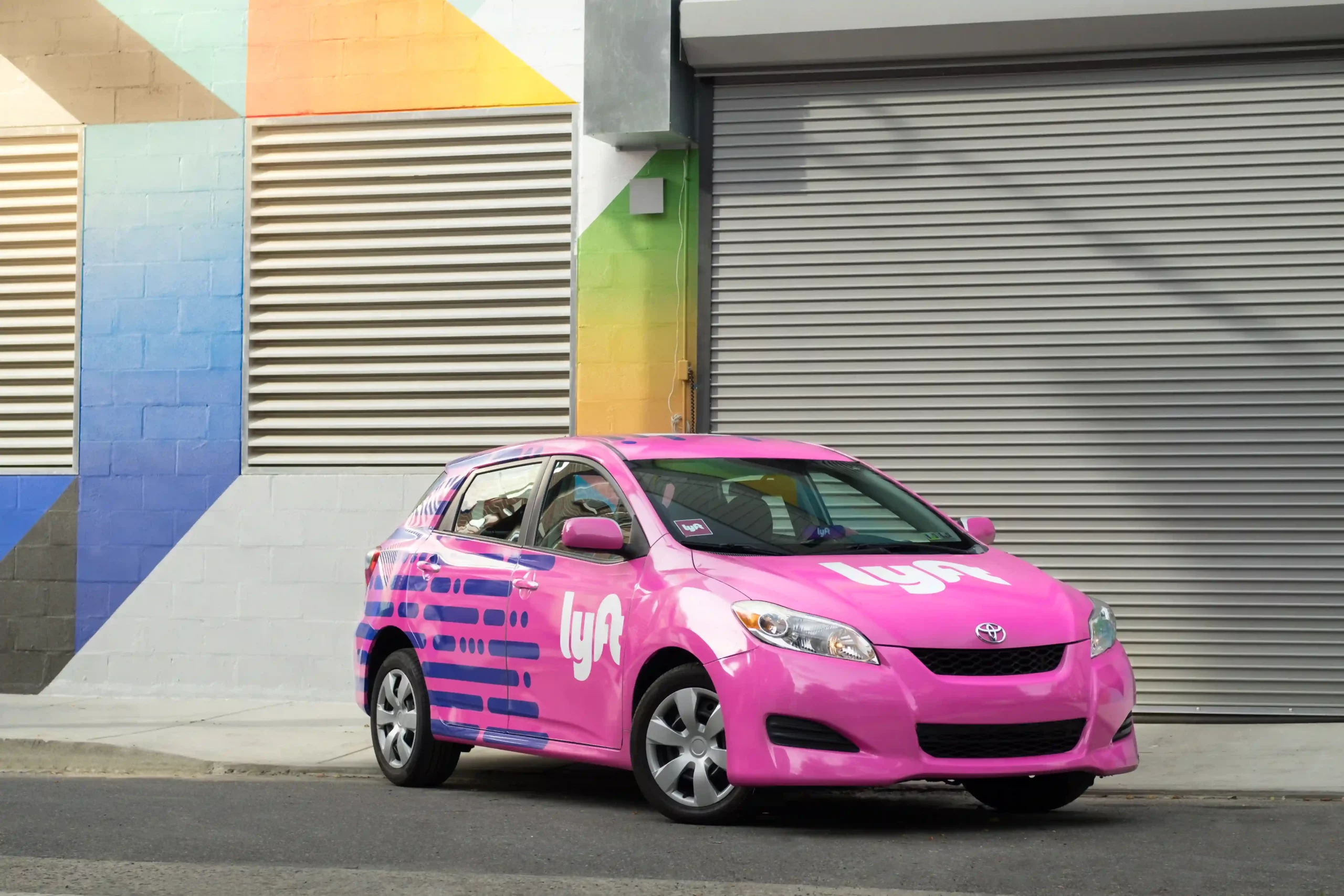
Rideshare advertising places branded wraps on vehicles driven by Uber, Lyft, and delivery service drivers. These wrapped cars travel through cities all day, covering residential neighborhoods, retail districts, entertainment zones, and event venues that static billboards cannot reach.
Unlike fixed placements that wait for traffic to pass by, rideshare vehicles follow real consumer movement patterns. Your brand shows up where your audience lives, works, shops, and spends time. This mobility creates repeated exposure opportunities throughout the day.
Modern rideshare campaigns include GPS technology that records vehicle routes, neighborhood coverage, and time-of-day exposure. This data turns out-of-home advertising into a measurable channel with reporting capabilities that marketers expect from digital media.
How Rideshare Advertising Differs from Traditional Transit Ads
Traditional transit advertising uses fixed routes. Buses, subways, and trains travel the same paths daily, which creates consistent but limited geographic coverage.
Rideshare advertising adapts to real-time demand. Drivers naturally gravitate toward high-activity areas like downtown business districts, entertainment venues, airports, and shopping centers. This dynamic routing delivers exposure across more neighborhoods than fixed-route transit.
The measurement capabilities also differ significantly. Rideshare campaigns with GPS tracking can verify exactly where vehicles traveled, while transit advertising relies on estimated ridership and route projections.
Why GPS Tracking Matters for Rideshare Advertising Selection
GPS tracking is the most important capability to evaluate when choosing a rideshare advertising partner. Without verified tracking, you’re relying on estimates and projections that may not reflect actual campaign delivery.
Strong GPS analytics should prove where your campaign ran, which neighborhoods received coverage, how many miles vehicles traveled, and whether the deployment matched your media plan. This creates accountability that other out-of-home formats struggle to match.
What GPS Verification Should Include
Basic GPS tracking confirms that vehicles were on the road. But campaign-grade GPS verification goes further by documenting specific route data that supports performance reporting.
Look for partners that can show you which geographic zones received coverage, how exposure was distributed across your campaign window, and whether vehicles reached the areas you specified in your media plan. This level of detail helps you understand exactly what your investment delivered.
Questions to Ask About GPS Capabilities
When evaluating vendors, ask how frequently GPS data is collected and whether you can access route-level detail in your reporting. Some providers offer real-time dashboards while others deliver end-of-campaign summaries.
Also ask whether GPS data ties directly to impression calculations. The most accurate impression reporting comes from combining verified movement data with population density and traffic pattern information for each route segment.
How to Evaluate Campaign Analytics and Reporting Packages
Campaign analytics determine how much visibility you have into your rideshare advertising performance. The right analytics package helps you understand campaign delivery, optimize mid-flight, and prove results to stakeholders.
Different vendors offer different reporting depths. Some focus on basic impression counts while others deliver granular geographic breakdowns, dwell time analysis, and attribution tools.
Route Tracking and Geographic Reporting
Route tracking shows where campaign vehicles traveled during your activation. This is especially valuable for campaigns built around specific venues, event areas, retail corridors, or high-value neighborhoods.
Geographic reporting should break down exposure by zone so you can see which areas received the most coverage. Carvertise campaigns include GPS-verified route tracking with heatmaps that visualize neighborhood-level delivery.
Impression Reporting and Methodology
Impression reporting estimates how many people had the opportunity to see your campaign. All impression numbers are modeled, but the methodology matters significantly for accuracy.
Strong impression reporting combines verified route data with traffic counts, population density, and time-of-day factors. Ask vendors to explain their methodology and whether impressions tie to actual GPS-verified vehicle movement.
Dashboard Access and Reporting Frequency
Real-time or near real-time dashboards give you better visibility into campaign performance while the activation is still running. This enables mid-campaign optimization if certain areas need more coverage.
Ask about reporting frequency and format. Some brands prefer weekly email summaries while others want self-serve dashboard access. Make sure the reporting cadence matches your team’s workflow.
Rideshare Advertising for Event Promotions and Conferences
Event promotions require precision timing and geographic targeting. You need wrapped vehicles in the right places during specific windows when attendees are arriving, networking, and leaving.
Rideshare advertising works well for events because vehicles naturally cluster around conference centers, hotels, airports, and entertainment venues where your target audience spends time.
Conference Takeover Campaigns
Conference takeovers deploy branded vehicles around major events during peak arrival, departure, and networking windows. Vehicles drive and park near entrances, hotels, and networking hubs to intercept high-intent attendees.
This format works well for B2B brands targeting decision-makers at industry conferences. The concentrated visibility creates multiple touchpoints during the event lifecycle.
SWARM Deployments for Venue Saturation
SWARM campaigns coordinate groups of 5-10 wrapped vehicles at specific venues during high-traffic windows. The vehicles drive together around stadiums, convention centers, or event venues, then park in high-visibility locations near exits and entrances.
This approach creates immediate market saturation around a single location. Attendees see your brand repeatedly within a short time frame, which builds recognition and recall.
What to Look for in Event Campaign Partners
Event campaigns require operational flexibility that not every vendor can deliver. Ask about deployment speed, geographic precision, and whether the partner has experience activating around similar events.
Also ask about venue-specific reporting. Strong event campaign analytics should show exposure during the event window versus non-event periods so you can measure the impact of your targeted deployment.
Rideshare Advertising for Retail Launches and Store Openings
Retail launches need high-frequency visibility across shopping districts, residential neighborhoods, and commuter routes. You want potential customers to see your brand repeatedly before they visit a store or search online.
Rideshare advertising supports retail campaigns by covering multiple zones throughout the day as drivers move between high-activity areas.
Building Awareness Across Shopping Districts
Wrapped vehicles travel through retail corridors, parking lots, and busy intersections where shoppers spend time. This creates exposure during the moments when consumers are making purchasing decisions.
Unlike fixed billboards near highways, rideshare vehicles reach the neighborhood-level streets where your customers live and shop. This geographic penetration is especially valuable for brands with multiple store locations.
Connecting Physical Exposure to Store Visits
Modern rideshare advertising campaigns can measure foot traffic lift by tracking whether people exposed to wrapped vehicles later visited your retail locations.
This attribution requires integration with location data providers who track anonymized movement patterns. Ask potential partners about foot traffic measurement capabilities and how store visit data appears in campaign reporting.
Launch Timeline Considerations
Retail launches often have fixed dates that cannot move. Make sure your rideshare partner can deploy wrapped vehicles quickly enough to support your launch timeline.
Ask about lead times for vehicle recruitment, wrap production, and campaign activation. The fastest partners can deploy within weeks, while others may need longer preparation periods.
Rideshare Advertising for Citywide Brand Awareness Campaigns
Citywide campaigns prioritize reach and frequency across entire metropolitan areas. You want your brand visible in every neighborhood, from downtown business districts to suburban residential areas.
Rideshare advertising delivers citywide coverage because drivers naturally travel throughout metro areas as they pick up passengers and complete deliveries.
Mass Market Campaign Structures
Mass market campaigns deploy fleets of 25-300 wrapped vehicles across target cities for sustained visibility. Longer campaign flights build recognition through repeated exposure over weeks or months.
Fleet size depends on market population and coverage goals. Larger fleets create more saturation, while smaller deployments work for focused geographic targeting within a metro area.
Neighborhood-Level Targeting Within Cities
Even citywide campaigns can include geographic targeting. You can recruit drivers who live in specific areas or set parameters for which neighborhoods receive priority coverage.
This neighborhood-level control helps brands focus on high-value zones while still maintaining broad market presence. Ask vendors about their targeting capabilities and how geographic parameters translate into actual campaign delivery.
Measuring Citywide Campaign Performance
Citywide campaigns need analytics that show coverage breadth and exposure frequency. Look for reporting that breaks down impressions by geographic zone and shows how coverage evolved throughout your campaign window.
Strong citywide reporting also includes reach estimates that show what percentage of your target market had the opportunity to see your campaign at least once.
How to Compare Digital Retargeting Capabilities
Digital retargeting extends rideshare advertising impact by reaching mobile devices near wrapped vehicles. This bridges the gap between physical out-of-home exposure and digital engagement.
Retargeting works by capturing device IDs from phones that passed near wrapped vehicles, then serving digital ads to those devices through programmatic ad networks.
How Retargeting Integration Works
The rideshare advertising partner collects location data from wrapped vehicles via GPS. Device IDs from mobile phones near those vehicles are captured by data partners using location signals.
Those device IDs then become retargeting audiences that receive digital ads on websites and apps. This creates a second touchpoint that reinforces the physical ad exposure.
Evaluating Retargeting Quality and Reach
Not all retargeting integrations deliver equal quality. Ask about the data sources used to capture device IDs and how the partner ensures accuracy in matching physical exposure to digital audiences.
Also ask about audience size projections. Retargeting reach depends on how many device IDs can be captured and matched, which varies based on fleet size, campaign duration, and data partner capabilities.
Attribution and ROI Measurement for Rideshare Campaigns
Attribution connects rideshare advertising exposure to business outcomes like website visits, store traffic, and conversions. Strong attribution helps you prove ROI and justify future investment.
Different attribution methods measure different outcomes. Choose the approach that aligns with your campaign goals and the actions you want to drive.
Website and App Lift Measurement
Website lift studies compare online behavior between people exposed to your rideshare campaign and a control group who was not exposed. This measures whether physical ad exposure drove incremental digital engagement.
According to research from the OAAA, 66% of smartphone users take action on their devices after seeing out-of-home advertising. Website lift studies help you measure whether your specific campaign generated similar results.
Foot Traffic and Store Visit Attribution
Foot traffic attribution tracks whether people exposed to wrapped vehicles later visited your physical locations. This is especially valuable for retail brands measuring store visit lift.
Carvertise partners with measurement providers like Placer.ai to connect campaign exposure to verified store visits. This gives brands visibility into how rideshare advertising drives real-world foot traffic.
Custom Promo Codes and Dedicated Tracking
Custom promo codes, dedicated phone numbers, and unique landing page URLs create direct attribution paths from physical ad exposure to conversion.
If your wrapped vehicles display a specific promo code, you can track redemptions directly back to the campaign. This approach works well for brands that want simple, verifiable conversion tracking.
What to Look for in a Rideshare Advertising Partner
The best rideshare advertising partner depends on your specific campaign goals, but certain capabilities matter for every brand. Here’s what to prioritize during your evaluation.
Network Size and Geographic Coverage
Larger driver networks enable faster campaign deployment and better geographic coverage. Ask how many drivers are available in your target markets and how quickly the partner can scale fleet size for larger campaigns.
Carvertise operates the nation’s largest rideshare advertising network with over 550,000 registered drivers, which enables rapid deployment across major markets nationwide.
Campaign Flexibility and Contract Terms
Flexible terms let you test rideshare advertising without long-term commitments. Look for partners that offer month-to-month campaigns and the ability to adjust geographic targeting mid-flight.
Also ask about minimum fleet sizes and budget thresholds. Some vendors require large commitments while others can accommodate smaller test campaigns.
Design and Production Support
Vehicle wrap design requires specific expertise. The creative must work at vehicle scale, be readable from multiple angles, and survive outdoor conditions for the campaign duration.
Strong partners offer bundled design, production, and installation services. This simplifies campaign execution and ensures creative quality.
Common Mistakes When Choosing Rideshare Advertising Vendors
Avoiding common selection mistakes helps you choose a partner that actually delivers results. Here are the pitfalls that trip up many brands during the evaluation process.
Prioritizing Fleet Size Over Analytics Quality
A large fleet means nothing if you cannot verify where vehicles traveled and what exposure they delivered. Prioritize partners with strong GPS tracking and reporting capabilities, even if their networks are smaller.
Ask to see sample campaign reports from previous activations. This shows you exactly what data you’ll receive and whether the analytics meet your needs.
Ignoring Geographic Targeting Capabilities
Not all vendors can target specific neighborhoods or event zones. If your campaign requires precise geographic coverage, verify that the partner can actually deliver that targeting.
Ask how they recruit drivers in specific areas and what controls exist to ensure vehicles stay within target zones.
Overlooking Attribution Integration
If proving ROI matters for your business case, confirm that attribution tools are available before signing. Adding measurement capabilities after campaign launch is often difficult or impossible.
Discuss attribution goals during the sales process and ask for case studies showing how previous brands measured similar outcomes.
Questions to Ask Before Signing a Rideshare Advertising Contract
These questions help you gather the information needed to make an informed decision. Ask every potential partner to address each item.
GPS and Tracking Questions
How frequently is GPS data collected? Can I see route-level detail in my reporting? Does your impression methodology tie directly to verified GPS movement data?
Analytics and Reporting Questions
What does a sample campaign report look like? Do I get dashboard access or email summaries? How quickly after campaign end will I receive final reporting?
Targeting and Deployment Questions
How do you target specific neighborhoods or event zones? What is your deployment timeline for new campaigns? Can I adjust geographic targeting mid-campaign?
Attribution and Measurement Questions
What attribution tools are available? How do you measure foot traffic lift? Can you integrate with my existing measurement partners?
Building Your Rideshare Advertising Evaluation Scorecard
Creating a structured evaluation framework helps you compare vendors objectively. Score each partner across the criteria that matter most for your campaign goals.
Core Capability Assessment
Rate each vendor on GPS tracking quality, analytics depth, geographic targeting precision, network size in your target markets, and deployment speed. Weight these factors based on your priorities.
Support and Partnership Factors
Also assess design support, account management responsiveness, contract flexibility, and overall ease of doing business. These operational factors affect campaign success beyond core capabilities.
Making the Final Decision
The right partner balances capability strength with operational fit. Choose a vendor whose strengths align with your most important campaign requirements, even if they score lower on secondary factors.
FAQs About How to Choose Rideshare Advertising in 2026
What is the most important feature to look for in a rideshare advertising partner?
GPS-verified tracking is the most critical capability. Without verified route data, you cannot confirm where your campaign actually ran or validate impression reporting. Carvertise includes GPS verification with every campaign, giving you transparent proof of campaign delivery.
How do I measure ROI from rideshare advertising campaigns?
ROI measurement options include website lift studies, foot traffic attribution, and custom promo code tracking. Carvertise integrates with measurement partners like Placer.ai to connect campaign exposure to store visits and digital engagement, giving you clear performance data.
What makes rideshare advertising different from traditional billboard advertising?
Rideshare vehicles move through neighborhoods, retail areas, and event zones that fixed billboards cannot reach. Carvertise campaigns include GPS tracking that verifies geographic coverage, while traditional billboards rely on traffic estimates without verified exposure data.
How long does it take to launch a rideshare advertising campaign?
Launch timelines depend on fleet size and geographic scope. Carvertise can activate campaigns quickly because of our network of 550,000 registered drivers. Typical deployments take a few weeks from creative approval to vehicles on the road.
Can rideshare advertising target specific neighborhoods or event venues?
Yes, strong partners offer geographic targeting at the neighborhood and venue level. Carvertise SWARM campaigns coordinate groups of wrapped vehicles around specific venues during high-traffic windows for concentrated exposure exactly where your audience gathers.
What analytics should I expect from a rideshare advertising campaign?
Expect GPS-verified route tracking, impression reporting, geographic breakdowns, and campaign dashboards. Carvertise delivers granular analytics that break down exposure by neighborhood and time of day, helping you understand exactly what your investment delivered.