

Advertising budgets face more scrutiny than ever. If you’re comparing rideshare advertising and traditional transit advertising in 2026, you’re likely asking the same questions most media buyers ask: Which delivers better ROI? Which gives you more control over targeting? And which one can actually prove results?
Carvertise helps brands answer those questions by turning wrapped rideshare vehicles into mobile campaigns with GPS tracking and attribution. This guide breaks down costs, targeting capabilities, and measurement methods so you can make an informed decision about which format fits your campaign goals.
By the end, you’ll understand the key differences between these two out-of-home advertising approaches and know what to look for when evaluating vendors.
Key Takeaways: Rideshare vs Transit Ads Costs Targeting ROI in 2026
- Rideshare advertising offers route flexibility and neighborhood-level targeting that traditional transit cannot match.
- GPS tracking enables real-time attribution and mid-campaign optimization for rideshare campaigns.
- Transit advertising remains effective for fixed-route markets but lacks the measurement precision brands now expect.
- Carvertise gives you verified movement data and dashboard analytics to track campaign performance by neighborhood.
- Choosing the right format depends on your targeting needs, budget flexibility, and attribution requirements.
What Is Rideshare Advertising?
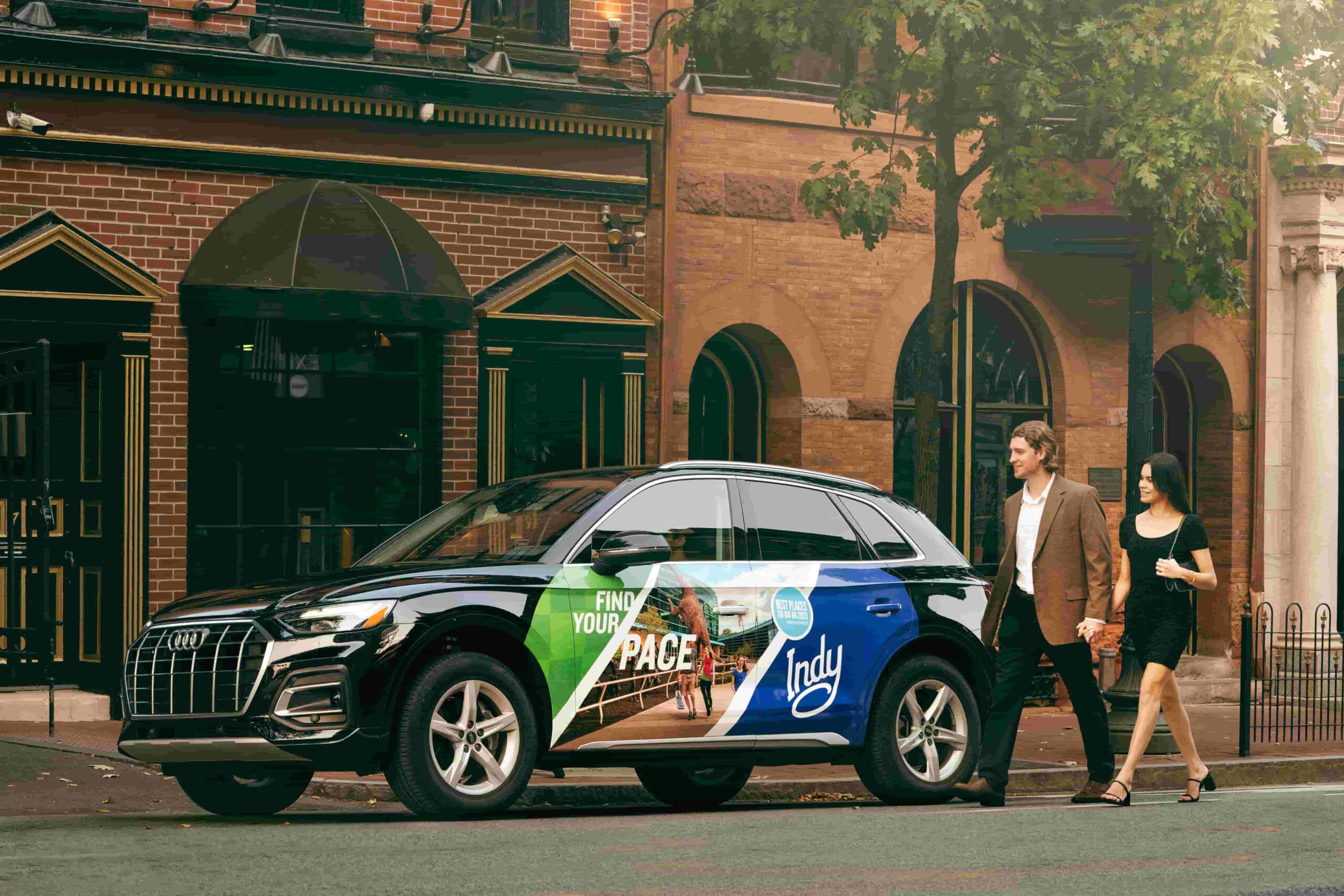
Rideshare advertising places branded wraps on vehicles operated by drivers working with platforms like Uber, Lyft, and delivery services. These vehicles travel throughout cities, covering residential neighborhoods, retail districts, entertainment zones, and downtown areas.
Unlike stationary placements, wrapped rideshare vehicles follow real traffic patterns and consumer movement throughout the day. This mobility means your message reaches audiences in locations where traditional out-of-home formats often cannot go.
Modern rideshare advertising campaigns include GPS tracking that records where vehicles travel, how long they spend in specific areas, and how many impressions they generate. This data supports attribution and ROI measurement in ways that static placements cannot replicate.
How Rideshare Advertising Campaigns Work
A typical rideshare campaign begins with market selection. You choose cities, neighborhoods, or event zones where you want visibility. A network of vetted drivers then receives vehicle wraps featuring your brand.
Drivers continue their normal rideshare and delivery routes while your ads travel throughout target areas. GPS technology tracks every mile, logging routes, dwell times, and geographic coverage.
You receive regular campaign reports showing where your ads appeared, how many impressions they generated, and how exposure correlates with your business goals.
Common Campaign Formats in Rideshare Advertising
Rideshare advertising can be tailored to different campaign goals, from broad market awareness to highly targeted event activations. Common formats include:
- Mass Market campaigns deploy wrapped vehicles across entire cities and metropolitan areas for broad awareness.
- Conference Takeovers position branded vehicles at entrances, hotels, and networking hubs during major events.
- SWARMS coordinate groups of 5+ wrapped vehicles at specific venues during high-traffic windows like sporting events or festivals.
- Branded Chauffeur offers premium executive transportation using fully wrapped vehicles for VIP transport at conferences and events.
What Is Traditional Transit Advertising?
Traditional transit advertising includes placements on buses, subways, trains, taxis, bus shelters, and transit stations. These formats have been part of the out-of-home advertising mix for decades.
Transit ads reach commuters and urban audiences along fixed routes. Placements can include bus exterior panels, interior cards, station posters, platform displays, and train wraps.
The primary advantage of transit advertising is consistent placement. Vehicles travel the same routes daily, creating repeated exposure for audiences who commute on those lines.
Standard Transit Advertising Placements
Transit advertising offers multiple placement options:
- Bus exterior ads appear on side panels or as partial or full wraps.
- Bus interior ads include overhead cards, seat backs, and digital screens.
- Bus shelter posters target pedestrians and commuters waiting for transit.
- Train and subway ads include platform posters, train wraps, and in-car displays.
- Transit station ads appear in high-traffic station areas and concourses.
Limitations of Fixed-Route Transit Advertising
Traditional transit advertising has some limitations that matter to modern marketers. Vehicles follow the same routes, which limits geographic flexibility. If your target audience lives in neighborhoods outside those routes, your ads won’t reach them.
Measurement is another challenge. Many transit advertising providers rely on traffic counts and ridership data to estimate impressions. These estimates lack the precision of GPS-verified tracking.
Contract terms often require longer commitments, reducing your ability to adjust campaigns based on performance or market changes.
How Do Costs Compare Between Rideshare and Transit Advertising?
Advertising costs vary significantly by format, city, and campaign duration. Understanding cost structures helps you compare options and budget effectively.
Transit advertising typically sells on four-week cycles. Rideshare advertising often offers more flexible terms, including month-to-month options that reduce long-term commitment risk.
CPM (cost per thousand impressions) is the standard metric for comparing media costs across channels. According to industry research, transit advertising CPMs often fall between $3 and $8 depending on placement and market, making it one of the more cost-efficient out-of-home formats.
Transit Advertising Cost Ranges
Transit advertising costs depend on placement type and market size:
- Bus interior ads typically range from $35 to $150 per placement monthly.
- Bus exterior panels often cost $500 to $3,000 per bus monthly.
- Full bus wraps can run $2,000 to $6,500 or more per bus monthly.
- Bus shelter posters typically range from $1,000 to $3,500 per location monthly.
- Train and subway ads vary from $75 for interior cards to $6,000 for exterior panels.
Major metro markets and high-traffic routes command higher rates. Downtown placements and premium station locations often cost more than suburban routes.
Rideshare Advertising Cost Factors
Rideshare advertising costs depend on fleet size, campaign duration, geographic coverage, and whether you’re running a general awareness campaign or a targeted event activation.
Campaigns can scale from a few vehicles for local activations to hundreds of vehicles for national awareness efforts. This scalability means you can match investment levels to your specific goals.
Month-to-month flexibility lets you test markets without locking into long contracts. If a campaign performs well, you can expand. If results fall short, you can adjust without penalty.
What Affects Total Campaign Cost?
Several factors influence your total investment in either format:
- Market size: Major metros cost more than regional markets.
- Campaign duration: Longer campaigns often reduce monthly rates.
- Fleet or placement count: More vehicles or placements increase total spend.
- Creative production: Design and installation add to upfront costs.
- Measurement and attribution: Advanced tracking may require additional investment.
How Does Targeting Differ Between Rideshare and Transit Advertising?
Targeting precision is one of the biggest differentiators between these two formats. Your ability to reach specific audiences in specific locations affects campaign efficiency and ROI.
Traditional transit follows fixed routes determined by municipal transit authorities. You can select routes that pass through target areas, but you cannot redirect vehicles based on real-time conditions or campaign performance.
Rideshare advertising offers geographic flexibility. You can target specific neighborhoods, business districts, event zones, or even individual corridors. Vehicles go where audiences are, not where transit lines happen to run.
Transit Advertising Targeting Capabilities
With traditional transit, targeting happens at the route level. You can select:
- Routes that pass through target neighborhoods
- Station placements in high-traffic areas
- Lines that serve specific demographics based on ridership data
However, you cannot adjust routes mid-campaign. If your target audience shifts or an unexpected event creates new opportunities, transit placements remain where they are.
Measurement often relies on ridership estimates and traffic counts rather than verified exposure data.
Rideshare Advertising Targeting Capabilities
Rideshare advertising offers more granular targeting options:
- Neighborhood-level deployment: Concentrate vehicles in specific zip codes or districts.
- Event targeting: Deploy fleets around conferences, sporting events, festivals, and trade shows.
- Behavioral targeting: Recruit drivers whose normal routes match your target areas.
- Daypart optimization: Focus visibility during peak hours or specific time windows.
- Real-time adjustments: Shift deployment based on performance data or market conditions.
Carvertise gives you the flexibility to deploy Mass Market campaigns across entire cities or concentrate vehicles for event activations using the SWARMS format that puts multiple branded vehicles at key venues during high-traffic windows.
Which Format Offers Better Geographic Control?
Rideshare advertising offers superior geographic control for most campaign objectives. Vehicles can reach residential neighborhoods, commercial districts, entertainment zones, and event venues that transit routes may not serve.
If your audience is concentrated along specific transit corridors, traditional transit can work well. But if you need flexibility, hyperlocal reach, or the ability to follow audience movement, rideshare advertising has clear advantages.
How Do You Measure ROI for Out-of-Home Advertising?
Measurement has historically been the biggest challenge in out-of-home advertising. Unlike digital channels, OOH lacks native click tracking. However, modern attribution methods now make it possible to connect physical ad exposure to real business outcomes.
The shift toward measurable OOH is accelerating. Industry data shows that brands increasingly expect the same accountability from outdoor advertising that they get from digital channels.
GPS tracking, mobile device data, and foot traffic attribution have changed what’s possible. These tools let you move beyond estimated impressions to verified exposure and attributed actions.
Traditional Transit Advertising Measurement Methods
Traditional transit advertising measurement typically includes:
- Ridership data: Counts of passengers using specific routes or stations.
- Traffic counts: Estimates of vehicles and pedestrians passing ad placements.
- Reach and frequency estimates: Modeled projections based on route coverage.
- Brand lift studies: Surveys comparing exposed and unexposed audiences.
These methods offer directional insights but lack the precision of GPS-verified tracking. You know approximately how many people might have seen your ad, but you don’t have verified data on actual exposure.
Rideshare Advertising Measurement Methods
GPS-tracked rideshare advertising enables more sophisticated measurement:
- Verified impressions: GPS logs confirm where vehicles traveled and for how long.
- Neighborhood-level analytics: Dashboard reporting breaks down exposure by area and time.
- Foot traffic attribution: Track whether exposed audiences visited your locations.
- Weblift studies: Measure whether OOH exposure drove website visits.
- Conversion tracking: Use promo codes, dedicated phone numbers, or landing pages to attribute actions.
Carvertise delivers dashboard analytics that break down exposure by neighborhood and time of day. This granular data lets you understand exactly where your campaign generated visibility and how that visibility connects to business outcomes.
What Attribution Models Work for Vehicle Advertising?
Attribution for OOH advertising typically uses one of several approaches:
- Foot traffic lift: Compare store visits from exposed audiences versus a control group.
- Digital retargeting: Serve digital ads to mobile devices that were near your OOH placements.
- Brand lift surveys: Measure awareness, recall, and consideration among exposed audiences.
- Direct response tracking: Attribute conversions using unique codes, phone numbers, or URLs.
The most effective campaigns often combine multiple attribution methods to build a complete picture of campaign performance.
What Makes GPS Tracking Critical for Campaign Analytics?
GPS tracking is the foundation of modern rideshare advertising measurement. It provides verified data on where your ads appeared, how long they stayed in specific areas, and how many impressions they generated.
Without GPS tracking, you’re relying on estimates. With it, you have documented proof of campaign delivery.
This matters for budget justification. When you can show stakeholders exactly where their investment went and what it produced, you build confidence in the channel and make it easier to secure future budgets.
How GPS Tracking Improves Campaign Performance
GPS data does more than verify delivery. It enables optimization:
- Mid-campaign adjustments: Shift vehicles toward higher-performing areas.
- Daypart optimization: Identify which time windows generate the most exposure.
- Route pattern analysis: Understand which corridors deliver the best visibility.
- Event performance tracking: Measure impact during specific activations.
Near-real-time data means you don’t have to wait until the campaign ends to understand performance. You can make informed decisions while the campaign is still running.
What Data Should Your Dashboard Include?
When evaluating rideshare advertising vendors, look for dashboards that include:
- Total miles driven and verified impressions
- Heat maps showing geographic coverage
- Breakdowns by neighborhood, zip code, or custom geofence
- Time-of-day distribution of exposure
- Driver activity and route verification
Carvertise delivers granular dashboard analytics that show exactly where your branded vehicles traveled, how long they spent in target areas, and how that exposure translates to measurable impressions.
When Should You Choose Rideshare Advertising Over Transit?
Both formats have valid use cases. The right choice depends on your specific objectives, target audience, and measurement requirements.
Rideshare advertising works better when you need geographic flexibility, GPS-verified tracking, or the ability to reach audiences outside traditional transit corridors. It’s particularly effective for event activations, hyperlocal targeting, and campaigns where attribution matters.
Traditional transit advertising can work well for fixed-route markets where your audience overlaps with transit ridership patterns. If you’re targeting commuters on specific subway lines or bus routes, transit placements may make sense.
Scenarios Where Rideshare Advertising Excels
Consider rideshare advertising when:
- You need to reach residential neighborhoods and commercial districts that transit doesn’t serve
- Your campaign includes event activations or conference takeovers
- You want GPS-verified tracking and attribution
- You need flexibility to adjust campaigns based on performance
- You’re launching in markets without extensive transit infrastructure
- You want month-to-month terms without long-term contracts
Scenarios Where Transit Advertising May Fit
Transit advertising may work when:
- Your target audience aligns closely with specific transit routes
- You’re focused on commuter audiences in dense urban cores
- You have existing relationships with transit authorities or vendors
- Your measurement requirements are less demanding
Can You Combine Both Formats?
Yes. Many brands run integrated OOH campaigns that include both transit placements and rideshare advertising. This approach maximizes reach while using each format’s strengths.
For example, you might use transit station ads to reach commuters during their daily routines while deploying rideshare vehicles to cover event zones, suburban markets, and neighborhoods that transit doesn’t reach.
How to Evaluate Rideshare Advertising Vendors
Choosing the right vendor affects campaign success. Look for partners who offer verified tracking, flexible terms, and transparent reporting.
Not all rideshare advertising platforms are equal. Some rely on estimated impressions rather than GPS-verified data. Others lock you into long contracts or lack the driver network to deliver meaningful coverage.
Do your due diligence before committing. Ask for case studies, request sample reports, and understand exactly what measurement capabilities each vendor offers.
Questions to Ask Potential Vendors
When evaluating vendors, ask:
- How do you track and verify impressions?
- What does your reporting dashboard include?
- How large is your driver network in my target markets?
- What contract terms do you offer?
- Can you show case studies from similar campaigns?
- What attribution capabilities do you support?
- How do you handle creative design and installation?
Red Flags to Watch For
Be cautious of vendors who:
- Cannot show GPS-verified tracking data
- Rely heavily on estimated or modeled impressions
- Require long-term contracts with limited flexibility
- Cannot demonstrate experience in your target markets
- Lack transparent reporting and dashboard access
How to Set Up a Successful Rideshare Advertising Campaign
A successful campaign starts with clear objectives. Are you building awareness, driving store visits, or supporting an event launch? Your goals shape every other decision.
Next, define your target geography. Which cities, neighborhoods, or events matter most? The more specific you can be, the more effective your targeting will be.
Finally, establish how you’ll measure success. What KPIs matter? What attribution methods will you use? Answering these questions upfront sets you up for meaningful results.
Step 1: Define Campaign Objectives
Start by clarifying what you want to achieve:
- Awareness: Generate visibility and brand recognition across target markets.
- Consideration: Drive website visits, search activity, or information requests.
- Conversion: Generate store visits, leads, or sales.
- Event support: Dominate visibility around a specific event or activation.
Your objectives determine which campaign format, fleet size, and measurement approach make sense.
Step 2: Select Target Markets and Geographies
Decide where you want your message to appear:
- Specific cities or metropolitan areas
- Neighborhoods or zip codes with high target audience concentration
- Event venues, conference centers, or stadium zones
- Retail corridors or competitor locations
Geographic precision improves efficiency. The more focused your targeting, the higher your effective reach among your actual audience.
Step 3: Choose Campaign Format and Fleet Size
Select the format that matches your objectives:
- Mass Market for broad citywide awareness
- Conference Takeovers for event-focused visibility
- SWARMS for concentrated venue saturation
- Branded Chauffeur for premium VIP experiences
Fleet size depends on market coverage goals and budget. Start with enough vehicles to generate meaningful frequency in your target areas.
Step 4: Develop Creative That Works on Vehicles
Vehicle wraps need designs that work at speed and distance. Keep these principles in mind:
- Use bold, high-contrast visuals that are visible from a distance
- Keep text minimal and readable at a glance
- Prioritize brand recognition over detailed messaging
- Design for multiple viewing angles
Work with your vendor’s creative team to optimize designs for the vehicle types in your campaign.
Step 5: Launch, Monitor, and Optimize
Once your campaign launches, monitor performance through your dashboard:
- Track geographic coverage and verify vehicles are in target areas
- Review impression data by neighborhood and time of day
- Identify high-performing areas for potential expansion
- Adjust deployment if certain areas underperform
Use insights from early campaign data to optimize during the campaign, not just afterward.
What Results Can You Expect from Rideshare Advertising?
Results vary based on campaign objectives, market conditions, and creative execution. However, rideshare advertising consistently delivers strong brand recall and visibility in real-world environments.
Nielsen research has shown that transit advertising formats generate among the highest recall rates of any advertising medium. Mobile formats like wrapped vehicles often perform even better because motion naturally attracts attention.
The ability to verify exposure through GPS tracking means you can document results with confidence. You’re not guessing—you have data showing exactly what your campaign delivered.
Metrics to Track for Campaign Success
Focus on metrics that connect to your objectives:
- Verified impressions: How many people were exposed to your ads?
- Geographic coverage: Did you reach your target areas effectively?
- Foot traffic lift: Did exposed audiences visit your locations at higher rates?
- Brand lift: Did awareness, recall, or consideration improve?
- Digital engagement: Did web traffic or search volume increase during the campaign?
- Direct response: Did promo codes, dedicated numbers, or landing pages generate conversions?
Making the Right Choice for Your Campaign
Both rideshare advertising and traditional transit advertising can play a role in your media mix. The right choice depends on your specific needs.
If you value geographic flexibility, GPS-verified measurement, and the ability to reach audiences beyond fixed transit routes, rideshare advertising offers clear advantages. If your audience aligns tightly with specific transit corridors and measurement is less critical, traditional transit may work.
For most modern brands and agencies, the combination of mobility, targeting precision, and attribution capability makes rideshare advertising the stronger option for campaigns where accountability matters.
Carvertise delivers all of these capabilities through the nation’s largest rideshare advertising network. With over 550,000 registered drivers, GPS-verified tracking, and flexible campaign options, Carvertise helps you reach your target audience with measurable, data-backed results. Visit carvertise.com to learn how mobile billboard campaigns can work for your brand.
FAQs About Rideshare vs Transit Advertising Costs Targeting and ROI
What is the average CPM for rideshare advertising?
Rideshare advertising CPMs vary by market and campaign type but often fall competitively compared to other out-of-home formats. The advantage is that impressions are GPS-verified rather than estimated, giving you more confidence in what you’re actually paying for.
How does GPS tracking improve rideshare advertising ROI?
GPS tracking verifies where your ads appeared and for how long. Carvertise uses this data to confirm delivery, support attribution studies, and enable mid-campaign optimization. This transparency helps you connect spending to measurable outcomes.
Can rideshare advertising reach neighborhoods that transit doesn’t serve?
Yes. Rideshare vehicles travel throughout residential neighborhoods, retail districts, entertainment zones, and event venues that transit routes may not cover. Carvertise gives you flexibility to target specific areas based on where your audience actually spends time.
What is the minimum campaign duration for rideshare advertising?
Campaign durations vary by vendor. Many rideshare advertising providers, including Carvertise, offer month-to-month terms without requiring long-term contracts. This flexibility lets you test markets and adjust based on performance.
How do you measure foot traffic attribution for out-of-home ads?
Foot traffic attribution uses mobile device data to identify devices exposed to OOH placements and then tracks whether those devices appear at target locations. Carvertise supports foot traffic measurement through attribution partnerships that connect ad exposure to store visits.
Is rideshare advertising effective for event marketing?
Absolutely. Event campaigns are one of the strongest use cases for rideshare advertising. Carvertise SWARMS deploy coordinated vehicle fleets to conferences, sporting events, and festivals, creating concentrated visibility exactly where your audience gathers.