

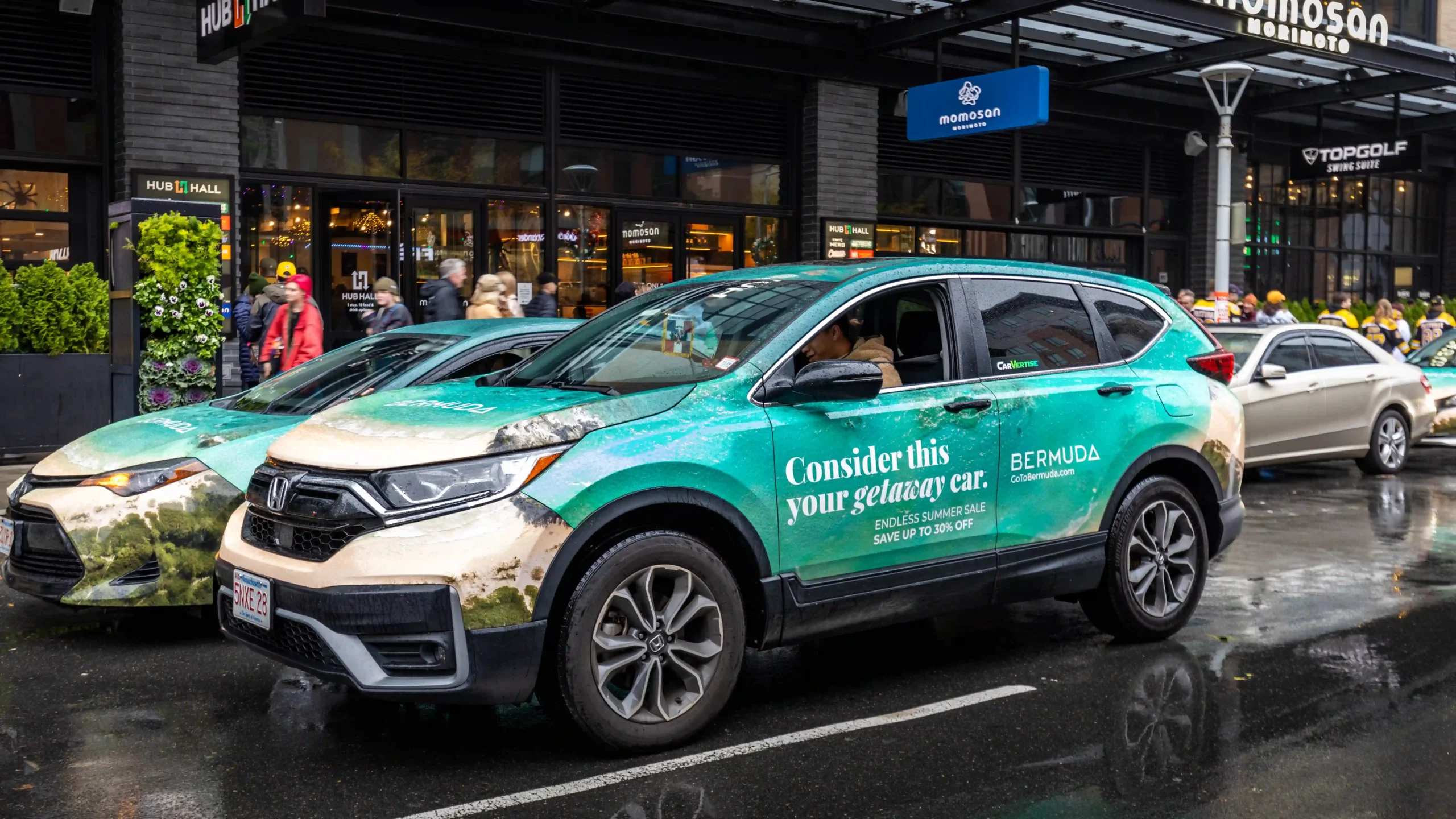
You’re planning an event promotion or retail launch, and you need visibility that actually shows up where your audience spends time. Rideshare advertising gives you something fixed placements can’t: mobile reach that follows consumer movement throughout entire cities. Carvertise helps brands turn this mobility into measurable campaigns with GPS-verified tracking and real-time analytics.
This guide walks you through everything you need to know about choosing rideshare advertising for event promotions, retail launches, and citywide awareness campaigns. You’ll learn how GPS tracking works, what makes rideshare different from traditional transit, and how to measure campaign performance.
Key Takeaways: Rideshare Advertising for Events and Retail in 2026
- Rideshare advertising puts your brand on vehicles that travel through high-traffic areas, events, and neighborhoods all day long.
- GPS tracking lets you verify exactly where your campaign ran and measure exposure by zone, time of day, and route.
- Event swarms and conference takeovers concentrate wrapped vehicles at specific venues during peak attendance windows.
- Carvertise gives you flexible month-to-month campaigns with no long-term contracts and granular dashboard analytics.
- Combining rideshare ads with digital retargeting creates multiple touchpoints that connect offline exposure to online engagement.
What Is Rideshare Advertising and How Does It Work?
Rideshare advertising places branded vehicle wraps on cars operated by drivers working with platforms like Uber, Lyft, and delivery services. These vehicles travel throughout cities, covering residential neighborhoods, retail districts, entertainment zones, and downtown areas throughout each day.
Unlike fixed placements that stay in one location, wrapped rideshare vehicles follow real traffic patterns and consumer movement. Your message reaches audiences in neighborhoods, parking lots, event venues, and commuter routes where traditional outdoor formats often can’t go.
How Rideshare Campaigns Get Deployed
A typical campaign starts with market selection. You choose cities, neighborhoods, or event zones where you want visibility. A network of vetted drivers then receives vehicle wraps featuring your brand creative.
Drivers continue their normal rideshare and delivery routes while your ads travel throughout target areas. GPS technology tracks every mile, logging routes, dwell times, and geographic coverage. You receive regular campaign reports showing where your ads appeared and how exposure aligned with your goals.
Common Campaign Formats You Can Run
Rideshare advertising can be tailored to different objectives. Mass Market campaigns deploy wrapped vehicles across entire metropolitan areas for broad awareness. Conference Takeovers position branded vehicles at entrances, hotels, and networking hubs during major events.
SWARMS coordinate groups of wrapped vehicles at specific venues during high-traffic windows like sporting events, festivals, or community gatherings. Branded Chauffeur offers premium executive transportation using fully wrapped vehicles for VIP transport at conferences and events.
Why Brand Marketers and Media Planners Choose Rideshare Ads
Modern marketers face pressure to prove performance across every channel. For digital media, that often means clicks, conversions, and audience data. For out-of-home advertising, measurement has traditionally been harder to pin down.
Rideshare advertising helps close that gap by combining high-visibility mobile media with GPS-based campaign tracking and reporting. Instead of relying only on modeled impressions, you can see where vehicles traveled, which areas received exposure, and how the campaign supported broader marketing goals.
Reaching Audiences Beyond Fixed Routes
Traditional transit advertising follows predetermined routes. Buses run the same lines. Subway ads stay in stations. This predictability works for some campaigns, but limits geographic flexibility.
Rideshare vehicles naturally travel through busy consumer areas based on real demand. They cover shopping districts, nightlife areas, residential neighborhoods, and event locations throughout the day. This means your brand shows up in places fixed transit simply can’t reach.
Targeting High-Value Moments and Locations
You can focus campaigns around specific opportunities. Launching a product near a major convention? Deploy vehicles near the convention center, hotels, and networking venues. Opening a new retail location? Concentrate coverage in surrounding neighborhoods during opening week.
This location flexibility lets you align advertising exposure with the moments that matter most for your business objectives.
If you already have an event, market, or retail launch in mind, contact Carvertise to map the best routes, timing windows, and coverage zones for your campaign.
How GPS Tracking Delivers Measurable Advertising Results
GPS tracking is one of the most important capabilities to evaluate when comparing rideshare advertising providers. At a basic level, GPS tracking should verify vehicle movement and campaign delivery. Strong GPS-verified analytics go further than simply showing a vehicle was on the road.
Carvertise provides visibility into where campaign vehicles traveled, which neighborhoods and business districts were covered, how many miles were driven, and whether vehicles reached intended market areas. You can also see how campaign delivery aligned with your media plan.
What GPS Data Actually Shows You
GPS route tracking confirms where campaign vehicles traveled during the activation. This is especially valuable for campaigns built around specific venues, event areas, retail corridors, downtown districts, airports, hotels, or high-value neighborhoods.
For brands investing in mobile out-of-home advertising, route tracking provides a clear view of where the campaign actually delivered exposure. No guessing. No estimates without verification.
Connecting GPS Data to Impression Reporting
Impression reporting helps estimate how many people had the opportunity to see your campaign. While impressions are still modeled, they become more useful when paired with verified route activity and market-specific deployment data.
This combination gives you a better understanding of both campaign scale and geographic coverage. You can see not just how many impressions were generated, but where those impressions occurred.
Using Rideshare Advertising for Event Promotions
Events create concentrated audiences in specific locations during defined time windows. Concerts, conferences, sporting events, festivals, and trade shows all bring large numbers of people to predictable areas. Rideshare advertising lets you meet those audiences where they gather.
Conference Takeovers and Trade Show Activations
Major industry conferences draw attendees from across the country to specific cities and venues. Branded vehicles strategically deployed at key entrances, exits, hotels, and networking hubs intercept high-intent attendees during peak arrival, departure, and networking windows.
Carvertise Conference Takeovers typically operate during 4-8 hour blocks designed to reach attendees at the moments that matter most. This creates repeated exposure throughout the conference experience without requiring booth space or sponsorship packages.
Sporting Events and Festival Swarms
SWARMS coordinate fleets of wrapped vehicles around specific venues or event districts during high-traffic windows. For a professional sports game, vehicles might drive together around the stadium before and after the event, or park in high-visibility areas near entrances and exits.
This approach creates concentrated visibility that associates your brand with high-equity events. Attendees see multiple branded vehicles during their arrival and departure, reinforcing your message through repetition.
Planning around a game, festival, concert, race, or citywide event? Talk to Carvertise about building a SWARM around your event schedule, venue layout, and audience movement patterns.
Community Events and Local Activations
Not every event is a national conference or professional sports game. Local festivals, farmers markets, charity runs, and community gatherings also create opportunities for targeted visibility.
Rideshare campaigns can scale up or down based on event size. A local grand opening might use a smaller fleet focused on surrounding neighborhoods. A citywide festival might deploy vehicles throughout multiple zones.
How Retail Brands Use Rideshare Advertising for Launches
Retail launches depend on visibility at scale. Consumers need to see your product repeatedly before they visit a store or search online. Rideshare advertising delivers high-frequency exposure in busy retail corridors with flexible campaign coverage across multiple neighborhoods.
Building Awareness Before and During Store Openings
New store openings benefit from concentrated local awareness. Wrapped vehicles traveling through surrounding neighborhoods create repeated exposure for residents, commuters, and shoppers in the immediate trade area.
Carvertise Mass Market campaigns deploy vehicles across targeted cities so your brand shows up repeatedly in real life. This builds familiarity before customers ever walk through your doors.
Supporting Product Launches and Seasonal Promotions
Product launches require rapid awareness generation. Traditional outdoor campaigns often require long lead times and extended commitments. Rideshare advertising offers faster deployment and flexible campaign durations.
Seasonal promotions can ramp up during peak shopping periods and scale back afterward. Month-to-month flexibility means you’re not locked into placements that no longer align with your marketing calendar.
Launching a store, restaurant, product, or seasonal campaign? Contact Carvertise to discuss market coverage, fleet size, timing, pricing, and reporting options.
Reaching Retail Districts and Shopping Centers
Rideshare vehicles naturally travel through commercial areas where consumers shop. Drivers pick up and drop off passengers at malls, shopping centers, restaurants, and entertainment venues throughout the day.
This organic traffic pattern means your ads appear in retail environments without requiring specific placement purchases. Your brand shows up alongside consumer shopping behavior, reinforcing purchase intent.
Rideshare Advertising vs. Traditional Transit Advertising
If you’re comparing rideshare advertising with traditional transit options like buses, trains, and subway ads, several key differences affect campaign performance and measurement.
Route Flexibility and Geographic Coverage
Traditional transit follows fixed routes. A bus ad travels the same streets on the same schedule every day. This creates consistent exposure for audiences along that route, but limits reach to those specific areas.
Rideshare vehicles follow demand patterns, covering different neighborhoods throughout the day. They reach residential areas, commercial districts, event venues, and entertainment zones based on where passengers need to go. This creates broader geographic coverage across your target market.
Measurement and Attribution Capabilities
Traditional transit campaigns typically rely on estimated impressions based on route traffic counts and ridership data. These numbers provide general scale but limited geographic precision.
Rideshare campaigns with GPS tracking show exactly where vehicles traveled. You can verify coverage by neighborhood, see dwell time near specific locations, and connect exposure data to broader attribution efforts. According to research from the Out of Home Advertising Association of America (OAAA), 78% of OOH ad viewers take some form of action after exposure.
Contract Flexibility and Deployment Speed
Traditional transit advertising often requires longer commitments and advance booking. Premium placements on popular routes may not be available when you need them.
Rideshare advertising typically offers more flexibility. Carvertise provides month-to-month campaigns with no long-term commitments, allowing you to adjust based on business needs and marketing calendar changes.
How to Measure Rideshare Advertising ROI
Measuring out-of-home advertising performance has traditionally been challenging. Rideshare advertising with GPS tracking and attribution tools brings more precision to campaign measurement.
GPS-Verified Route Tracking and Heatmaps
Route tracking confirms where campaign vehicles traveled during the activation. Heatmaps visualize this data, showing concentration areas, coverage gaps, and exposure patterns across your target geography.
This information helps you understand whether the campaign reached intended areas. You can verify that vehicles spent time near key locations like retail stores, event venues, or competitor locations.
Impression Reporting and Reach Estimates
Impression reporting estimates how many people had the opportunity to see your campaign. Modern rideshare platforms combine GPS data with population density, traffic patterns, and time-of-day factors to generate these estimates.
While impressions remain modeled rather than directly measured, pairing them with verified route data provides more confidence in reach calculations. You know the vehicles were actually in high-traffic areas, not just assumed to be there.
Attribution and Conversion Tracking
Advanced campaigns can connect offline exposure to online actions. Mobile retargeting integrations identify devices exposed to your campaign and serve digital ads to those users afterward.
Store visit lift analysis measures whether people who saw your wrapped vehicles subsequently visited your retail locations. Website lift tracking examines increases in direct traffic and branded search activity correlated with campaign timing.
Want to understand what reporting would look like for your campaign? Contact Carvertise to discuss GPS coverage maps, impressions, demographic data, Device ID Passback, and attribution options.
Building a Citywide Brand Awareness Campaign
Some campaigns aim for broad market coverage rather than targeted event or retail activations. Citywide awareness campaigns deploy wrapped vehicles throughout metropolitan areas to build general brand recognition.
Market Saturation Through Fleet Deployment
Large-scale campaigns might deploy dozens or hundreds of wrapped vehicles across a market. This creates a distributed presence that reaches consumers repeatedly throughout their daily routines.
Vehicles traveling through different neighborhoods, commercial areas, and commuter routes generate cumulative exposure. Over time, this repetition builds brand familiarity and recall.
Multi-Market Expansion Campaigns
Brands expanding into new geographic markets can use rideshare advertising to establish presence quickly. Rather than negotiating individual billboard contracts or transit authority agreements, you can activate multiple markets through a single rideshare advertising partner with GPS analytics.
This approach supports regional or national rollouts with consistent creative and reporting across markets. You get comparable data from each city, making performance comparisons easier.
Combining Awareness with Digital Retargeting
Citywide campaigns work well when paired with digital retargeting. As wrapped vehicles generate exposure throughout a market, you can serve digital ads to devices that were in proximity to those vehicles.
This creates a multi-touchpoint experience. Consumers see your brand on the street, then see it again in their social feeds or display networks. The combination reinforces your message and drives online engagement.
What to Look for When Choosing a Rideshare Advertising Partner
Not every rideshare advertising provider offers the same capabilities. When evaluating options, focus on tracking, reporting, driver networks, and campaign support.
GPS Tracking and Campaign Analytics
Look for partners that provide verified GPS tracking rather than estimated route coverage. You should be able to see actual vehicle movement data, not just assumptions about where vehicles might travel.
Dashboard access matters too. Near real-time or regular reporting gives you visibility into campaign performance while it’s still running, allowing for optimization if needed.
Driver Network Size and Quality
Larger driver networks provide more flexibility for market coverage and campaign scale. Carvertise operates the nation’s largest rideshare advertising network with 550,000 registered drivers, enabling campaigns across multiple markets without geographic constraints.
Driver vetting also affects campaign quality. Top-rated rideshare drivers who maintain their vehicles and drive consistently deliver better brand representation than drivers with poor ratings or inconsistent activity.
Creative and Installation Support
Vehicle wrap design requires specific expertise. Creative that works on a billboard doesn’t automatically work on a moving vehicle. Look for partners that offer design support optimized for mobile impact.
Installation quality affects how your brand appears on the road. Professional wrap installation ensures consistent appearance and durability throughout the campaign duration.
Campaign Flexibility and Contract Terms
Marketing calendars change. Product launches get delayed. Events get rescheduled. Partners that offer month-to-month flexibility rather than long-term contracts give you room to adapt.
Ask about deployment timelines too. How quickly can a campaign launch? How much lead time is required for vehicle wrapping and driver recruitment?
Carvertise supports brands with campaign strategy, creative coordination, vehicle wrapping, driver communication, GPS activity tracking, coverage maps, impression reporting, demographic insights, Device ID Passback, and post-campaign reporting. Contact Carvertise to discuss the right campaign structure for your goals.
Common Questions About Rideshare Advertising Campaigns
How Long Should a Rideshare Advertising Campaign Run?
Campaign duration depends on your objectives. Event-focused campaigns might run for days or weeks around specific dates. Retail launch campaigns typically run 4-8 weeks to build awareness. Brand awareness campaigns often run 3-6+ months for sustained visibility.
Shorter campaigns work for concentrated bursts of exposure. Longer campaigns build cumulative reach and frequency over time.
Integration with Broader Marketing Strategies
Rideshare advertising works well alongside other channels. QR codes on vehicle wraps can drive mobile engagement. Promo codes track conversions from offline exposure. Landing pages capture leads from campaign viewers.
Digital retargeting connects offline impressions to online touchpoints. Social media campaigns can amplify vehicle sightings when viewers share photos of wrapped cars they encounter.
Getting Started with Your Rideshare Advertising Campaign
Starting a rideshare advertising campaign involves several steps: defining your objectives, selecting target markets, developing creative, and establishing measurement goals.
Define Your Campaign Objectives
Are you driving awareness for a new product? Supporting a retail launch? Creating visibility around an event? Expanding into new markets? Your objectives shape everything from market selection to campaign duration.
Clear objectives also help establish success metrics. Know what you’re trying to achieve so you can measure whether the campaign delivered.
Select Target Markets and Zones
Choose cities and neighborhoods aligned with your audience. Consider population density, demographic fit, and proximity to retail locations or event venues where you want visibility.
For event campaigns, focus on areas where attendees will be: convention centers, hotels, restaurants, and transportation hubs. For retail campaigns, prioritize neighborhoods surrounding your stores.
Develop Creative for Mobile Impact
Vehicle wrap creative needs to work at speed and from varying distances. Simple messages, bold colors, and clear logos perform better than detailed text or complex imagery.
Your creative should be recognizable in seconds as vehicles pass by or sit in traffic. Test designs for readability at different sizes and viewing angles.
In Conclusion: Choosing Rideshare Advertising for Your Next Campaign
Rideshare advertising offers something fixed placements can’t match: mobile reach that follows consumer movement throughout entire cities. GPS tracking brings measurement precision that traditional outdoor advertising lacks, helping you verify where campaigns ran and connect exposure to business outcomes.
For event promotions, retail launches, and citywide awareness campaigns, rideshare advertising delivers flexible deployment, geographic coverage, and data-backed reporting. The key is choosing a partner with verified tracking, strong driver networks, and campaign support that matches your objectives.
Whether you’re activating around a major conference, launching a new store, or building broad market awareness, rideshare advertising puts your brand in motion where your audience actually spends time.
FAQs About Rideshare Advertising for Events and Retail
How much does rideshare advertising cost compared to traditional transit ads?
Rideshare advertising typically offers competitive CPM rates compared to traditional transit options, with added benefits of GPS tracking and geographic flexibility. Carvertise provides campaigns with no long-term commitments and month-to-month flexibility, making budget management easier than fixed transit contracts. Request pricing with Carvertise here.
Can I target specific neighborhoods or just entire cities?
Yes, you can target specific neighborhoods, zip codes, and event zones. Rideshare advertising providers recruit drivers who live and work in your target areas, ensuring vehicles naturally travel through the neighborhoods you want to reach.
How do I know if my rideshare ads are actually being seen?
GPS tracking provides verified data on where campaign vehicles traveled. Carvertise gives you dashboard analytics showing route coverage, time spent in different zones, and exposure patterns. This lets you confirm your ads appeared in intended locations rather than relying on estimates.
What’s the difference between a SWARM and a Conference Takeover?
A SWARM is a timed activation within a larger campaign, using a subset of wrapped vehicles around a single event during defined high-traffic windows. A Conference Takeover is a dedicated multi-day campaign for conferences and trade shows, using a larger cohort of fully wrapped vehicles across continuous 4- or 8-hour shifts to reach attendees throughout the event schedule.
How quickly can a rideshare advertising campaign launch?
Campaign timelines depend on creative development, wrap production, and driver recruitment. Most campaigns can launch faster than traditional outdoor placements because rideshare advertising doesn’t require negotiating with transit authorities or securing fixed inventory.
Does rideshare advertising work for local businesses or just national brands?
Rideshare advertising works for both local and national brands. Local businesses benefit from concentrated neighborhood coverage around their locations. Carvertise helps businesses of all sizes deploy campaigns scaled to their market and budget, from single-market local campaigns to nationwide activations.
Whether you are activating around a major conference, launching a new store, supporting a product release, or building broad market awareness, Carvertise helps put your brand in motion where your audience is already moving.
Contact Carvertise to discuss pricing, campaign timing, fleet size, route strategy, and measurement options for your next rideshare advertising campaign.