

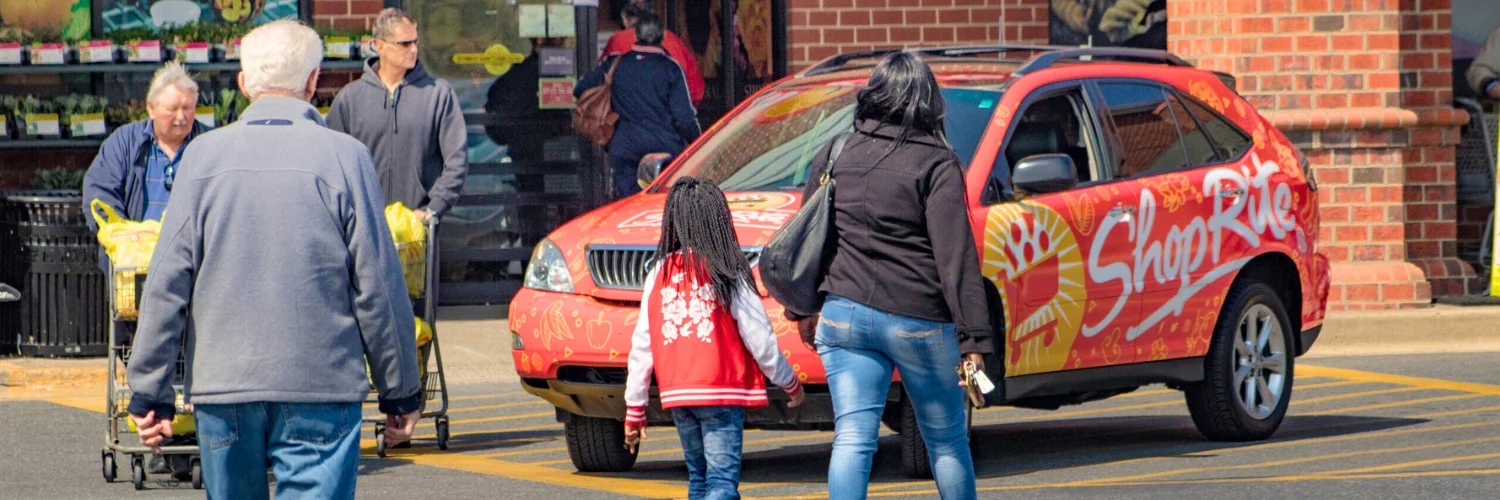
Fairfield sits at the intersection of I-80 and I-680 in Solano County, making it a critical crossroads between the Bay Area, Sacramento, and the North Bay. Traditional billboards along these interstates capture eyeballs but deliver wasted impressions. A San Francisco commuter heading to Sacramento sees your Fairfield restaurant billboard but will never visit. Meanwhile, Fairfield residents require targeted local reach that interstate billboards miss entirely.
Car advertising through Carvertise solves this by placing your message directly in Fairfield neighborhoods, on surface streets where locals actually live and shop, and in parking lots where purchasing decisions happen—not just on freeways where 70% of viewers live elsewhere.
Ready to strengthen your message with advertising that reaches actual Fairfield customers? Contact Carvertise to deploy wrapped vehicles that circulate through your target neighborhoods, business districts, and shopping areas with precision that interstate billboards can’t match.
Fairfield’s Billboard Paradox: High Traffic, Wrong Audience
Understanding Fairfield’s unique advertising challenge requires recognizing the disconnect between traffic volume and customer location.
I-80 moves an estimated 180,000+ vehicles daily through Fairfield, connecting San Francisco, Oakland, and Sacramento. I-680 handles another 100,000+ daily vehicles. These numbers make Fairfield appear ideal for billboard advertising—massive reach at reasonable rates compared to San Francisco or Sacramento markets.
But here’s the problem: commuter traffic dominates both corridors. Bay Area professionals commute to Sacramento government jobs. Vacaville and Dixon residents commute to Bay Area employment. Weekend travelers pass through heading to Napa, Tahoe, or the Sierra foothills. Very few of these drivers stop, shop, or make purchasing decisions in Fairfield itself.
For Fairfield businesses—restaurants, retail stores, service providers, healthcare facilities—this commuter traffic represents near-total waste. You’re paying to reach people who will never become customers because they don’t live, work, or shop in Fairfield.
Fairfield’s actual customer base lives in distinct zones: the northeast neighborhoods near Travis AFB housing military families and defense contractors; the Green Valley area with newer suburban development; downtown Fairfield’s historic core; and the retail corridor surrounding Solano Town Center. Reaching these audiences requires presence on surface streets, in residential neighborhoods, and local destinations, not on interstate billboards they hardly notice.
Why Military Presence Changes Fairfield’s Advertising Dynamics
Travis Air Force Base fundamentally shapes Fairfield’s demographics and consumer behavior in ways that demand specialized advertising approaches.
Travis AFB hosts approximately 13,000+ active duty personnel plus families, contractors, and civilian employees, making it one of the largest employers in Solano County. This population creates concentrated purchasing power but also unique targeting challenges.
Military families turn over regularly as personnel receive new assignments, creating constant demand for businesses serving newcomers—restaurants, retail, home services, automotive services, and family entertainment. These families need to discover local businesses quickly but lack the longstanding community knowledge that multi-generation residents possess.
Traditional billboard advertising fails this audience because military families don’t automatically associate interstate signage with “local” businesses. A billboard on I-80 reads as regional or even Sacramento-focused, not as a Fairfield neighborhood business relevant to someone living on base or in nearby housing.
Mobile billboards solve this by appearing in context where military families actually spend time: commissary parking lots, base perimeter areas, family housing neighborhoods, and retail areas frequented by military personnel. A wrapped vehicle in the Solano Town Center parking lot registers as “local” in ways that a distant highway billboard never can.
The Compound Effect: How Repeated Local Exposure Drives Action
Mobile billboard effectiveness in markets like Fairfield stems from psychological principles of memory formation and decision-making.
Consumer psychology research consistently shows that familiarity breeds trust. People prefer businesses they’ve encountered multiple times over completely unknown options, even when they can’t consciously recall where they saw the business before.
This “mere exposure effect” works powerfully in Fairfield’s tight geographic area. A resident might see your wrapped vehicle Tuesday morning at a traffic light on Texas Street, Thursday afternoon in the Solano Town Center parking lot, and Saturday at a stoplight near the movie theater. By the third encounter, your brand feels familiar—”local” and trustworthy—even if they’ve never consciously processed your advertising message.
Static billboards can’t replicate this effect because the context never changes. Seeing the same billboard at the same I-680 location daily doesn’t build familiarity—it creates habituation where the brain stops processing the stimulus entirely.
The most powerful advertising reaches people when they’re ready to make purchasing decisions. Mobile billboards excel here because they appear unpredictably during daily routines. Someone seeing your wrapped vehicle while pulling into the Solano Town Center parking lot is literally seconds away from deciding where to eat lunch or which stores to visit. That exposure influences immediate behavior in ways a billboard seen on their morning commute cannot.
Case Study: PenFed Credit Union Digital Engagement Campaign
PenFed Credit Union’s Tampa campaign demonstrates how mobile billboards drive measurable online engagement for service businesses in markets with military presence comparable to Fairfield.
Campaign Strategy and Execution
PenFed Credit Union deployed 15 rideshare vehicles across Tampa for three months, with strategic timing around the Stanley Cup Finals when regional attention and community engagement peaked. The campaign targeted both Tampa residents and event visitors, creating multiple exposure opportunities across different contexts.
The wrapped vehicles featured PenFed’s branding with clear digital calls-to-action designed to drive website visits where potential members could learn about products, rates, and membership eligibility. Rideshare drivers naturally circulated through business districts, residential areas, entertainment venues, and shopping centers—exactly where credit union target demographics spend time.
Carvertise partnered with StreetMetrics to track website visits following exposure to wrapped vehicles during a six-week tracking period, measuring actual behavior change rather than just brand impressions.
Verified Results
The campaign produced significant, measurable digital engagement:
Control group: 1,089,084 individuals exposed to baseline advertising generated 94 page visits.
Exposed group: 1,313,674 individuals exposed to Carvertise wrapped vehicles generated 283 page visits.
This represents a 201% increase in engagement rate for the exposed group. People who encountered PenFed wrapped vehicles were more than twice as likely to visit the credit union’s website compared to those who only saw baseline advertising.
For a financial services provider like PenFed, website visits represent serious intent—people researching rates, products, and membership requirements. The 283 page visits from exposed individuals represent qualified leads at different stages of the consideration process.
Application to Fairfield’s Military-Adjacent Market
PenFed’s success in Tampa translates directly to Fairfield’s dynamics, particularly given Travis Air Force Base’s presence.
Both Tampa (home to MacDill AFB) and Fairfield (Travis AFB) feature significant military populations with unique financial service needs—VA loans, military banking products, deployment-related services. Both markets include military families who regularly research and compare providers.
The 201% engagement lift demonstrates that mobile billboards don’t just create passive brand awareness—they drive immediate digital action. For Fairfield businesses with online research components (financial services, healthcare providers, real estate), similar lifts mean more website traffic, more qualified leads, and more conversions.
Strategic Targeting: Reaching Fairfield’s Distinct Demographics
Fairfield’s population diversity requires sophisticated audience targeting that goes beyond simple geographic boundaries.
Military families near Travis AFB respond to messaging emphasizing convenience, family-friendliness, and understanding of military lifestyle challenges. Mobile billboards circulating through base perimeter areas, family housing zones, and commissary access routes reach this audience during their daily routines. Evening and weekend coverage works best when families are actively shopping and dining.
Commuter residents living in Green Valley and newer developments but working in Bay Area cities need different positioning. They seek quality and efficiency that justify not driving to Bay Area alternatives. Target their limited Fairfield time—early mornings, evenings, and weekends when they’re actually in town making local purchasing decisions.
Downtown and established neighborhood residents represent long-term Fairfield community members who respond to messaging emphasizing local ownership and community involvement. Surface street coverage through downtown, older neighborhoods, and local gathering spots builds credibility with this demographic.
Industrial and business park workers create weekday lunch and after-work opportunity. Weekday coverage along industrial corridors and near business parks during lunch hours (11am-1pm) captures this audience at peak decision-making times.
Launch Your Fairfield Mobile Billboard Campaign
Carvertise makes billboard advertising work for Fairfield businesses by eliminating the commuter waste that plagues traditional outdoor media.
Initial consultation identifies which Fairfield demographics and neighborhoods drive your business, then matches those priorities with driver recruitment targeting specific routes and patterns. Campaign design balances interstate visibility with local context appropriateness.
GPS tracking verifies coverage from day one, showing exactly where your wrapped vehicles travel, how much time they spend in priority zones, and which neighborhoods receive maximum exposure. This transparency enables rapid optimization based on actual performance data.
Flexible campaign durations starting at one month allow seasonal testing, event-driven surge coverage around Travis AFB family days or Solano County Fair periods, or sustained presence that builds long-term recognition among Fairfield residents.
Contact Carvertise for a Fairfield-specific campaign proposal including military demographic targeting recommendations, neighborhood coverage strategies, and creative direction tailored to your specific customer base.
Frequently Asked Questions
How do mobile billboards avoid wasting impressions on I-80 commuters?
Driver recruitment focuses on Fairfield residents whose patterns emphasize surface streets, neighborhoods, and local destinations rather than long-distance interstate commuting. This concentrates impressions on people who actually live, work, and shop in Fairfield.
Can campaigns specifically target the Travis AFB community?
Yes. Carvertise recruits drivers whose routes include base perimeter areas, military housing neighborhoods, and retail/dining areas frequented by military families.
What’s the typical timeline for Fairfield campaign launch?
Campaigns launch within 2-4 weeks. Design approval takes 3-5 days, driver recruitment 1-2 weeks, and wrap production/installation 5-7 days.
How many vehicles provide effective Fairfield coverage?
This depends on objectives. Broad Fairfield awareness might need 8-12 vehicles covering multiple neighborhoods. Focused targeting (military families or specific neighborhoods) could succeed with 3-5 vehicles with precise routing.
Can campaigns adjust seasonally for military family turnover?
Yes. Campaign intensity can increase during PCS (Permanent Change of Station) seasons when military families arrive and actively search for local services, then reduce during lower-turnover periods.