

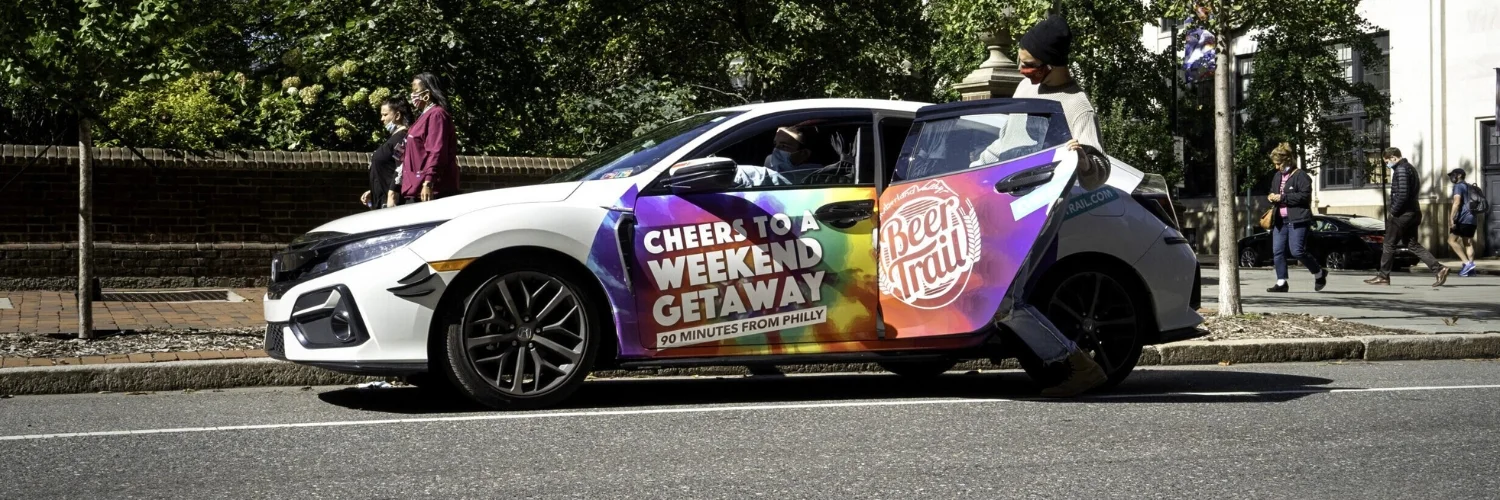
Santa Maria occupies a unique position on California’s Central Coast—too far from major metros to attract casual visitors, yet central to the region’s agricultural economy, wine country tourism, and military presence at Vandenberg Space Force Base. This geographic isolation creates advertising challenges that traditional billboards struggle to solve.
Car advertising through Carvertise adds exposure where it matters—circulating through residential areas near the Santa Maria Town Center, passing Vandenberg’s gates during shift changes, appearing in Old Town Santa Maria’s restaurant district, and reaching wine country visitors at tasting rooms along Foxen Canyon Road.
Ready to add meaningful exposure beyond 101 billboards that prioritize through-traffic over local customers? Contact Carvertise to deploy wrapped vehicles reaching Santa Maria’s actual consumer base in neighborhoods, commercial districts, and destination areas where purchasing decisions happen.
The Agricultural Economy’s Hidden Advertising Opportunity
Santa Maria’s agricultural dominance—strawberries, wine grapes, vegetables—creates a substantial workforce often overlooked by traditional outdoor advertising focused on highway corridors and affluent neighborhoods.
Agricultural workers, supervisors, and related industry employees represent tens of thousands of Central Coast residents with consistent income and local purchasing patterns. They need grocery stores, restaurants, automotive services, retail shopping, and entertainment options—but traditional advertising often bypasses them in favor of targeting tourists or higher-income demographics.
Mobile billboards reach this workforce naturally through residential neighborhood circulation in Santa Maria’s working-class areas, coverage near major employers during shift changes, and presence at shopping centers and commercial districts where agricultural workers actually spend money.
A wrapped vehicle passing workers heading to morning shifts plants awareness. The same vehicle appearing at Santa Maria Town Center during weekend shopping hours triggers recall and action.
This workforce also influences broader Santa Maria economic activity. Agricultural industry success drives local prosperity, supports retail and service businesses, and creates multiplier effects throughout the community. Businesses that authentically reach and serve this demographic build sustainable customer bases less dependent on tourism fluctuations or seasonal wine country traffic.
Vandenberg Space Force Base: A Concentrated Market Within the Market
Vandenberg Space Force Base hosts approximately 6,000+ military and civilian personnel plus families and contractors, creating a distinct consumer segment with unique characteristics.
Military families stationed at Vandenberg face challenges similar to Travis AFB families in Fairfield: regular turnover as personnel receive new assignments, need to discover local businesses quickly, and limited time to build community connections before the next move. They actively seek family-friendly restaurants, retail options, entertainment for children, and service providers who understand military lifestyle constraints.
Traditional billboards along 101 don’t effectively reach this audience because they read as targeting transient travelers rather than local military families. Vandenberg personnel need signals that businesses are “local” and relevant to their specific needs—child-friendly, deployment-understanding, military discount-offering.
Mobile billboards deliver these signals through contextual presence: wrapped vehicles appearing near base gates during shift changes, circulating through neighborhoods where military families live, and showing up at shopping centers and restaurants frequented by Vandenberg personnel. This repeated local exposure builds familiarity and trust in ways highway billboards cannot.
Aerospace contractors and civilian employees at Vandenberg represent another valuable demographic—stable employment, good incomes, and long-term Central Coast residence. They’re less transient than military families but still need to discover businesses, especially as the base continues expanding space launch operations and attracting new commercial aerospace activity.
Case Study: Fry’s Food Stores Multi-Market Grocery Traffic
Fry’s Food Stores’ Phoenix campaign demonstrates how mobile billboards drive measurable retail traffic for businesses with multiple locations serving distributed populations comparable to Santa Maria.
Campaign Strategy and Execution
Fry’s Food Stores deployed 75 rideshare vehicles across Phoenix for 18 weeks, with strategic timing around major events including Super Bowl LVII and Phoenix Suns home games. The campaign targeted both Phoenix residents and event visitors during periods when grocery shopping activity peaks around entertaining and celebrations.
The wrapped vehicles featured Fry’s distinctive red branding with clear messaging designed to drive store visits. Rideshare drivers provided ideal coverage by naturally circulating through residential neighborhoods where grocery shoppers live, business districts where they work, and entertainment areas where event-related activity concentrates.
Carvertise partnered with StreetMetrics to track actual store visits following exposure to wrapped vehicles, measuring real shopping behavior rather than just brand awareness.
Verified Results
The campaign produced exceptional, measurable retail traffic:
14,142+ visitors driven to Fry’s Food Stores during the Carvertise campaign.
22.2% more likely to visit a Fry’s store after exposure to a Carvertise car.
StreetMetrics used location tracking to identify individuals who encountered wrapped vehicles, then verified their subsequent visits to Fry’s retail locations. The 22.2% lift represents the increased probability that someone exposed to the mobile billboard would visit a store compared to someone not exposed.
For a grocery retailer like Fry’s, this conversion rate is remarkable. Grocery shopping involves high-frequency purchasing—weekly or more often—meaning a single converted customer represents substantial lifetime value through repeated visits.
Relevance to Santa Maria’s Multi-Location Retail and Service Businesses
Fry’s success in Phoenix translates directly to Santa Maria businesses operating multiple locations or serving distributed populations across the city and surrounding areas.
Santa Maria businesses—whether grocery stores competing with national chains, restaurant groups with multiple locations, automotive service chains, or healthcare providers with multiple clinics—face similar challenges: building awareness across spread-out neighborhoods, driving traffic to specific locations based on proximity, and competing against both local competitors and regional/national chains.
The 14,142+ store visits and 22.2% lift demonstrate that mobile billboards drive substantial foot traffic that directly impacts revenue. For Santa Maria retailers and service providers, similar lifts mean more customers walking through doors, more transactions, and better return on advertising investment than highway billboards delivering impressions to travelers passing through the region.
Fry’s 18-week campaign duration also proves mobile billboards work as sustained awareness-builders rather than just short-term promotional tools. The compounding effect of repeated exposure over months builds familiarity and preference that drives long-term customer loyalty.
Wine Country Integration: Reaching Visitors Where Highway Billboards Can’t
Santa Barbara County wine country attracts significant tourism, but these visitors often bypass Santa Maria entirely—staying in Los Olivos, Solvang, or Buellton while visiting tasting rooms along Foxen Canyon and Santa Maria Valley roads.
Santa Maria businesses—restaurants hoping to capture dinner crowds, hotels offering wine country lodging alternatives, retail stores providing shopping options—need presence in wine country context, not just along 101 where tourists travel at 70mph focused on reaching destinations.
Mobile billboards circulating through wine country roads, appearing at popular tasting rooms, and showing up in Santa Maria’s restaurant districts where wine tourists might venture create contextual exposure that highway billboards miss. A wrapped vehicle in the Santa Maria Town Center parking lot reaches wine tourists who’ve ventured into town for lunch or shopping, planting awareness for future visits.
Wrapped vehicles traveling Foxen Canyon Road or appearing near Bien Nacido Vineyard reach tourists during their wine country experience, positioning Santa Maria businesses as part of the regional wine country ecosystem rather than separate entities along a highway corridor.
This strategy works particularly well for restaurants emphasizing local ingredients, agricultural heritage, and wine-friendly menus—positioning that resonates with wine tourists’ values and interests.
Hyper-Local Creative: Messaging That Resonates With Santa Maria Identity
Santa Maria’s distinct identity—agricultural heritage, BBQ tradition, Central Coast lifestyle—demands creative execution that feels authentically local rather than generic or imported from larger markets.
Successful wraps reference local touchpoints that residents and regular visitors recognize: Santa Maria Style BBQ, strawberry farming heritage, wine country proximity, beach access to Pismo and Avila, Vandenberg space launches visible from town. These references signal “we’re from here” in ways that generic messaging cannot.
Visual aesthetics should reflect Central Coast sensibility—relaxed, agricultural, unpretentious—rather than urban sophistication or beach resort flashiness. Color palettes incorporating earth tones, agricultural greens, and Central Coast blues feel more authentic than neon or overly corporate designs.
Language choices matter too. Santa Maria residents don’t call it “SaMa” like some regional shorthand. They reference neighborhoods by actual names (Orcutt, Tanglewood, Old Town) and local landmarks (Town Center Mall, Broadway, Main Street). Copy that uses authentic local references builds credibility; copy that feels imported undermines it.
Launch Your Santa Maria Mobile Billboard Campaign
Carvertise enables Santa Maria businesses to reach actual customers rather than paying premium rates for 101 through-traffic unlikely to stop or shop locally.
Initial consultation identifies which Santa Maria demographics and geographic areas drive your business—agricultural workforce, Vandenberg families, wine country visitors, specific neighborhoods, or broader city coverage. Campaign design creates wraps that feel authentically Santa Maria while maintaining the visual impact necessary for mobile visibility.
Driver recruitment focuses on individuals whose patterns match your targeting priorities: residential circulation through working-class neighborhoods, coverage near Vandenberg during shift changes, wine country road presence, or concentration in commercial districts where your target customers shop and dine.
GPS tracking shows exactly where wrapped vehicles travel, which areas receive maximum exposure, and how coverage patterns align with your business objectives. This transparency enables optimization based on actual performance rather than assumptions about where your customers spend time.
Flexible campaign durations allow seasonal testing around wine harvest season (August-October), holiday retail periods, or summer tourism, plus sustained campaigns building year-round familiarity and preference among Santa Maria residents.
Contact Carvertise for a Santa Maria-specific campaign proposal including demographic targeting recommendations, neighborhood coverage strategies, and creative direction reflecting authentic Central Coast identity and values.
Frequently Asked Questions
How do mobile billboards reach wine country tourists?
Driver recruitment includes individuals whose routes incorporate Foxen Canyon Road, Santa Maria Valley wine roads, and areas where wine tourists concentrate. Coverage appears where tourists actually experience wine country, not just on 101 where they’re passing through.
Can campaigns target Vandenberg Space Force Base personnel?
Yes. Campaigns can emphasize coverage near base gates during shift changes, neighborhoods where military families live, and retail/dining areas frequented by Vandenberg personnel and families.
What’s the typical timeline for Santa Maria campaign launch?
Campaigns launch within 2-4 weeks. Design approval takes 3-5 days, driver recruitment 1-2 weeks, and wrap production/installation 5-7 days.
How many vehicles provide effective Santa Maria coverage?
This depends on objectives. Broad Santa Maria awareness across the city might need 6-10 vehicles. Focused targeting (Vandenberg community, specific neighborhoods, or wine country integration) could succeed with 3-5 vehicles with precise routing.
Can campaigns integrate with existing marketing efforts?
Yes. Mobile billboard geographic and timing data can inform digital retargeting, and sustained local exposure from wrapped vehicles improves conversion rates across other marketing channels by building familiarity and trust.