

Trade shows and conferences remain valuable opportunities for B2B marketers to build relationships, launch products, and generate pipeline. But a booth or sponsorship alone does not guarantee attention.
Brands that are not exhibiting need other ways to establish a credible presence around the event. Exhibitors and sponsors face a different challenge: extending their investment beyond the exhibit hall and reaching attendees who may never visit their booth.
Both groups can benefit from a broader conference visibility strategy.
By reaching attendees at hotels, airports, restaurants, networking events, and throughout the surrounding city, brands can:
- Stand out without purchasing exhibit space
- drive more traffic and recognition back to an existing booth
- Amplify a sponsorship beyond the assets included in the package
- Reinforce messaging throughout the attendee journey
- Extend conference reach beyond scheduled exhibit hours
This guide explores eight ways to increase awareness, generate conversations, and make a stronger conference impact, whether you are exhibiting, sponsoring, attending, or activating around the event.
Why Conference Visibility Matters Beyond the Booth
Conference attendees do not spend their entire trip inside the exhibit hall.
They move among airports, hotels, restaurants, customer meetings, networking events, and off-site parties. Each touchpoint creates another opportunity for your brand to reach attendees.
For brands without a booth, those touchpoints can create a recognizable presence without the cost of exhibiting. For exhibitors and sponsors, they can reinforce the campaign before attendees arrive at the venue and after they leave.
A well-planned, multi-touch conference campaign can support:
- Greater brand recognition
- More booth traffic and meeting opportunities
- Increased social media exposure
- Stronger product-launch visibility
- Greater value from exhibit and sponsorship investments
- Broader reach than venue-based marketing alone
The goal is not necessarily to replace the booth. It is to avoid making the booth your only point of visibility.
1. Turn Rideshare Vehicles into Mobile Billboards
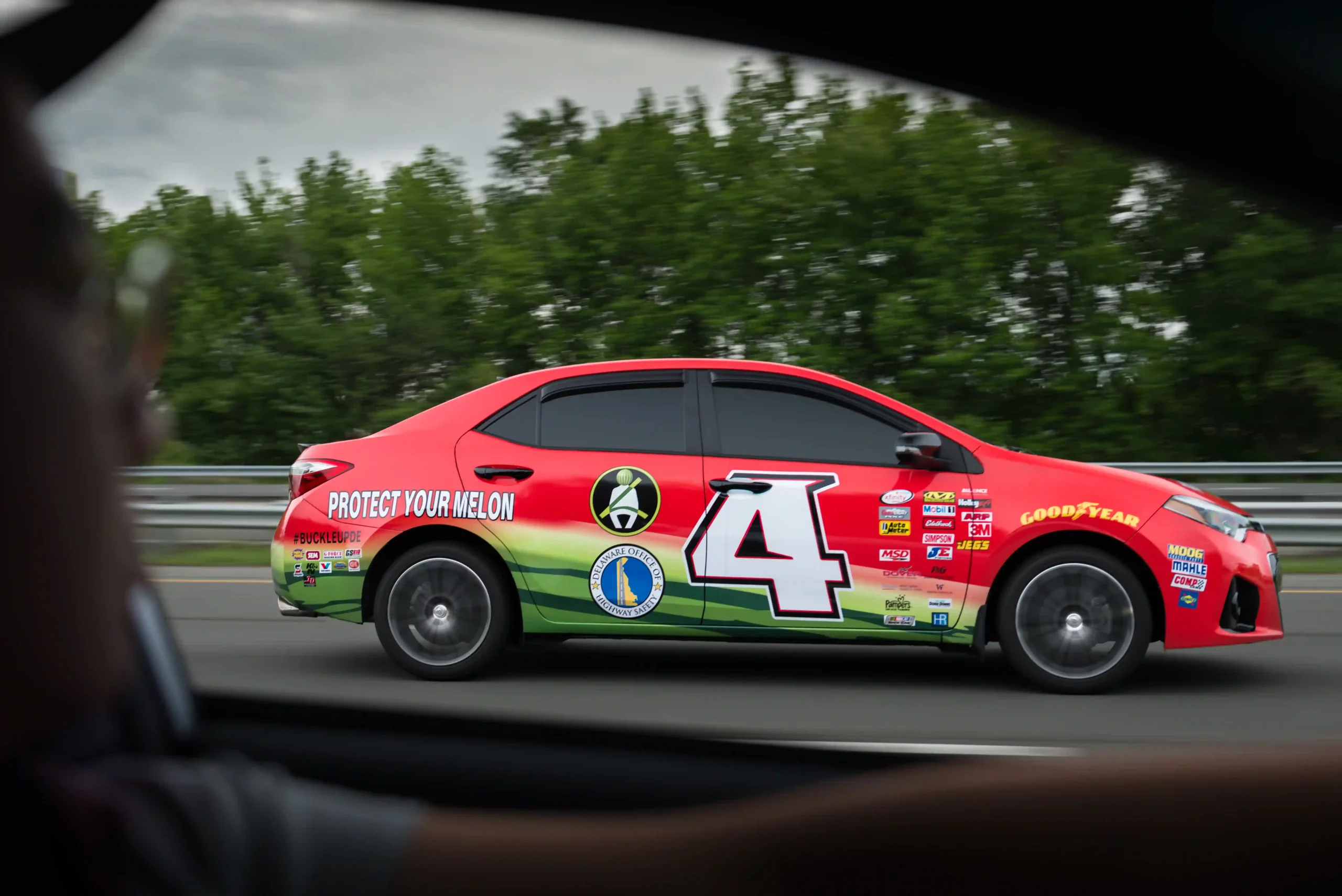
Wrapped rideshare vehicles can circulate through conference districts, hotel corridors, airports, restaurants, and entertainment areas, bringing your message directly into the environments attendees frequent.
Unlike advertising fixed to one location, a mobile campaign can:
- Move among multiple conference hotspots
- Reach attendees beyond exhibit hours
- Generate repeated exposure throughout the event
- Create recognizable and shareable brand moments
- Support transportation for clients, prospects, or VIPs
For brands that are not exhibiting, rideshare advertising can establish a visible presence around the conference without purchasing a booth.
For exhibitors and sponsors, branded vehicles can reinforce campaign messaging across the city, direct attendees to a booth, promote a product launch, or extend the visibility of an existing sponsorship.
Best for:
- Product launches
- Booth and sponsorship amplification
- Competitive awareness campaigns
- Enterprise and technology brands
- Hosted meetings and VIP transportation
- Brands attending without exhibiting
2. Own the Conference City, Not Just the Convention Center
The exhibit hall represents only one portion of the attendee experience. Expand your campaign into the places attendees visit before, during, and after conference hours.
Potential activation areas include:
- Airport arrival routes
- Conference hotel districts
- Transit hubs
- Popular restaurant corridors
- Entertainment venues
- Networking neighborhoods
- Off-site meeting locations
A citywide approach helps non-exhibitors establish a meaningful presence around the event. It also gives exhibitors and sponsors more opportunities to reinforce their message beyond a single venue or scheduled activation.
3. Host Invite-Only Experiences
A booth can support a high volume of interactions, but smaller hosted experiences often create more time for substantive conversations.
Consider organizing:
- Executive dinners
- Customer appreciation events
- Rooftop networking receptions
- Breakfast briefings
- VIP transportation
- Private product demonstrations
Brands without a booth can use these experiences as the center of their conference strategy. Exhibitors can use them to deepen relationships that begin on the show floor or provide a next step for high-value prospects.
4. Build a Presence Without Exhibiting
Some brands attend major industry conferences without purchasing exhibit space. Instead, they focus their investment on:
- Customer and prospect meetings
- Partner events
- Branded transportation
- Mobile advertising
- Local networking
- Off-site demonstrations
This approach allows marketers to reach a concentrated industry audience while avoiding the full cost of exhibiting. However, simply attending is not enough. Brands still need a coordinated plan for generating visibility, scheduling meetings, and creating reasons for attendees to engage.
5. Create Shareable Brand Moments
Today’s conference marketing extends well beyond physical signage.
Consider experiences attendees naturally share online:
- Branded vehicles
- Interactive installations
- Creative photo opportunities
- Live demonstrations
- Limited-time giveaways
- Local partnerships
Social amplification significantly increases conference reach while improving overall B2B brand awareness.
6. Sponsor Experiences Attendees Will Use
Brands do not need a booth to sponsor a useful attendee experience. Exhibitors and existing sponsors can also add experiential elements that extend their visibility beyond the assets included in their standard package.
Some of the most useful sponsorship opportunities are tied to practical parts of the attendee experience, such as:
- Airport transportation
- Hotel shuttles
- Charging lounges
- Coffee stations
- Happy hours
- Ride credits
- VIP transportation
These activations can give non-exhibiting brands an accessible way to participate in the conference environment. Existing sponsors can also add experiential elements to make their official package more visible and memorable.
Before investing, assess whether the opportunity places your brand in front of the right attendees and supports a broader campaign objective. Convenience alone does not guarantee business impact.
7. Surround High-Value Accounts Throughout Their Journey
Account-Based Marketing (ABM) doesn’t stop during conferences.
Identify the priority accounts likely to attend and the common locations and moments where conference attendees can be reached.
- Airport arrivals
- Conference hotels
- Evening networking venues
- Customer dinners
- Local transportation
Multi-touch exposure reinforces brand familiarity before sales meetings even begin.
8. Measure More Than Booth Traffic
Traditional event success metrics often focus on:
- Badge scans
- Booth visits
- Giveaway participation
Modern marketers should also evaluate:
- Impressions
- Social engagement
- Website traffic during the event
- Meeting volume
- Direct traffic
- Brand search lift
- Pipeline influence
A broader measurement strategy provides a more accurate picture of conference marketing ROI.
Bringing It All Together
Conference marketing does not have to be limited to the exhibit hall.
If you are not exhibiting, a coordinated off-site strategy can help your brand establish a visible, credible presence around the conference.
If you have already invested in a booth or sponsorship, citywide advertising, branded transportation, hosted experiences, and other external activations can extend that presence across more locations and more hours of the attendee journey.
The strongest approach depends on your audience, objectives, budget, and level of official conference participation. In either case, the opportunity is larger than the footprint you occupy inside the venue.
Key Takeaways
- A booth is one component of conference marketing, not the entire strategy.
- Non-exhibitors can build visibility through citywide campaigns, hosted events, and targeted networking.
- Exhibitors and sponsors can use off-site activations to amplify their investment and reach more attendees.
- Rideshare advertising can extend campaign exposure across attendee travel routes.
- Invite-only experiences can create more time for high-value conversations.
- ABM campaigns can reach priority accounts throughout the conference journey.
- Campaign measurement should connect awareness and engagement to meetings, pipeline, and business outcomes.
Frequently Asked Questions
Can you build conference visibility without exhibiting?
Yes. Brands can build conference visibility through rideshare advertising, executive events, hotel activations, airport campaigns, transportation programs, networking sponsorships, and citywide marketing efforts. These tactics work best when they are connected to a clear meeting, awareness, or pipeline objective.
How can exhibitors extend their booth presence?
Exhibitors can extend their presence through branded transportation, mobile advertising, hosted events, hotel-area activations, social content, and messaging that directs attendees back to the booth. These tactics allow the campaign to reach attendees before they enter the venue and after exhibit hours end.
How can sponsors get more value from a conference sponsorship?
Sponsors can amplify their official conference package with experiences that reach attendees outside the sponsored session or venue placement. Branded vehicles, VIP transportation, customer events, ride credits, and citywide campaigns can create additional touchpoints throughout the trip.
What are the best conference marketing strategies outside the convention center?
Effective options include rideshare advertising, branded transportation, hotel district campaigns, invite-only customer events, airport advertising, local partnerships, and targeted account-based marketing.
Is rideshare advertising effective during conferences?
Rideshare advertising can help brands reach attendees around airports, hotels, restaurants, entertainment districts, and conference venues. It can provide an off-site presence for non-exhibitors or extend an exhibitor’s booth and sponsorship messaging across the city.
What metrics should marketers track for conference campaigns?
Relevant metrics may include meetings completed, qualified interactions, website visits, QR code activity, branded search activity, social engagement, geographic coverage, pipeline influence, and return on marketing investment. Exhibitors may also track booth traffic influenced by external activations.
Ready to make your brand the most visible at your next conference? Contact Carvertise to build a custom citywide campaign.