

Seattle billboards along I-5, I-90, and Highway 99 promise massive reach—hundreds of thousands of daily commuters passing fixed locations throughout the city. The problem? Seattle’s notorious traffic congestion means those same commuters see the same billboards during the same gridlock until habituation makes your expensive placement invisible.
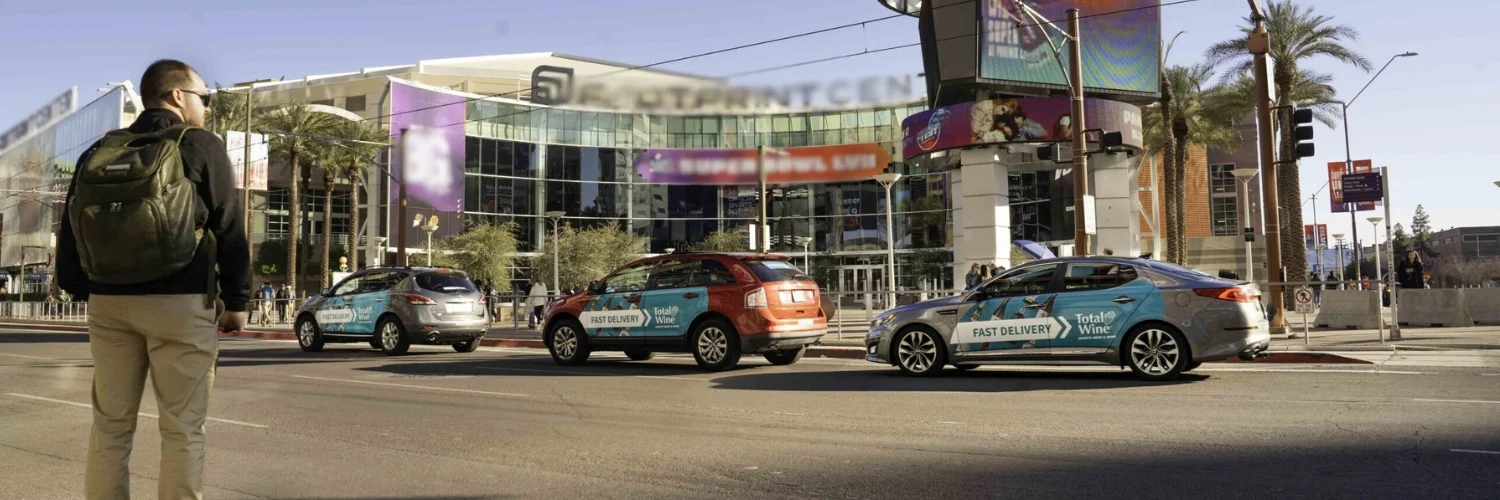
Mobile billboards through Carvertise reach more eyes daily by going where Seattle residents actually move throughout their routines. Wrapped vehicles circulate through neighborhood commercial districts during shopping hours, appear outside popular restaurants during meal times, show up at coffee shops where professionals work remotely, and create exposure across Seattle’s spread-out geography rather than just along congested highway corridors.
Ready to reach more Seattle eyes daily beyond static placements that capture the same commuters in the same gridlock repeatedly? Contact Carvertise to deploy mobile billboards that follow Seattle residents throughout their actual movement patterns across neighborhoods, commercial districts, and daily destinations where attention is available and purchasing decisions happen.
How Mobile Billboards Multiply Daily Eye Contact in Seattle
Mobile billboard effectiveness stems from movement, varied contexts, and behavioral alignment with how Seattle residents actually experience their city.
Breaking the Habituation Trap
Human brains are wired to stop noticing unchanging stimuli through a process called habituation. That I-5 billboard near downtown? Your brain actively filters it out after seeing it three times during your commute. It’s still there, but your attention system has learned to ignore it because it never changes and carries no new information.
Mobile billboards reset habituation through movement and context variation. Encountering a wrapped vehicle Monday at a Ballard coffee shop registers as novel. Seeing it again Wednesday in a Capitol Hill restaurant parking lot feels like a different exposure because the context changed entirely. Friday’s sighting at a Fremont brewery creates a third distinct impression.
Your brain processes each encounter as worthy of attention because the varied contexts signal potential relevance. The advertising achieves genuine “reach” rather than just estimated impressions of people who’ve trained themselves not to see it.
Geographic Coverage Multiplication
Seattle’s geography—neighborhoods separated by hills, water, and traffic patterns—makes comprehensive coverage through static billboards prohibitively expensive. Reaching Capitol Hill, Ballard, Fremont, Queen Anne, South Lake Union, Georgetown, and West Seattle would require separate placements in each area.
Mobile billboards achieve multi-neighborhood coverage through natural driver circulation. A single wrapped vehicle driven by a Seattle resident naturally travels through multiple zones daily: home neighborhood, work location, shopping areas, entertainment districts, errand destinations. That one vehicle delivers impressions across geographic zones requiring five or six static billboards to cover.
This geographic multiplication means mobile billboards reach more unique individuals daily rather than the same people seeing the same static placement repeatedly during their predictable commute patterns.
Time-of-Day Optimization
Static billboards deliver impressions whenever traffic passes—regardless of whether those impressions occur during relevant decision-making windows. Your restaurant billboard reaches commuters at 8am when they’re thinking about work, not dinner.
Mobile billboards concentrate exposure during behavioral windows when purchasing decisions naturally occur. Restaurant wraps generate impressions during lunch hours (11am-2pm) and dinner planning windows (4-7pm). Coffee shop advertising appears during morning routines and afternoon work breaks. Retail coverage peaks during shopping hours and weekend activity periods.
This temporal alignment means mobile billboard impressions occur when recipients are actually in decision-making mode for your product category—dramatically improving conversion rates compared to static placements reaching people during irrelevant activities.
Attention Availability Advantage
Drivers in Seattle’s I-5 gridlock are stressed, frustrated, and focused on traffic rather than advertising. Even when traffic moves, highway speeds and driving demands mean billboard viewing time is measured in seconds with minimal attention available.
Mobile billboards capture attention during moments when people are receptive: walking from their car to a coffee shop, waiting for friends outside a restaurant, browsing shops in neighborhood commercial districts, or encountering wrapped vehicles in parking lots where they’re already stopped and observing their surroundings.
This attention availability advantage means mobile billboard impressions involve actual cognitive processing rather than peripheral glimpses from stressed drivers focused on traffic.
Case Study: Albertsons Game Day Foot Traffic Campaign
Albertsons’ Dallas campaign demonstrates how mobile billboards drive measurable store visits by reaching customers throughout their daily routines and aligning exposure with specific behavioral opportunities.
Campaign Strategy and Execution
Albertsons launched 15 rideshare vehicles in Dallas for 20 weeks, sending cars to every Dallas Cowboys home game throughout the season and producing over 15,000,000+ impressions. The strategy connected grocery shopping with game day excitement, encouraging spectators to visit Albertsons stores on Sundays while wearing Dallas Cowboys gear to receive grocery discounts.
The wrapped vehicles featured Albertsons branding alongside Dallas Cowboys imagery, creating association between the grocery chain and the city’s most visible cultural touchstone. Rideshare drivers naturally concentrated near AT&T Stadium during games, throughout Dallas neighborhoods on game days, and in commercial areas where fans gathered to watch and celebrate.
The campaign recognized that grocery purchasing decisions happen throughout the week but could be influenced by event-driven promotions tied to specific days—in this case, Sunday game days when football culture dominates Dallas consciousness.
Verified Results
The campaign produced exceptional, measurable store traffic demonstrating mobile billboards’ effectiveness at driving foot traffic:
13,981 individual visits to an Albertsons location after exposure to Carvertise cars during a six-week tracking cycle.
33.25% more likely to visit an Albertsons location after exposure to a Carvertise car.
StreetMetrics tracked individuals who encountered wrapped vehicles, then verified their subsequent visits to Albertsons stores. The 33.25% lift represents the increased probability that someone exposed to the mobile billboard would visit a store compared to someone not exposed.
For a grocery retailer like Albertsons with frequent purchasing cycles, this conversion rate is remarkable. Shifting 33.25% of exposed individuals toward your stores creates substantial revenue impact through both immediate visits and potential long-term customer acquisition.
The 20-week campaign duration and event-driven timing (Cowboys games) also demonstrate mobile billboards’ effectiveness as sustained awareness-builders with strategic surge opportunities.
Application to Seattle’s Daily Reach Strategy
Albertsons’ success reaching Dallas residents throughout their routines while concentrating on event-driven opportunities provides a model for maximizing daily eye contact in Seattle.
Seattle businesses can achieve similar results by aligning mobile billboard presence with when and where target audiences naturally concentrate. Restaurants benefit from lunch hour coverage near South Lake Union offices and evening presence in Capitol Hill dining districts. Retail stores need weekend coverage in neighborhood commercial areas. Coffee shops want morning commute and afternoon work break exposure.
The 33.25% store visit lift proves mobile billboards don’t just create passive impressions—they drive measurable behavior change. For Seattle businesses seeking foot traffic, similar conversion rates mean more customers walking through doors, more transactions, and better return on advertising investment than static billboards delivering unmeasurable results.
The event-driven approach also applies to Seattle: concentrate mobile billboard presence during Seahawks game days, Mariners opening week, Bumbershoot, Capitol Hill Block Party, or neighborhood festivals when specific demographics concentrate and entertainment/celebration mindsets make them receptive to discovering new businesses.
Maximizing Daily Reach Across Seattle’s Distinct Zones
Effective mobile billboard deployment requires understanding Seattle’s neighborhood characteristics and targeting strategies that maximize daily unique reach.
Downtown and South Lake Union concentrate office workers, tech professionals, and convention attendees during weekdays. Lunch hour coverage (11:30am-1:30pm) reaches workers making dining decisions. Happy hour presence (4-7pm) influences after-work plans.
Capitol Hill houses young professionals, LGBTQ+ community members, and nightlife seekers. Evening and weekend coverage captures residents during peak social activity. Coffee shop and brunch spot presence reaches this demographic during their routine activities.
Ballard attracts craft beer enthusiasts, established residents, and weekend crowds. Evening brewery coverage and weekend shopping district presence reaches Ballard’s distinct demographic when they’re actively exploring the neighborhood.
University District serves UW students requiring affordable options and campus-convenient locations. Academic year coverage (September-June) reaches students when they’re present. Summer reduces UW focus unless targeting summer programs.
Fremont and Wallingford house families, creative professionals, and established residents valuing local character. Daytime commercial district coverage and weekend presence reaches this demographic during shopping and dining decisions.
West Seattle and Georgetown represent geographically isolated neighborhoods requiring dedicated coverage. Residents often shop locally rather than crossing bridges, making neighborhood-specific presence essential.
North Seattle (Northgate, Lake City, Greenwood) houses families and established residents often overlooked by advertising focused on “trendy” Seattle neighborhoods. This demographic values practical positioning and local convenience.
Launch Your Seattle Mobile Billboard Campaign
Carvertise enables Seattle businesses to reach more eyes daily by deploying mobile billboards that follow residents throughout their actual movement patterns across the city’s diverse neighborhoods.
Initial consultation identifies your target audience within Seattle’s varied zones and determines optimal coverage strategies for maximizing daily unique reach rather than repeated exposure to the same commuters.
Campaign design creates wraps appropriate for Seattle’s design-conscious culture while maintaining visibility necessary for mobile advertising effectiveness. Driver recruitment focuses on individuals whose movement patterns align with target audience locations and activity windows.
GPS tracking verifies daily reach by showing unique neighborhoods covered, times of maximum exposure, and geographic distribution ensuring comprehensive Seattle coverage rather than concentration in limited corridors.
Contact Carvertise for a Seattle-specific campaign proposal including daily reach projections, neighborhood coverage strategies, and deployment recommendations that maximize unique eye contact across Seattle’s diverse zones and demographic segments.
Frequently Asked Questions
How do mobile billboards reach more eyes than static Seattle billboards?
Mobile billboards travel through multiple neighborhoods daily, reaching diverse audiences across varied contexts rather than the same commuters seeing the same static placement repeatedly until habituation makes it invisible.
Can campaigns target specific Seattle neighborhoods to maximize relevant reach?
Yes. Driver recruitment emphasizes individuals whose routes concentrate in priority neighborhoods, ensuring coverage reaches target demographics where they live, work, and make purchasing decisions rather than just during highway commutes.
What’s the timeline for launching a Seattle mobile billboard campaign?
Campaigns launch within 2-4 weeks. Design approval takes 3-5 days, driver recruitment 1-2 weeks, and wrap production/installation 5-7 days.
How many vehicles maximize daily reach across Seattle?
This depends on objectives and budget. Comprehensive multi-neighborhood coverage typically requires 12-18 vehicles. Focused neighborhood targeting (Capitol Hill, Ballard, South Lake Union) could succeed with 6-10 vehicles achieving concentrated local reach.
Can campaigns adjust timing to maximize reach during high-attention windows?
Yes. Driver recruitment prioritizes individuals whose schedules align with target audience activity periods—lunch hours for restaurant clients, evening coverage for entertainment venues, weekend presence for retail businesses—ensuring impressions occur when attention is available and purchasing decisions happen.