

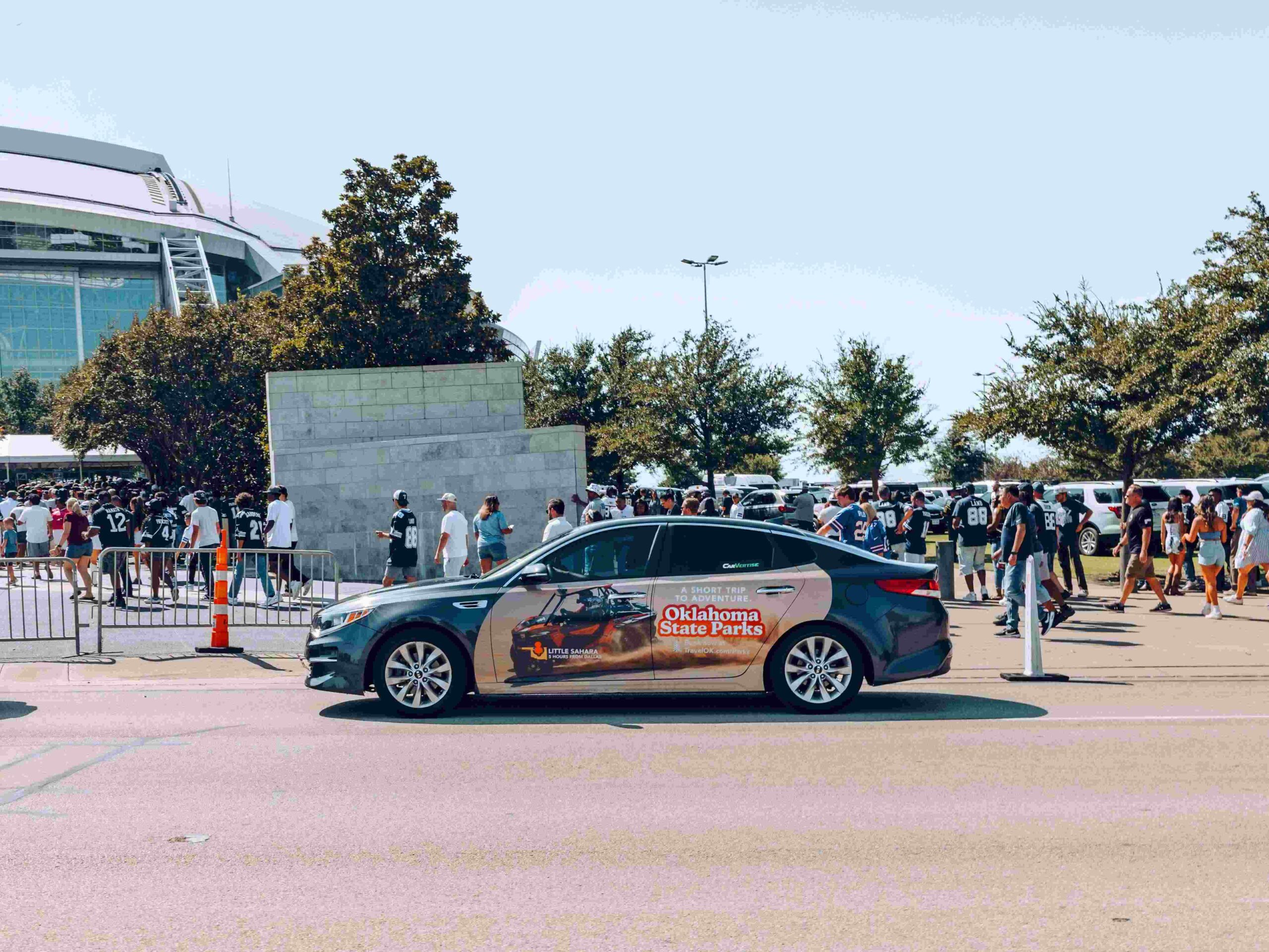
Citywide campaigns are evolving quickly. Brands now want flexible outdoor advertising that can reach consumers across neighborhoods, retail districts, airports, and event venues.
That is why more marketers are investing in rideshare advertising. Wrapped Uber, Lyft, and delivery vehicles can travel throughout a city while providing GPS tracking and attribution data for campaign analytics and ROI measurement.
What Is Rideshare Advertising?
Rideshare advertising uses branded vehicles to deliver mobile out-of-home advertising across targeted city areas. Campaigns typically include wrapped rideshare and delivery vehicles that move through high-traffic locations throughout the day.
Unlike traditional billboards, rideshare ads are mobile. They can reach consumers in entertainment districts, shopping areas, business centers, and residential neighborhoods.
Common campaign uses include:
- Citywide brand awareness campaigns
- Retail launch advertising
- Event and conference promotions
- Tourism marketing
- Product launches
- Local market expansion
Related Pages
Why Rideshare Advertising Matters in 2026
Brands need advertising that is measurable, flexible, and hyperlocal.
Traditional transit advertising often relies on fixed routes and limited analytics. Rideshare advertising gives marketers more control over where campaigns appear and how performance is measured.
Major benefits include:
- Neighborhood targeting
- Flexible fleet deployment
- GPS tracking and attribution
- High daily visibility
- Real-time optimization
- Better campaign analytics and ROI measurement
Comparison With Transit Advertising
| Feature | Rideshare Advertising | Transit Advertising |
|---|---|---|
| Route Flexibility | High | Low |
| GPS Tracking | Advanced | Limited |
| Event Activation | Strong | Moderate |
| Campaign Agility | Fast | Slower |
| Neighborhood Targeting | Precise | Broad |
Related Page
How a Citywide Rideshare Ad Campaign Works
Most campaigns follow a simple planning process.
1. Define Campaign Goals
Start by identifying the primary objective.
Examples include:
- Driving store visits
- Increasing local awareness
- Promoting a conference
- Supporting a retail launch
- Generating app downloads
2. Select Target Areas
Use audience and traffic data to prioritize neighborhoods with strong consumer activity.
High-value areas often include:
- Downtown districts
- Retail corridors
- Airports
- Stadiums
- Convention centers
- University zones
3. Determine Fleet Size
Fleet size depends on market size and campaign goals.
| Market Size | Suggested Fleet |
|---|---|
| Small City | 10–20 Vehicles |
| Mid-Size Metro | 25–50 Vehicles |
| Large Metro | 75–150+ Vehicles |
4. Design Campaign Creative
Simple designs usually perform best.
Effective creative includes:
- Large logos
- Minimal text
- Bold colors
- QR codes
- Clear calls to action
5. Measure Campaign Performance
Modern rideshare campaigns use GPS tracking and attribution platforms to monitor:
- Impressions
- Route coverage
- Store visits
- Website traffic
- Consumer engagement
Related Page
Key Metrics and Campaign Components
Campaign success depends on measurable performance indicators.
Important Metrics
- Impressions
- Reach
- Frequency
- CPM
- QR code scans
- Store visit lift
- Branded search lift
- Conversion rates
GPS Tracking and Attribution
GPS reporting helps brands verify:
- Vehicle routes
- Time spent in target zones
- Audience density
- Exposure frequency
This makes campaign analytics and ROI measurement more accurate than many traditional out-of-home formats.
Timing Factors
Campaign timing can improve results significantly.
Strong activation periods include:
- Sporting events
- Holiday seasons
- Conferences
- Grand openings
- Tourism peaks
- Back-to-school promotions
Real-World Campaign Example With Results
A retail brand launches a new location in Chicago.
Campaign Setup
- 40 wrapped rideshare vehicles
- 8-week campaign
- Downtown and retail corridor targeting
- Weekend event activations
- Digital retargeting support
Campaign Results
- 5.2 million impressions
- 1.4 million consumers reached
- 18% increase in branded search traffic
- 12% increase in store visits
- 22,000 QR scans
- Lower CPM than traditional billboard campaigns
GPS analytics showed the highest engagement near convention centers and shopping districts.
Related Page
Tools and Methods Used for Campaign Success
Modern rideshare campaigns combine outdoor advertising with digital analytics tools.
Common Tools
- GPS route tracking
- Attribution platforms
- Geofencing
- Heat mapping
- Mobile device matching
- Digital retargeting
Common Campaign Methods
- Neighborhood targeting
- Event swarms
- Daypart optimization
- Fleet rotation
- High-frequency routing
These tools help improve campaign visibility and performance over time.
Related Page
Common Challenges in Rideshare Advertising Campaigns
Even strong campaigns face operational challenges.
Uneven Neighborhood Coverage
Some areas may receive less exposure than planned.
Solution:
- Use GPS heat maps
- Rotate vehicles regularly
- Optimize routes weekly
Overloaded Creative
Too much text reduces visibility.
Solution:
- Keep messaging simple
- Focus on one CTA
- Use larger visuals
Attribution Complexity
Offline exposure can be difficult to measure accurately.
Solution:
- Use QR tracking
- Combine GPS reporting with retargeting
- Measure lift studies
Traffic Pattern Changes
Large events and holidays can impact campaign routing.
Solution:
- Monitor routes daily
- Maintain flexible deployment plans
Best Practices for Citywide Brand Awareness Campaigns
The best campaigns focus on consistency, visibility, and measurable results.
Prioritize High-Traffic Areas
Focus on:
- Entertainment districts
- Shopping centers
- Airports
- Stadiums
- Business corridors
Keep Creative Clean and Simple
Drivers and pedestrians only have a few seconds to view the ad.
Use:
- Large branding
- Bold contrast
- Minimal copy
Match Fleet Size to Market Goals
Under-sized fleets may reduce campaign frequency and reach.
Combine Physical and Digital Marketing
Strong campaigns often pair rideshare advertising with:
- Retargeting ads
- Social media promotion
- QR campaigns
- Dedicated landing pages
Track Performance Continuously
Use campaign analytics and ROI measurement tools from launch through completion.
Related Page
Frequently Asked Questions About Rideshare Advertising
What is rideshare advertising?
Rideshare advertising uses wrapped rideshare and delivery vehicles as mobile billboards throughout a city.
How is rideshare advertising measured?
Campaigns use GPS tracking and attribution tools to measure impressions, routes, website traffic, and store visits. Carvertise provides monthly reports for clear visibility on campaign performance.
How many vehicles are needed for a citywide campaign?
Small campaigns may begin at around 5-10 vehicles, while large metro campaigns can scale to more than 100 vehicles for full city coverage.
Is rideshare advertising better than transit advertising?
Rideshare advertising offers more route flexibility, better neighborhood targeting, and includes event activations and stronger analytics capabilities than traditional transit advertising campaigns.
What industries benefit most from rideshare advertising?
Retail, tourism, higher education, food and beverage, legal, healthcare, fintech, entertainment, technology, SAAS, and event marketing brands often see strong performance.
Can rideshare advertising support conference promotions?
Yes. Many brands use event swarms, conference takeovers, or Branded Chauffeur campaigns to increase visibility around conventions, concerts, and sporting events.