

Eugene’s progressive culture, University of Oregon presence, and spread-out geography create advertising challenges that traditional billboards struggle to solve effectively. Static placements along I-5 and Highway 99 capture commuters and through-traffic, but miss Eugene’s actual consumer base: students and faculty concentrated around campus, residents in neighborhoods from Whiteaker to South Eugene, shoppers at Valley River Center, and downtown professionals.
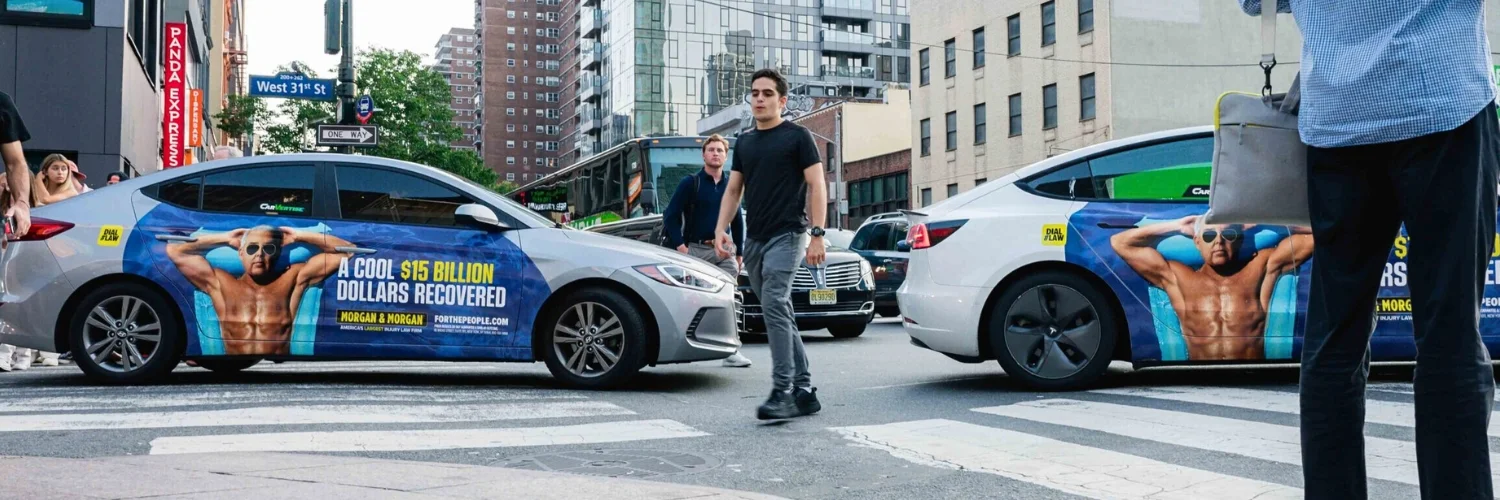
Mobile advertising through Carvertise increases impact by working with Eugene’s culture rather than against it. Wrapped vehicles feel less intrusive than highway billboards, circulate through the specific neighborhoods where your customers live and shop, reach University of Oregon students during their campus routines, and create repeated exposure across varied contexts that static placements can’t deliver.
Ready to increase your Eugene advertising impact beyond static billboards? Contact Carvertise to deploy mobile advertising that reaches Eugene’s progressive, educated, and environmentally conscious audience where they actually spend time—not just where they happen to drive on highways.
Understanding Eugene’s Unique Advertising Landscape
Eugene’s character demands advertising approaches fundamentally different from typical mid-sized American cities.
Eugene’s population skews young, educated, and progressive. University of Oregon enrollment exceeds 20,000 students plus thousands of faculty and staff, creating a concentration of 18-30 year olds who respond to advertising differently than older demographics. They’re digital-first, skeptical of traditional marketing, and value authenticity over corporate polish.
Environmental consciousness runs deep in Eugene. Residents care about sustainability, local businesses, and community impact. They actively support businesses demonstrating environmental values and local commitment. Advertising that feels mass-market or corporate often generates backlash rather than positive response.
The city’s geography spreads across distinct zones: the University of Oregon campus area dominates the southeast, downtown Eugene serves as the urban core, Whiteaker neighborhood houses the arts district and younger residents, South Eugene contains established residential areas, West Eugene includes industrial and working-class neighborhoods, and the Coburg Road corridor provides suburban retail concentration.
Static billboards concentrated along I-5 and Highway 99 miss most of these zones entirely. Students living near campus rarely drive those routes. Whiteaker residents avoid highways. South Eugene families make purchasing decisions at Valley River Center and local shopping areas, not during highway commutes.
Mobile advertising solves this by circulating through the actual neighborhoods, commercial districts, and campus areas where Eugene’s diverse populations concentrate throughout their daily routines.
How Mobile Advertising Solves Eugene’s Geographic and Cultural Challenges
Mobile advertising through Carvertise fundamentally changes how businesses reach Eugene’s distributed, values-driven population by adding movement, cultural alignment, and neighborhood-level targeting that static billboards cannot deliver.
Movement Creates Comprehensive Coverage
Eugene’s spread-out geography—from University of Oregon campus through downtown to West Eugene industrial areas—makes comprehensive advertising coverage prohibitively expensive through static billboards. You’d need placements along I-5, Highway 99, Franklin Boulevard, Coburg Road, and West 11th to reach different zones. Each placement costs thousands monthly.
Mobile billboards solve this through natural circulation. A single wrapped vehicle driven by a Eugene resident naturally travels through multiple zones daily: residential neighborhoods during morning and evening, commercial districts during workdays, campus areas when visiting coffee shops or running errands, shopping centers on weekends. That one vehicle delivers impressions across geographic zones that would require four or five static billboards to cover.
This movement also prevents the habituation problem plaguing static placements. Seeing the same billboard in the same location daily trains your brain to ignore it. Encountering a wrapped vehicle in different contexts—Monday at a coffee shop, Wednesday in a grocery store parking lot, Friday near campus—keeps each exposure fresh and attention-worthy.
Precision Targeting Based on Actual Behavior
Static billboards reach whoever happens to drive past—commuters, through-traffic, people who’ll never become customers. You pay for thousands of wasted impressions daily.
Mobile advertising targets based on actual behavior patterns. Need to reach University of Oregon students? Recruit drivers whose routines include campus-adjacent areas, popular student coffee shops, and routes connecting student housing to campus. Need downtown professionals? Focus on drivers working or living downtown with weekday lunch hour coverage near businesses and evening presence in restaurant districts.
This behavioral targeting dramatically improves impression quality. Someone encountering your wrapped vehicle while shopping at Valley River Center is actively in purchasing mode. Someone seeing your vehicle outside their regular coffee shop associates your brand with their daily routine. These context-rich impressions drive action that generic highway exposure cannot achieve.
Real-Time Optimization Through GPS Verification
Traditional billboard advertisers rely on traffic estimates and hope their placement reaches the right people. You pay for promised impressions with no verification of actual delivery or audience quality.
Carvertise provides GPS tracking showing exactly where wrapped vehicles travel, which Eugene zones receive coverage, and when impressions occur. See real-time data on campus area exposure, downtown coverage, neighborhood penetration, and shopping district presence.
This transparency enables optimization impossible with static placements. If GPS shows minimal coverage in target neighborhoods, driver recruitment adjusts. If certain times of day underperform, routing shifts toward higher-value windows. You’re not locked into hoping a static placement works—you’re actively managing and improving coverage based on actual performance data.
Case Study: Virtua Health Multi-County Healthcare Engagement
Virtua Health’s New Jersey campaign demonstrates how healthcare providers and service organizations use mobile billboards to drive measurable website engagement across distributed geographic markets comparable to Eugene’s spread-out zones.
Campaign Strategy and Execution
Virtua Health launched 25 rideshare vehicles across Burlington, Camden, and Gloucester counties in New Jersey for three months, sending cars to high-impact areas like Cherry Hill Mall. The campaign targeted residents throughout the multi-county region, recognizing that healthcare decisions involve research, comparison, and deliberation rather than impulse purchasing.
The wrapped vehicles featured Virtua Health’s “Expect” branding with clear messaging designed to drive website visits where potential patients could learn about services, find locations, read physician profiles, and understand insurance acceptance. Rideshare drivers naturally circulated through residential neighborhoods, shopping centers, and commercial districts where target demographics live and spend time.
Carvertise partnered with StreetMetrics to track website visits following exposure to wrapped vehicles during a six-week tracking period, measuring actual digital engagement representing healthcare consideration and research behavior.
Verified Results
The campaign produced significant, measurable website engagement demonstrating mobile billboards’ effectiveness for service-based marketing:
Control group: 2,639,891 individuals exposed to baseline advertising generated 491 page visits (14.68% visitation rate).
Exposed group: 2,329,891 individuals exposed to Virtua Health wrapped vehicles generated 799 page visits (18.81% visitation rate).
This represents a 28% increase in visitation rate for the exposed group. People who encountered Virtua Health wrapped vehicles were substantially more likely to visit the healthcare system’s website compared to those who only saw baseline advertising.
For a healthcare provider like Virtua Health, website visits represent serious consideration—people researching services, comparing providers, checking insurance acceptance, and moving toward healthcare decisions. The 799 page visits from exposed individuals represent qualified leads at various stages of the patient acquisition funnel.
The multi-county geographic distribution also demonstrates mobile billboards’ effectiveness across spread-out markets. Rather than concentrating expensive billboard placements in specific high-traffic corridors, Virtua Health achieved coverage across three counties through mobile presence that reached residents throughout the service area.
What This Means For Eugene’s Market
Virtua Health’s success across Burlington, Camden, and Gloucester counties translates directly to Eugene’s spread-out geography and distinct neighborhood zones.
Eugene businesses face similar challenges: customers distribute across campus areas, downtown, Whiteaker, South Eugene, West Eugene, and suburban corridors. Reaching all these zones through static billboards requires multiple expensive placements. Mobile billboards achieve comprehensive coverage through natural circulation patterns.
The 28% visitation rate increase proves mobile billboards drive measurable digital action—critical for Eugene businesses where customers research options online before purchasing. Restaurants check menus online, service providers compare offerings, retail stores browse inventory. The website traffic mobile billboards generate directly translates to foot traffic and revenue.
For Eugene healthcare providers competing for patients, professional services building client bases, retailers establishing market presence, or restaurants attracting diners, Virtua Health’s results demonstrate that mobile billboards drive the digital engagement necessary for customer acquisition in service-based businesses requiring research and consideration.
The three-month campaign duration also validates mobile billboards as sustained awareness-builders rather than just short-term tactics. Eugene businesses benefit from extended campaigns that build familiarity over months, creating the repeated exposure that transforms unknown brands into trusted community options.
Aligning With Eugene’s Environmental and Cultural Values
Eugene’s progressive culture demands advertising approaches that signal environmental consciousness and community commitment.
Environmental Messaging
Eugene residents respond positively to businesses demonstrating sustainability values. Mobile billboard wraps can incorporate environmental messaging—recyclable materials, carbon offset programs, local sourcing commitments—that resonates with Eugene’s eco-conscious population.
The mobile billboard format itself carries less environmental stigma than large static billboards. Wrapped vehicles serve dual purposes (transportation plus advertising) rather than single-use structures. This efficiency aligns with Eugene’s resource-consciousness values.
Local Business Support
Eugene strongly values supporting local over national chains. Mobile billboard creative should emphasize local ownership, community involvement, and Eugene-specific knowledge. “Locally owned since 2010” carries more weight in Eugene than “Convenient locations nationwide.”
Wrapped vehicles driven by Eugene residents create authentic local presence that imported advertising campaigns cannot replicate. The driver becomes an inadvertent brand ambassador—a community member visibly associated with your business.
Design Aesthetics
Eugene’s progressive culture responds to design that feels authentic, creative, and non-corporate. Avoid overly polished, generic commercial aesthetics. Instead, incorporate local artistic influences, natural elements, and design choices reflecting Eugene’s creative culture.
Color palettes emphasizing greens, earth tones, and natural hues perform better than corporate primaries or neon brights. Typography should feel organic rather than corporate. Imagery works best when it reflects Eugene’s outdoor lifestyle, artistic community, or university culture.
Launch Your Eugene Mobile Advertising Campaign
Carvertise enables Eugene businesses to increase advertising impact by aligning with the city’s culture, reaching distributed neighborhoods, and creating authentic local presence.
Initial consultation identifies your target audience within Eugene’s diverse zones—University of Oregon students and faculty, downtown professionals, neighborhood residents, or broader city coverage. Campaign design creates wraps reflecting Eugene’s progressive aesthetics and environmental values rather than generic commercial approaches.
Driver recruitment focuses on Eugene residents whose patterns naturally concentrate in areas where your customers live, work, study, and shop. GPS tracking verifies coverage across priority neighborhoods, campus areas, and commercial districts.
Flexible campaign structures allow seasonal targeting around University of Oregon academic calendar, event-driven surge coverage during Oregon football season or Eugene Celebration, or sustained year-round presence building long-term brand recognition among Eugene’s stable residential population.
Contact Carvertise for an Eugene-specific campaign proposal including audience targeting recommendations, creative direction aligned with Eugene’s cultural values, and geographic coverage strategies reaching the city’s distributed neighborhoods and distinct demographic zones.
Frequently Asked Questions
How do mobile billboards work with Eugene’s anti-billboard sentiment?
Mobile billboards feel less intrusive than static placements because they’re temporary, mobile, and dual-purpose (vehicles serving transportation plus advertising). They avoid the visual pollution concerns Eugene residents associate with permanent billboard structures.
Can campaigns specifically target University of Oregon students and faculty?
Yes. Coverage emphasizes campus-adjacent streets, student housing areas, popular coffee shops and restaurants near campus, and routes connecting student neighborhoods to campus and commercial areas where students shop and dine.
What’s the timeline for launching a Eugene campaign?
Campaigns launch within 2-4 weeks. Design approval takes 3-5 days, driver recruitment 1-2 weeks, and wrap production/installation 5-7 days.
How many vehicles provide effective Eugene coverage?
This depends on objectives. Comprehensive city coverage across all zones might need 8-12 vehicles. Focused targeting (University area, downtown, specific neighborhoods) could succeed with 4-6 vehicles with precise routing.
Can wrap design incorporate Eugene’s environmental and progressive values?
Yes. Creative development can emphasize sustainability messaging, local ownership, community commitment, and design aesthetics reflecting Eugene’s progressive culture and artistic sensibility rather than generic commercial approaches.