

Airport billboard advertising promises access to millions of travelers annually—business professionals, international tourists, and domestic visitors moving through terminals nationwide. The pitch is compelling: capture affluent, mobile audiences during airport dwell time when they’re planning activities, researching destinations, and making purchasing decisions.
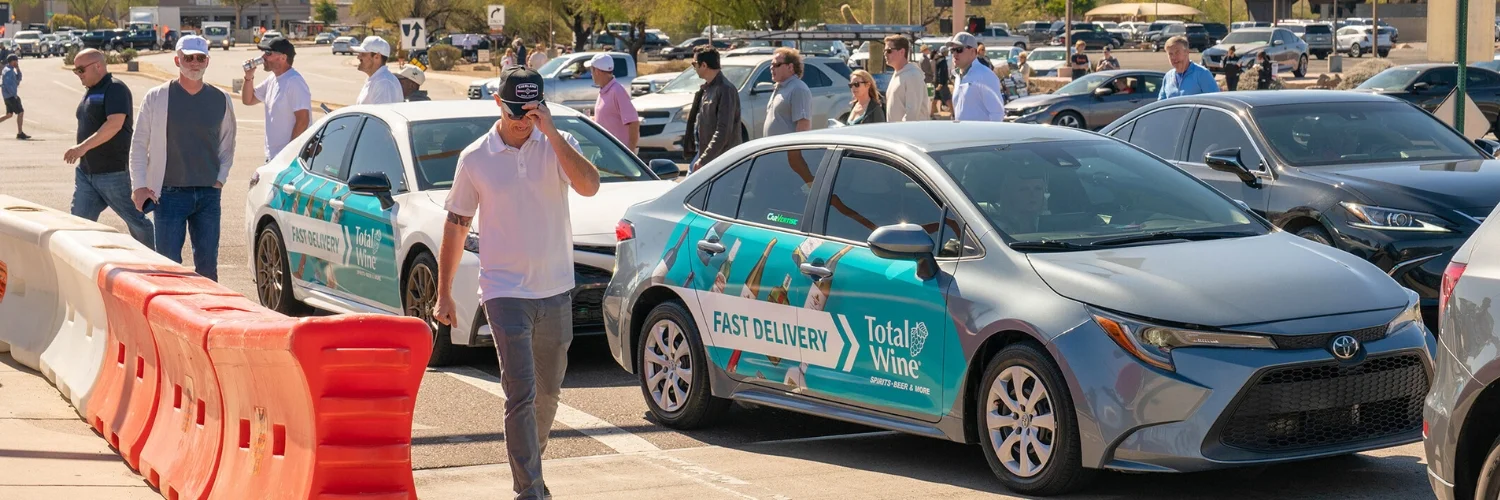
Outdoor advertising solutions through Carvertise reach airport travelers where traditional billboards cannot: throughout their entire destination experience. Wrapped vehicles appear outside airport hotels during shuttle pickups, circulate through downtown business districts where corporate travelers attend meetings, show up at tourist attractions where leisure visitors spend time, and create repeated exposure across multi-day visits.
Ready to reach airport travelers beyond expensive terminal placements that capture attention for seconds? Contact Carvertise to deploy outdoor advertising solutions that follow travelers from airport arrival through their entire destination experience, creating multiple touchpoints when purchasing decisions actually happen.
Why Mobile Outdoor Advertising Outperforms Static Airport Placements
Understanding mobile advertising’s advantages requires examining how travelers actually experience destinations versus how airport billboard advertisers hope they experience airports.
Beyond Terminal Walls: Following the Traveler Journey
Airport billboards operate on a flawed assumption: that terminal dwell time represents a valuable advertising opportunity. In reality, travelers moving through airports are in logistics mode—managing baggage, finding gates, checking flight status, dealing with security, coordinating ground transportation.
They’re not researching restaurants, comparing service providers, or planning activities. They’re executing a necessary but stressful travel task they want to complete as quickly as possible. Even if they notice a terminal billboard, recall hours or days later when actually making dining or service decisions is minimal.
Mobile outdoor advertising intercepts travelers after they’ve left the airport and entered destination mode. A wrapped vehicle appearing outside their downtown hotel at 6pm reaches them when they’re planning dinner. The same vehicle encountered near a business district lunch spot influences their meal choice. A weekend sighting near tourist attractions plants awareness when they’re actively exploring and making spontaneous decisions.
This shift from logistics mode to destination mode transforms advertising receptivity. Terminal exposure during stressed airport navigation barely registers. Neighborhood exposure during relaxed exploration, meal planning, or activity decisions creates meaningful engagement that drives action.
Geographic Flexibility Across Multiple Airports
A business targeting travelers at JFK, LAX, O’Hare, and Miami faces astronomical costs for airport billboard presence at each location. Four airports × $30,000+ monthly per placement = $120,000+ monthly before any performance data validates the investment.
Mobile outdoor advertising achieves multi-airport coverage at a fraction of the cost by reaching travelers in destination cities rather than terminal facilities. Deploy wrapped vehicles in Manhattan reaching JFK arrivals, Los Angeles neighborhoods capturing LAX travelers, Chicago business districts serving O’Hare visitors, and Miami Beach areas where airport tourists concentrate.
This destination-based approach delivers superior impression quality at lower cost. You’re reaching travelers during their actual destination experience when purchasing decisions happen, not during brief airport logistics when advertising barely registers.
Real-Time Impression Quality vs. Estimated Traffic Volume
Airport billboard sales rely on total passenger traffic: “Our terminal sees 50,000 daily passengers, your ad gets X million annual impressions!” These numbers sound impressive but obscure crucial quality questions.
How many passengers actually notice your specific placement among dozens of competing messages? How many are connecting flights who never leave the airport? How many are departing residents rather than arriving visitors? How many are rushing to gates with zero attention for advertising?
Mobile outdoor advertising delivers verifiable, high-quality impressions through GPS tracking. You see exactly where wrapped vehicles travel, which destination zones receive coverage, and when impressions occur. A wrapped vehicle parked outside a popular downtown restaurant at dinner hour creates verifiable exposure to people actively making dining decisions—not estimated impressions of stressed travelers rushing through security.
Flexibility and Optimization
Airport billboards lock you into 6-12 month contracts at fixed locations with no ability to adjust based on performance. If your placement underperforms, you’re committed to months of wasted spending.
Mobile advertising enables continuous optimization. GPS data shows which neighborhoods, times of day, and routes deliver maximum engagement. Driver recruitment adjusts to emphasize high-performing zones. Campaign duration scales based on actual results rather than pre-committed contracts.
This flexibility matters enormously when testing new markets, responding to seasonal demand shifts, or optimizing budget allocation across multiple destination cities.
Case Study: Fry’s Food Stores Event-Driven Retail Traffic
Fry’s Food Stores’ Phoenix campaign demonstrates how mobile outdoor advertising drives measurable store visits across distributed locations by reaching customers throughout their daily routines rather than during single-point terminal exposure.
Campaign Strategy and Execution
Fry’s Food Stores launched 75 rideshare vehicles across Phoenix for 18 weeks, strategically timing the campaign around major events including Super Bowl LVII and Phoenix Suns home games. The strategy recognized that grocery shopping decisions happen throughout customers’ regular routines—not during specific terminal exposures—and concentrated mobile billboard presence when event-related activity and out-of-town visitors peaked.
The wrapped vehicles featured Fry’s distinctive red branding with clear messaging designed to drive store visits. Rideshare drivers naturally circulated through residential neighborhoods where shoppers live, business districts where they work, entertainment areas where event visitors concentrate, and commercial corridors connecting these zones.
Carvertise partnered with StreetMetrics to track actual store visits following exposure to wrapped vehicles, measuring real shopping behavior rather than estimated terminal impressions.
Verified Results
The campaign produced exceptional, measurable retail traffic demonstrating mobile outdoor advertising’s effectiveness:
14,142+ visitors driven to Fry’s Food Stores during the Carvertise campaign.
22.2% more likely to visit a Fry’s store after exposure to a Carvertise car.
StreetMetrics used location tracking to identify individuals who encountered wrapped vehicles, then verified their subsequent visits to Fry’s retail locations. The 22.2% lift represents the increased probability that someone exposed to the mobile billboard would visit a store compared to someone not exposed.
For a grocery retailer like Fry’s, this conversion rate is remarkable given that grocery shopping involves routine, frequency, and established patterns. Shifting 22.2% of exposed individuals toward your stores represents substantial revenue impact through both immediate visits and potential long-term customer acquisition.
The 18-week campaign duration also demonstrates mobile outdoor advertising’s effectiveness as a sustained awareness-builder. The compounding effect of repeated exposure over months—encountering Fry’s wrapped vehicles at grocery stores, gas stations, residential neighborhoods, entertainment venues—builds familiarity and preference that drives behavior change.
Application to Airport Traveler Marketing
Fry’s success reaching Phoenix residents and visitors throughout their daily routines translates directly to reaching airport travelers throughout their destination experiences.
The fundamental principle is identical: reach people where they actually make purchasing decisions, not at single terminal touchpoints when they’re in logistics mode. Airport travelers make dozens of micro-decisions throughout their visits—breakfast restaurants, lunch spots, coffee shops between meetings, dinner reservations, evening entertainment, shopping destinations. Mobile outdoor advertising creates presence at these decision points.
The 22.2% lift demonstrates that mobile outdoor advertising doesn’t just create passive awareness—it drives measurable behavior change. For businesses seeking airport traveler customers (hotels, restaurants, services, entertainment venues), similar conversion rates mean more bookings, more foot traffic, and more revenue than expensive terminal placements delivering unmeasurable results.
The event-driven timing (Super Bowl, Suns games) also provides a model for airport advertising strategies. Time mobile billboard campaigns around convention periods when business travelers concentrate, summer tourism peaks, or specific events driving airport traffic. This ensures maximum exposure when target audiences are present and advertising budgets aren’t wasted during slow periods.
Strategic Deployment Across Major Airports
Effective mobile outdoor advertising solutions for airport travelers require understanding each airport’s unique characteristics and traveler distribution patterns.
Hub airports (Atlanta, Dallas, Chicago O’Hare) see massive passenger volume but high percentages of connecting flights who never leave terminals. Mobile advertising focuses on destination travelers staying overnight or multiple days—business districts for corporate visitors, tourist zones for leisure travelers, hotel areas for all segments.
International gateways (JFK, LAX, Miami) bring travelers from around the world with varied language proficiency and cultural backgrounds. Mobile billboard creative emphasizes visual communication over text-heavy messaging, incorporates multiple languages when appropriate, and focuses on universally understood value propositions.
Regional business airports (San Jose, Austin, Nashville) concentrate corporate travelers attending conferences, meetings, and business development. Mobile advertising emphasizes downtown business districts, convention center areas, and professional service positioning rather than tourist-focused messaging.
Leisure destination airports (Orlando, Las Vegas, Honolulu) serve predominantly vacation travelers seeking entertainment, dining, and activity options. Mobile advertising concentrates on tourist districts, theme park areas, resort corridors, and family-friendly positioning.
Launch Your Airport Traveler Campaign
Carvertise enables businesses to reach airport travelers throughout their destination experiences rather than just during compressed terminal windows.
Initial consultation identifies which airports and traveler segments drive your business—international tourists, domestic business travelers, convention attendees, or specific demographic profiles. Campaign design creates wraps optimized for mobile visibility with messaging that resonates with traveler needs and decision-making contexts.
Driver recruitment focuses on individuals whose routes align with traveler concentration points: airport hotel areas, downtown business districts, convention centers, tourist attractions, and restaurant/entertainment districts where visitors spend time throughout their stays.
GPS tracking verifies coverage across traveler zones, showing exactly where wrapped vehicles travel and how coverage aligns with traveler traffic patterns throughout typical visit durations.
Contact Carvertise for an airport traveler campaign proposal including traveler segment targeting, geographic coverage strategies focused on where visitors actually spend time, and creative consultation optimized for mobile viewing contexts throughout major destination cities.
Frequently Asked Questions
How does mobile advertising reach airport travelers without terminal presence?
Mobile billboards reach travelers throughout their destination visits—at hotels, restaurants, attractions, business districts, and shopping areas—creating repeated exposure across multiple days rather than single terminal encounters.
Can campaigns target multiple airports simultaneously?
Yes. Deploy wrapped vehicles in destination cities served by multiple airports. For example, Manhattan campaigns reach travelers arriving via JFK, LaGuardia, and Newark without requiring separate terminal placements at each airport.
What’s the timeline for launching an airport traveler campaign?
Campaigns launch within 2-4 weeks. Design approval takes 3-5 days, driver recruitment 1-2 weeks, and wrap production/installation 5-7 days.
How many vehicles provide effective airport traveler coverage?
This depends on objectives and destination city size. Major metros like New York or Los Angeles might need 15-25 vehicles for comprehensive coverage. Smaller destination cities could succeed with 8-12 vehicles.
Can campaigns time around peak travel periods or major conventions?
Yes. Campaign intensity can increase during summer tourism peaks, major convention periods, or specific events driving airport traffic, then reduce during slower times for cost efficiency.