

O’Hare International Airport moves 83+ million passengers annually, making it one of the world’s busiest airports and an incredibly attractive advertising venue. The problem? Traditional O’Hare airport advertising—terminal displays, gate signage, baggage claim placements—costs $15,000-$50,000+ monthly for premium locations, requires 6-12 month commitments, and reaches travelers only during the narrow window they’re physically inside the terminal.
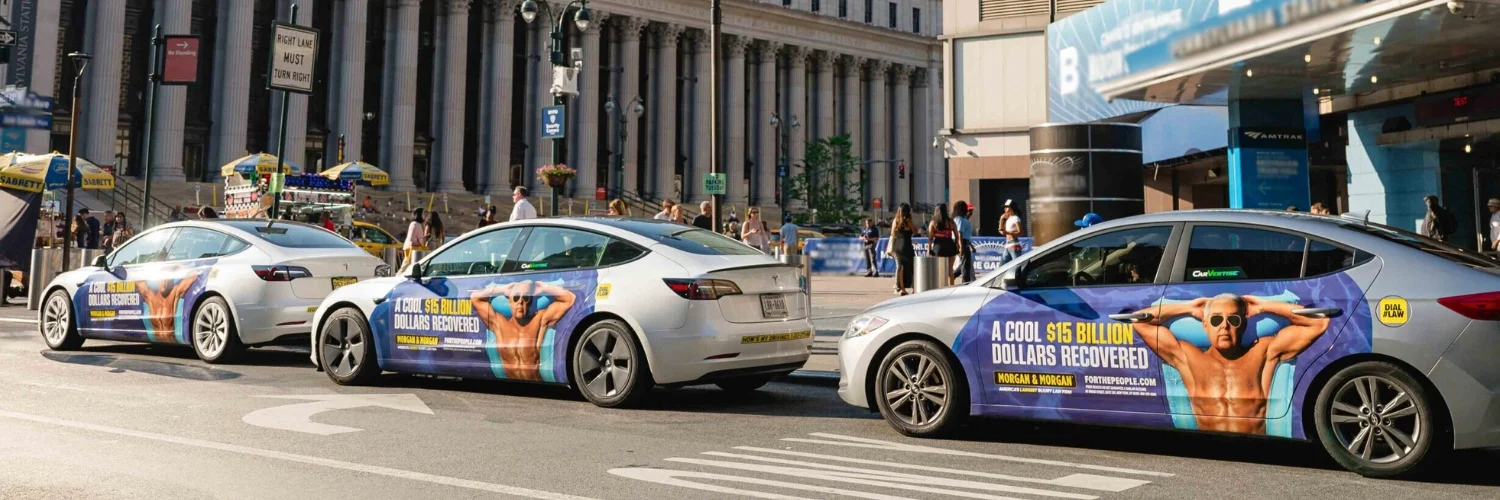
Car advertising through Carvertise extends reach beyond terminal walls, following travelers throughout their Chicago experience. Wrapped vehicles appear outside O’Hare hotels during airport shuttle pickups, circulate through downtown convention districts where business travelers attend meetings, show up at Navy Pier and Magnificent Mile where tourists spend time, and create repeated exposure across their entire journey—not just the airport portion.
Ready to reach O’Hare travelers beyond expensive terminal placements? Contact Carvertise to deploy mobile advertising that follows visitors throughout Chicago, creating multiple touchpoints from airport arrival through their entire stay.
Why Terminal-Only Advertising Misses Most of the Traveler Journey
Understanding the limitations of traditional O’Hare airport advertising requires examining actual traveler behavior throughout Chicago visits.
The Two-Hour Terminal Window
Business travelers arriving at O’Hare typically spend 30-45 minutes from plane exit to ground transportation—navigating the terminal, collecting baggage, finding their ride. Departing travelers arrive 60-90 minutes before flights, check bags, clear security, and wait at gates. Total terminal exposure: under two hours per trip.
During this compressed window, travelers are focused on logistics—finding gates, checking flight status, rushing to connections, managing luggage. They’re not in decision-making mode for restaurants, entertainment, or services they’ll use later during their Chicago visit. A terminal ad might register subconsciously but rarely drives immediate action or later recall when actual purchasing decisions happen.
Where Travelers Actually Spend Time and Money
The remaining 24-72 hours of a typical Chicago visit happen entirely outside O’Hare. Business travelers spend time in the Loop, River North, or Near West Side at conventions, conferences, and corporate meetings. They eat lunch near McCormick Place or dinner in the West Loop restaurant district. They stay at hotels near downtown or O’Hare.
Leisure tourists concentrate on Magnificent Mile shopping, Navy Pier, Millennium Park, the Museum Campus, Wrigleyville for Cubs games, or neighborhoods like Lincoln Park and Wicker Park. They need restaurant recommendations, entertainment options, and retail shopping—decisions made throughout their visit, not during terminal transit.
Convention attendees spend days at McCormick Place, the largest convention center in North America, then seek nearby dining and entertainment. They rarely return to O’Hare between arrival and departure, meaning airport advertising reaches them only twice—during arrival and departure logistics—missing the entire convention experience when they’re actively seeking services.
How Mobile Advertising Reaches O’Hare Travelers Beyond Terminal Walls
Mobile billboard advertising through Carvertise fundamentally changes how businesses reach O’Hare travelers by following them throughout their entire Chicago experience rather than capturing brief terminal moments.
The Mobile Billboard Advantage for Traveler Marketing
Traditional airport advertising operates on a broadcast model—place your message where large crowds pass and hope the right people notice at the right time. Mobile billboards flip this approach by going where travelers actually are throughout their visits.
Wrapped vehicles driven by rideshare drivers, delivery workers, and Chicago residents naturally circulate through the exact zones where O’Hare travelers concentrate after leaving the airport. A rideshare driver picking up fares in River North hotels creates exposure to business travelers.
The same driver ferrying tourists to Navy Pier delivers impressions when those visitors are planning their next activity. Delivery drivers working lunch hours near McCormick Place reach convention attendees deciding where to eat.
This isn’t random—it’s behaviorally targeted coverage based on where Chicago visitors actually spend time and money. The wrapped vehicles appear in hotel parking lots during morning checkout, outside restaurants during dinner hours, near attractions during peak visiting times, and in shopping districts when tourists are actively browsing.
Multi-Day Exposure Creates Familiarity and Trust
The psychological impact of encountering the same branded vehicle multiple times throughout a multi-day Chicago visit far exceeds seeing a terminal ad once during arrival logistics.
Day one: A business traveler sees your wrapped vehicle outside their River North hotel during airport shuttle arrival. Day two: They encounter it again near McCormick Place during their lunch break. Day three: It appears outside the restaurant where they’re having a client dinner. By the third encounter, your brand feels familiar, local, and trustworthy—even though they’ve never consciously studied your advertising.
This “mere exposure effect” is well-documented in consumer psychology. Repeated encounters in varied contexts build implicit memory and positive associations that influence purchasing decisions even when people can’t explicitly recall where they’ve seen a brand.
Terminal advertising can’t replicate this because travelers see it once—during the stressful, logistics-focused arrival or departure window when advertising barely registers—then never encounter it again during their actual Chicago experience when purchasing decisions happen.
GPS Tracking Verifies Traveler Zone Coverage
Unlike terminal advertising where you’re promised “X million annual passengers see your ad” with no verification of who actually noticed it or what they did afterward, Carvertise provides GPS tracking showing exactly where wrapped vehicles travel and how much time they spend in traveler concentration zones.
Real-time dashboards reveal coverage patterns: How many hours did vehicles spend near O’Hare hotels this week? What percentage of driving time occurred in the Loop versus tourist districts? Which convention center areas received the most exposure during that major trade show?
This transparency enables optimization impossible with terminal placements. If your business targets convention attendees but GPS shows minimal McCormick Place coverage, driver recruitment adjusts to increase presence in that zone. If tourist attraction coverage peaks midweek when visitor volume is lower, routing shifts toward weekend concentration.
Case Study: Morton College Student Recruitment in Chicago
Morton College demonstrates how educational institutions and service organizations use mobile billboards to reach diverse Chicago audiences including travelers, residents, and workers moving throughout the metro area.
Campaign Strategy and Execution
Morton College deployed 15 rideshare vehicles across Chicago for 24 weeks, sending cars to high-impact areas throughout the city. The campaign targeted prospective students, community members, and anyone considering higher education options—a broad demographic that includes Chicago residents, suburban commuters, and even visitors to the area who might be relocating or considering educational opportunities.
The wrapped vehicles featured Morton College’s distinctive orange branding with clear messaging designed to drive website visits where prospective students could learn about programs, enrollment, and campus information. Rideshare drivers provided natural coverage throughout Chicago neighborhoods, business districts, entertainment areas, and transportation hubs—including areas near O’Hare where travelers concentrate.
Carvertise partnered with StreetMetrics to track website visitation rates following exposure to wrapped vehicles, measuring actual behavior change rather than just impressions.
Verified Results
The campaign produced significant, measurable digital engagement:
2,691 individual visits to the Morton College website after exposure to Carvertise cars during a six-week tracking period.
5.78% visitation rate to the Morton College website after exposure to Carvertise cars during the same six-week tracking window.
StreetMetrics used location tracking to identify individuals who encountered wrapped vehicles, then measured their subsequent website visits. These weren’t estimates—the data represents verified actions by people who saw the mobile billboard and then actively visited Morton College’s website.
The nearly 6% visitation rate shows strong engagement, particularly valuable for educational institutions where website visits represent serious inquiry rather than casual browsing. For Chicago businesses seeking to reach travelers and residents alike, this conversion rate demonstrates that mobile billboards drive measurable digital action across diverse audiences.
Chicagoland Traveler Marketing
Morton College’s Chicago success demonstrates that mobile billboards effectively reach multiple audience segments simultaneously—a critical advantage for businesses targeting both travelers and local residents.
O’Hare travelers aren’t isolated from Chicago’s broader population. Business travelers mix with local professionals in River North restaurants. Tourists shop alongside Chicago residents on Magnificent Mile. Convention attendees encounter local workers during lunch hours near McCormick Place.
Mobile billboards circulating throughout Chicago reach travelers during their visits while also building awareness among Chicago residents who represent repeat customers, local reputation builders, and word-of-mouth advocates. A single campaign generates value across multiple audience segments without requiring separate investments for each.
Creative Execution for Mobile Traveler Advertising
Reaching O’Hare travelers through mobile billboards requires creative approaches different from terminal advertising.
Terminal ads can include detailed information—multiple services, specific pricing, complex maps—because viewers may have extended dwell time waiting at gates. Mobile billboard creative must work in 2-3 seconds as travelers walk past wrapped vehicles or see them from taxi windows.
Focus on one clear value proposition: “Best Deep Dish Near Navy Pier,” “Downtown’s Fastest Airport Shuttle,” “24-Hour Pharmacy—Loop Location.” Avoid trying to communicate multiple messages or detailed service information.
Include location specificity that helps travelers immediately understand relevance. “River North” or “Magnificent Mile” means more to tourists than a street address. “Near McCormick Place” resonates with convention attendees better than a ZIP code.
QR codes work well for traveler-focused mobile billboards because tourists and business travelers are comfortable using phones to access information immediately. A QR code leading to a mobile-optimized menu, booking page, or directions converts interest into action without requiring travelers to remember brand names or URLs hours later.
Launch Your O’Hare Traveler Campaign
Carvertise enables Chicago businesses to reach O’Hare travelers throughout their entire city experience rather than just during compressed terminal windows.
Initial consultation identifies which traveler segments drive your business—business travelers, convention attendees, leisure tourists, or specific demographic profiles. Campaign design creates wraps optimized for mobile visibility in Chicago’s urban environment, with messaging that resonates with traveler needs and decision-making contexts.
Driver recruitment focuses on individuals whose routes align with traveler concentration points: O’Hare hotel areas, downtown business districts, convention centers, tourist attractions, and restaurant/entertainment districts where visitors spend time throughout their stays.
GPS tracking verifies coverage across traveler zones, showing exactly where wrapped vehicles travel, which neighborhoods receive maximum exposure, and how coverage aligns with traveler traffic patterns throughout typical visit durations.
Flexible campaign timing allows seasonal targeting around peak business travel periods, major conventions at McCormick Place, or summer tourist season when O’Hare traffic peaks.
Contact Carvertise for an O’Hare traveler campaign proposal including traveler segment targeting, geographic coverage strategies focused on where visitors actually spend time, and creative consultation optimized for mobile viewing contexts throughout Chicago.
Frequently Asked Questions
How does mobile advertising reach O’Hare travelers if vehicles aren’t inside terminals?
Mobile billboards reach travelers throughout their Chicago visits—at hotels, restaurants, attractions, convention centers, and shopping districts—creating repeated exposure across multiple days rather than single brief terminal encounters.
Can campaigns target specific traveler types like business travelers or tourists?
Yes. Driver recruitment and routing emphasize areas where specific traveler types concentrate: business districts and convention centers for corporate travelers, tourist attractions and Magnificent Mile for leisure visitors.
What’s the timeline for launching a traveler-focused campaign?
Campaigns launch within 2-4 weeks. Design approval takes 3-5 days, driver recruitment 1-2 weeks, and wrap production/installation 5-7 days.
How many vehicles provide effective O’Hare traveler coverage?
This depends on objectives. Comprehensive coverage across business districts, tourist areas, and hotel zones might need 10-15 vehicles. Focused targeting on specific traveler types or neighborhoods could succeed with 5-8 vehicles.
Can campaigns time around major conventions or peak travel periods?
Yes. Campaign intensity can increase during major McCormick Place conventions, summer tourist season, or business travel peak periods, then reduce during slower times for cost efficiency.