

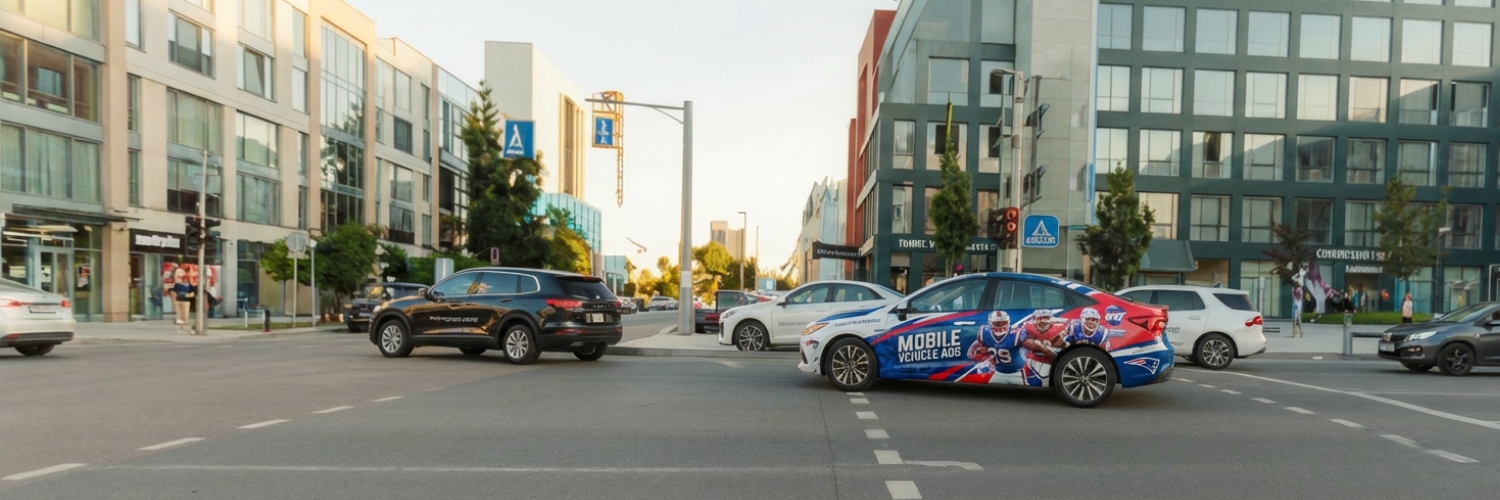
Angel Stadium draws over 2.5 million fans every year for Angels games, Monster Jam events, and Supercross competitions. Billboards along I-5 or State Route 57 only capture people during their commute—they miss fans arriving two and a half hours early to tailgate, grabbing dinner on Katella Avenue after the game, or exploring Anaheim’s Platinum Triangle district.
Vehicle advertising reaches fans where they actually spend time. Wrapped cars circulate through Angel Stadium parking lots, past ARTIC station where Metrolink riders arrive, and along approach routes from Orange County and Los Angeles. They move through commercial corridors on Katella and Orangewood throughout the entire game-day experience.
Connect with Carvertise to reach Angel Stadium fans where they actually make decisions—in parking areas, neighborhood streets, and the routes they travel before and after events.
Unique Advertising Challenges Faced by Angel Stadium
Limited Static Billboard Sightlines
Billboards along the I-5 corridor catch plenty of eyeballs—commuters driving between Los Angeles and San Diego see them every day. But most of those drivers aren’t heading to Angel Stadium. They’re passing through on their way to work or Disneyland, which means your impressions aren’t converting to actual event attendance or visits to nearby businesses.
State Route 57 presents a different problem. The Orange Freeway runs directly past Angel Stadium and Honda Center, so the entire corridor is saturated with advertising from entertainment venues, hotels, and restaurants competing for the same Anaheim tourist traffic. Your message has to fight through dozens of other advertisers vying for attention.
Event-Driven Traffic Patterns
Angels games pull anywhere from 25,000 to 40,000 people depending on matchups, day of the week, and team performance. The 2024 season averaged 31,822 fans per game. Major concerts and Supercross events can pack 45,000+ fans into the venue. That kind of attendance variation makes it hard to justify the fixed cost of billboard advertising.
The venue access situation doesn’t help either. Fans arrive from multiple directions—Katella Avenue from the west, Orangewood Avenue from the south, State College Boulevard from I-5, Gene Autry Way from the bridge extension. One billboard placement only captures people coming from one direction, which means you’re missing most of your potential audience.
How Vehicle Advertising Outperforms Angel Stadium Billboards
Parking Lot and Tailgate Penetration
Wrapped vehicles drive directly through Angel Stadium parking lots where fans spend one to three hours before games. The Big A parking lot, located near the famous scoreboard marquee, hosts the most active tailgating culture. Fans set up grills, hang out with friends, and pay attention to their surroundings during these extended windows.
Billboards on I-5 or Route 57 are completely invisible from these parking areas. Fans pull in off Orangewood or State College, set up their tailgate, spend two hours in the lot, then walk into the stadium. They never see your billboard. Vehicle advertising gets right into the spaces where fans are actually making purchasing decisions about food, drinks, and entertainment.
General parking costs $20 when purchased in person, creating massive concentrations of vehicles in designated areas. Season ticket holders enter through the Express Lane on Orangewood Avenue, while oversized vehicles use a separate entrance. This predictable traffic flow allows wrapped vehicles to maintain consistent visibility in high-traffic zones all throughout.
Neighborhood Integration Around Angel Stadium
The Platinum Triangle area surrounding Angel Stadium is experiencing rapid development with new apartments and condos creating a growing residential population. The 92806 zip code houses middle-class families and young professionals who attend games regularly.
Vehicle advertising reaches these fans in their own neighborhoods all week long, not just on game days when they happen to drive past a billboard. The Katella Avenue corridor between State College and Douglas serves as the main commercial strip for pre-game and post-game dining.
Golden Road Anaheim, Karl Strauss Brewing Company, and other establishments sit within walking distance of the stadium. Vehicle advertising maintains visibility right when people are deciding where to eat, creating multiple touchpoints throughout the game-day experience.
Multi-Route Coverage vs. Single Billboard Location
Vehicle advertising reaches fans coming from Orange, Santa Ana, Fullerton, and Los Angeles all at once. A single billboard only covers one approach route. Wrapped cars circulate around ARTIC station where Metrolink and Amtrak passengers arrive, then follow egress routes north and south on Route 57, west on I-5, and through the surrounding commercial districts.
Harbor Boulevard runs parallel to the stadium area and serves as an alternative route for fans avoiding freeway congestion. Small office parks east of Route 57 offer budget parking options, drawing cost-conscious fans who never use the main approaches where billboards are concentrated. Vehicle advertising captures these peripheral routes automatically.
Event-to-Event Continuity
Vehicles keep your brand visible between events, even when Angel Stadium sits empty. Your wrapped cars reach the same fans across Angels games, Monster Jam shows, and Supercross competitions throughout the year, building recognition through repeated exposure instead of hoping one billboard impression sticks.
Satisfied Clients: Albertsons Dallas Cowboys Stadium Campaign
Challenge: Albertsons needed to drive foot traffic to their Tom Thumb grocery stores in the Dallas-Fort Worth area during NFL season. Traditional billboard advertising failed to convert game-day excitement into immediate store visits. The company needed a way to reach Dallas Cowboys fans during peak windows on game days when purchasing intent was strongest.
Solution: Albertsons partnered with Carvertise to deploy wrapped vehicles at every Dallas Cowboys home game throughout the season. The campaign created concentrated visibility around AT&T Stadium, then followed fans back into their neighborhoods. Vehicles circulated through parking areas, tailgate zones, and residential communities where Cowboys fans lived.
The messaging promoted a special discount for customers wearing Cowboys merchandise to Tom Thumb stores on game days, directly tying the advertising to measurable store visits.
Results: The campaign drove concrete business outcomes that traditional billboards couldn’t match. Exposed audiences were 33% more likely to visit Tom Thumb stores on Sundays compared to the control group.
The measurable lift in foot traffic directly correlated with vehicle advertising exposure during game days. The promotion successfully converted game-day enthusiasm into actual shopping behavior by reaching fans when they were most receptive.
The campaign demonstrated how sports venue advertising creates immediate business results by reaching fans during peak engagement windows, then maintaining visibility as they return to their daily routines. This same strategy applies to any major sports venue—capturing fans when emotions run high, then staying visible through their post-game activities.
How Carvertise Performs Angel Stadium Advertising
Local Driver Networks in Anaheim
Carvertise recruits drivers who already live and work in Anaheim’s stadium neighborhoods—actual residents of the 92806, 92805, and 92802 zip codes who naturally move through the venue area during their normal daily routines. These aren’t commercial delivery trucks making predictable routes that people mentally tune out.
They’re everyday cars driven by community members who park near the stadium, commute along Katella Avenue to work, and navigate through Anaheim neighborhoods where fans live.
Your advertising feels like organic neighborhood presence instead of intrusive commercial messaging. The drivers shop at the same stores, eat at the same restaurants, and attend the same events as your target audience.
GPS-Verified Angel Stadium Coverage
Every wrapped vehicle carries GPS tracking that provides hard proof of campaign performance. Heat maps show exactly which areas got the most exposure—how long vehicles spent in parking lots, circulation patterns along Katella Avenue and Gene Autry Way, coverage density near the State College Boulevard approach.
Route logs prove vehicle presence during event windows versus non-event days, so you know your advertising dollars are targeting actual game attendance instead of empty parking lots on a Tuesday. The data shows dwell time in tailgating areas, frequency of passes through high-traffic intersections, and correlation with event schedules at both Angel Stadium and Honda Center.
Swarm Deployments for Major Events
Carvertise’s Swarm capability puts 10-20 vehicles on the ground simultaneously for high-value events—Opening Day, playoff contention games, major concerts pulling 40,000+ attendees, Monster Jam weekends. This concentrated coverage creates unavoidable visibility during peak decision-making windows when fans are most receptive.
Flexible scheduling matches Angel Stadium’s event calendar, letting you invest strategically during periods when ROI potential peaks instead of spreading budget across the entire year maintaining constant presence. Weekend games typically draw larger crowds than weekday matchups, justifying increased vehicle deployment when attendance numbers support it.
Performance Tracking Beyond Impressions
Campaigns tie directly to actual business results through comprehensive analytics. Track foot traffic increases to restaurants along Katella Avenue. Monitor discount code redemption by Orange County residents. Analyze website traffic spikes from Anaheim and Orange County IP addresses during game days.
Custom tracking URLs and dedicated phone numbers attribute specific conversions back to vehicle exposure. Measure app downloads geo-tagged to the stadium area. Connect advertising spend to real outcomes instead of guessing at impact.
Best Practices for Angel Stadium Mobile Campaigns
Timing Your Campaign with Baseball Season
The Angels’ 81 home games from March through September create predictable traffic patterns. Launch campaigns before Opening Day to build brand recognition, then maintain presence through the summer when families attend weekday games.
Peak deployment during weekend series maximizes exposure per advertising dollar. Weekend attendance typically jumps 20-30% above weekday averages, which means more eyes on your wrapped vehicles during the same deployment cost.
Coordinating with Non-Baseball Events
Monster Jam in January and Supercross events from January through March draw completely different demographics than baseball crowds. Motorsports fans skew younger and more male. Adjust messaging and vehicle deployment to match these distinct audiences rather than running identical campaigns year-round.
Concert crowds at Angel Stadium create late-night opportunities for restaurants and entertainment venues. When major acts perform, thousands of fans flood Katella Avenue after 10 PM looking for food and drinks—a demographic that traditional billboard advertising can’t effectively target.
Geographic Targeting Beyond the Stadium
Focus vehicle concentration in the 92806 zip code where middle-class families live closest to the venue. Extend coverage into the 92805 downtown Anaheim area to reach the Packing District food hall crowd.
Include Orange and Santa Ana for fans commuting from southern Orange County. Avoid oversaturating Disneyland tourist areas where visitors aren’t attending Angels games—your advertising budget should target actual stadium attendees, not theme park tourists who never set foot near Angel Stadium.
Getting Started with Carvertise at Angel Stadium
Traditional Angel Stadium billboards capture drivers on I-5 and Route 57. Vehicle advertising circulates through parking lots, neighborhoods, and the multiple approach routes fans actually travel. Local drivers, verified performance data, and flexible event-based deployment deliver measurable results that static placements can’t match.
Carvertise changes how brands connect with Anaheim audiences—your message moves through every part of the event experience. From residential streets to Katella Avenue restaurants to parking areas, wrapped vehicles create deeper engagement and actual business outcomes you can measure.
Ready to reach Angel Stadium fans where they’re actually making purchasing decisions? Contact Carvertise today to deploy mobile advertising campaigns customized for Angel Stadium’s unique event environment and Anaheim’s diverse community.
Frequently Asked Questions
How does vehicle advertising compare to traditional Angel Stadium billboards?
Traditional billboards along I-5 and Route 57 only reach drivers on specific routes. Vehicle advertising circulates through Angel Stadium parking lots, tailgate areas, Anaheim neighborhoods, and multiple approach routes simultaneously. You get broader coverage, GPS-verified performance data, and typically lower costs than premium billboard placements.
What’s the typical investment for an Angel Stadium area campaign?
Campaign costs depend on how many vehicles you deploy, which areas need coverage, and campaign duration. Everything from design to wrapping to management comes bundled. For specific numbers tailored to Angel Stadium, contact Carvertise directly. Businesses typically start with 5-10 vehicles, then scale to 15-25 for major events like Opening Day or playoff games.
How quickly can Angel Stadium campaigns launch?
From concept to wrapped vehicles circulating around Angel Stadium takes three to four weeks—including design, wrap production, installation, and driver coordination. Faster timelines can be arranged with advance notice for tight deadlines like Opening Day, major concerts, or Supercross events.
Can campaigns target specific event types or fan demographics?
Yes. Vehicles concentrate around baseball games for family demographics, target younger audiences during concerts and Monster Jam events, or focus on Anaheim residents in the 92806, 92805, and 92802 zip codes. GPS data confirms vehicles spend time in your priority zones during relevant event windows.
How is Angel Stadium campaign performance measured?
You get vehicle metrics—miles covered, impressions, location coverage, parking lot dwell time—plus business impact including website traffic from Orange County, discount code usage, foot traffic increases to nearby restaurants, and app downloads. Phone numbers and custom URLs trace results directly to vehicle advertising, proving ROI beyond impression counts.