

JFK Airport processes 62+ million passengers annually, making it one of America’s busiest international gateways and a seemingly ideal advertising venue. The reality? Traditional JFK airport advertising—terminal displays, baggage claim signage, gate placements—costs $20,000-$60,000+ monthly for premium locations, locks you into 6-12 month contracts, and reaches travelers only during the 60-90 minutes they’re navigating terminals.
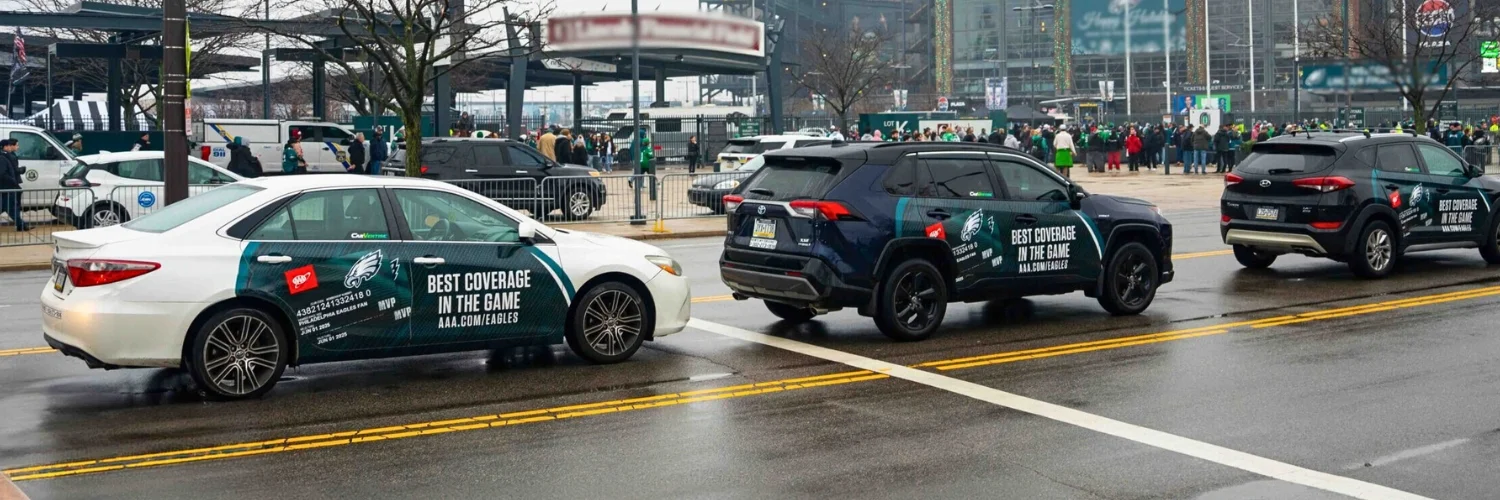
Car advertising through Carvertise extends beyond terminal walls into the neighborhoods, business districts, tourist zones, and hotel areas where JFK travelers actually spend their time and money. Wrapped vehicles appear outside Long Island City hotels during morning checkouts, circulate through Midtown during lunch hours when business travelers need dining options and show up at Times Square and Brooklyn Bridge when tourists are exploring.
Ready to reach JFK travelers throughout their entire New York experience instead of just during terminal transit? Contact Carvertise to deploy mobile advertising that follows international visitors, business travelers, and tourists across Manhattan, Brooklyn, Queens, and beyond—capturing attention when purchasing decisions actually happen.
The Terminal Exposure Gap: Where Traditional JFK Advertising Falls Short
Understanding why traditional airport advertising underperforms requires examining actual traveler behavior throughout New York visits.
JFK’s terminal experience is compressed and stressful. International arrivals face customs, baggage claim, and ground transportation navigation—typically 45-75 minutes of logistics-focused activity. Domestic arrivals move faster but remain focused on exiting efficiently. Departing travelers arrive 90-120 minutes before flights, check bags, clear security, and wait at gates.
During these windows, travelers aren’t receptive to advertising about New York restaurants, services, or attractions. They’re managing logistics: finding baggage carousels, locating ground transportation, checking flight status, dealing with security lines. Even if they notice terminal ads, recall hours or days later when actually making dining or entertainment decisions is minimal.
The real opportunity happens after JFK. Business travelers spend days in Manhattan attending meetings, dining with clients, and networking at hotels. International tourists explore Times Square, Central Park, museums, Brooklyn neighborhoods, and restaurant districts across multiple days. Convention attendees concentrate around Javits Center but venture throughout Manhattan during evenings and off-hours.
These travelers make hundreds of micro-decisions throughout their visits: where to eat breakfast, which coffee shop to work from, what to do between meetings, where to have dinner, which bars to visit, what shops to browse. Traditional JFK terminal advertising reaches them once during arrival logistics, then disappears entirely during the 95% of their trip when actual purchasing decisions occur.
Following Travelers Across New York With Mobile Billboards
Effective traveler advertising requires presence throughout their journey, not just at entry and exit points.
Manhattan business districts—Midtown, Financial District, Hudson Yards—concentrate corporate travelers during weekdays. Mobile billboards circulating during lunch hours (12-2pm) reach travelers making dining decisions. Evening coverage (5-8pm) influences dinner choices and after-work entertainment.
Hotel concentration zones create captive audiences making daily decisions. Long Island City, Times Square area, Midtown West, and Lower Manhattan hotels house thousands of travelers each night. Morning coverage captures travelers planning their day. Evening presence influences dinner and entertainment choices.
Tourist attraction zones—Times Square, Central Park, SoHo, Brooklyn Bridge, Williamsburg—concentrate leisure travelers following predictable patterns. Mobile billboards appearing near these attractions reach tourists when they’re actively exploring and making spontaneous decisions about dining, shopping, and activities.
Queens neighborhoods near JFK—Jamaica, Forest Hills, Flushing—house airport workers, crew layovers, and travelers seeking more affordable accommodations. Coverage here reaches audiences traditional Manhattan-focused advertising misses entirely while capturing travelers during their actual New York experience.
Case Study: Rita’s Water Ice Multi-Location Retail Traffic
Rita’s Water Ice Philadelphia campaign demonstrates how mobile billboards drive measurable store visits for businesses with multiple locations serving distributed populations comparable to New York metro.
Campaign Strategy and Execution
Rita’s Water Ice launched rideshare vehicles in Philadelphia for 8 weeks, strategically targeting key city areas and major events including concerts and professional sporting events. The campaign focused on reaching both Philadelphia residents and event attendees during periods when people actively seek refreshments, treats, and casual dining options.
The wrapped vehicles featured Rita’s distinctive branding with vibrant, appetizing imagery designed to trigger cravings and drive immediate store visits. Rideshare drivers naturally concentrated near entertainment venues, residential neighborhoods, shopping districts, and event locations—exactly where potential customers were actively moving throughout the city.
Carvertise partnered with StreetMetrics to track actual store visits to Rita’s 125 locations following exposure to wrapped vehicles, measuring real customer behavior across a distributed retail footprint.
Verified Results
The campaign produced exceptional, measurable retail traffic across Rita’s multi-location network:
74,000+ unique devices exposed to Rita’s Water Ice cars during the Carvertise campaign.
779+ visitors driven to Rita’s Water Ice locations during the Carvertise campaign.
With nearly 4 million impressions reaching 800,000 unique individuals over 8 weeks, the campaign achieved a 5x frequency—meaning the average exposed person encountered Rita’s wrapped vehicles five times. This repeated exposure built familiarity and triggered action, with StreetMetrics verifying actual store visits following mobile billboard exposure.
For a multi-location retailer like Rita’s, these results demonstrate mobile billboards’ effectiveness at driving traffic across distributed store networks. The 779+ verified visits represent customers who saw wrapped vehicles and then physically visited one of 125 locations—proving the advertising didn’t just create awareness but drove actual purchasing behavior.
Application to JFK Traveler Marketing Across New York
Rita’s success in Philadelphia translates directly to reaching JFK travelers across New York’s massive, distributed landscape.
JFK travelers don’t concentrate in one Manhattan neighborhood—they spread across hotels in multiple boroughs, attend meetings in various business districts, explore different tourist zones, and dine in neighborhoods from Financial District to Williamsburg. A restaurant, retail store, or service provider can’t capture this distributed audience with single-location advertising.
Mobile billboards solve this by circulating throughout the areas where JFK travelers concentrate, creating multiple exposure opportunities across their multi-day visits. A business traveler might encounter your wrapped vehicle Monday morning in Midtown, Tuesday afternoon near their Financial District meeting, and Wednesday evening in SoHo during client dinner—building familiarity through repeated contextual exposure that drives eventual action.
The 5x frequency from Rita’s campaign demonstrates why mobile billboards outperform single-exposure terminal ads. One terminal ad during JFK arrival barely registers. Five encounters across different New York contexts throughout a multi-day visit builds recognition, trust, and action.
For New York businesses with multiple locations or serving distributed populations, Rita’s 779+ verified visits across 125 locations proves mobile billboards drive traffic to wherever customers encounter your business—not just one flagship location near your advertising placement.
Creative Execution for International and Diverse Audiences
JFK’s international passenger volume demands creative approaches that work across cultural contexts and language barriers.
Visual-first design matters more when reaching international travelers who may have limited English proficiency. A wrapped vehicle showing appetizing food photography communicates instantly across languages. A wrap with text-heavy messaging loses effectiveness among non-English speakers.
Location specificity helps international visitors orient themselves. “Midtown Manhattan” or “Near Times Square” provides context that street addresses don’t. International tourists often navigate by landmarks and neighborhoods rather than numbered streets.
Cultural sensitivity ensures wraps don’t alienate international audiences. Avoid American cultural references that don’t translate globally. Humor that works domestically may confuse or offend international visitors. Clean, clear, universally understood value propositions perform best.
Mobile-friendly QR codes work exceptionally well for international travelers who rely heavily on smartphones for navigation, translation, and information. A QR code leading to a mobile-optimized menu with photos converts interest into immediate action without requiring language proficiency or local knowledge.
Launch Your JFK Traveler Campaign
Carvertise enables New York businesses to reach JFK travelers throughout their entire city experience rather than just during compressed terminal windows.
Initial consultation identifies which traveler segments drive your business—international tourists, domestic business travelers, specific nationality groups, or particular demographic profiles. Campaign design creates wraps optimized for New York’s urban environment with messaging that resonates across cultural contexts.
Driver recruitment focuses on individuals whose routes align with traveler concentration points: Manhattan business districts, hotel zones across multiple boroughs, tourist attractions from Times Square to Brooklyn, and restaurant/entertainment districts where JFK visitors spend evenings.
GPS tracking verifies coverage across traveler zones, showing exactly where wrapped vehicles travel and how coverage aligns with traveler traffic patterns throughout typical multi-day visits.
Contact Carvertise for a JFK traveler campaign proposal including traveler segment targeting, geographic coverage strategies focused on where visitors actually spend time, and creative consultation optimized for international audiences and mobile viewing contexts throughout New York City.
Frequently Asked Questions
How does mobile advertising reach JFK travelers if vehicles aren’t inside terminals?
Mobile billboards reach travelers throughout their New York visits—at hotels, restaurants, attractions, business districts, and entertainment zones—creating repeated exposure across multiple days rather than single brief terminal encounters.
Can campaigns target specific traveler types like international tourists or business travelers?
Yes. Driver recruitment and routing emphasize areas where specific traveler types concentrate: business districts and Midtown for corporate travelers, Times Square and major attractions for leisure tourists, Queens neighborhoods for budget-conscious international visitors.
What’s the timeline for launching a traveler-focused campaign?
Campaigns launch within 2-4 weeks. Design approval takes 3-5 days, driver recruitment 1-2 weeks, and wrap production/installation 5-7 days.
How many vehicles provide effective JFK traveler coverage across New York?
This depends on objectives. Comprehensive coverage across Manhattan, Brooklyn, and Queens might need 15-20 vehicles. Focused targeting on specific neighborhoods or traveler types could succeed with 8-12 vehicles.
Can campaigns time around peak international travel periods?
Yes. Campaign intensity can increase during summer tourism season, winter holidays, or specific cultural events that drive international visitation, then reduce during slower periods for cost efficiency.