

The Shift Happening in Home Services Marketing
For HVAC and home service brands, 2026 looks very different than it did even two years ago.
Customer acquisition costs continue rising across paid search. Local SEO is more competitive than ever. Traditional billboards are expensive and hard to attribute. Meanwhile, homeowners are increasingly skeptical of digital ads they scroll past in seconds.
At the same time, one marketing channel is quietly outperforming expectations for local service businesses: rideshare advertising.
From HVAC companies and plumbing franchises to roofing, electrical, pest control, and restoration brands, home service marketers are turning to rideshare advertising because it combines something rare in modern advertising:
- High visibility
- Hyperlocal targeting
- Real-world trust
- Strong frequency
- Lower CPMs than many traditional channels
- And increasingly measurable brand lift
In 2026, the companies winning market share in local services are not relying on a single marketing channel. They are building omnipresent local brands. Rideshare advertising has become part of that strategy.
What Is Rideshare Advertising for HVAC and Home Services?
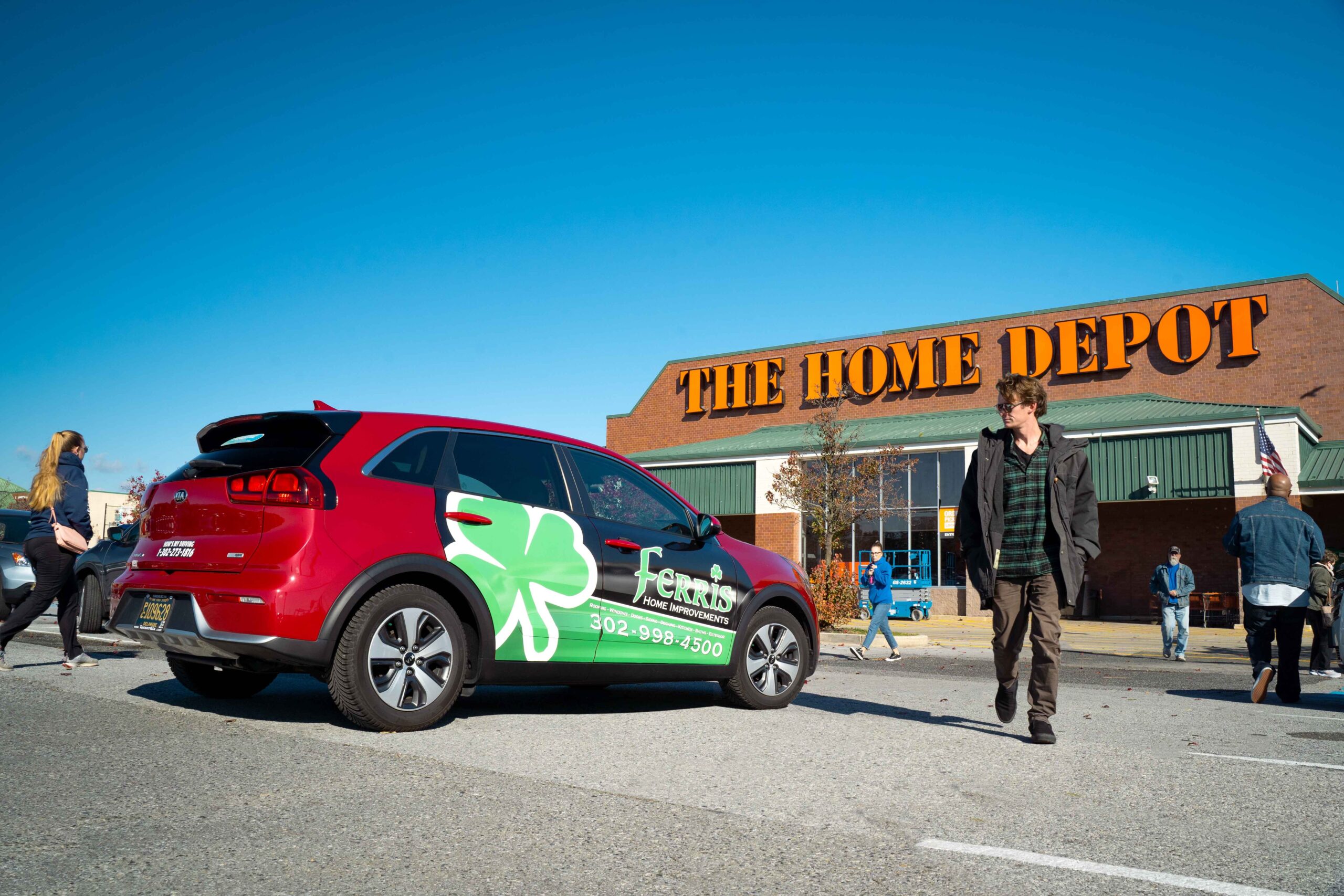
Rideshare advertising places branded vehicle wraps, rooftop displays, or digital campaigns on drivers for services like Uber and Lyft.
Unlike static billboards, rideshare vehicles move throughout high-density neighborhoods, commuter corridors, entertainment districts, airports, suburbs, and residential service areas.
For HVAC and home service brands, that mobility matters.
Consumers do not usually buy HVAC services impulsively. They buy when:
- Their AC breaks
- Their furnace stops working
- They need seasonal maintenance
- They move into a new home
- They need an emergency repair
That means brand familiarity before the moment of need becomes critically important.
The companies homeowners remember are often the companies they call first.
Why HVAC & Home Service Brands Are Investing More Into Rideshare Advertising
1. Local Brand Recall Is Becoming More Valuable Than Clicks
Performance marketing still matters. Google Ads still convert.
But many home service brands are discovering a major problem:
If every competitor is bidding on the same keywords, differentiation disappears.
When homeowners search:
- “AC repair near me”
- “emergency plumber”
- “HVAC company in [city]”
they often see nearly identical search results.
Brand familiarity changes that equation.
If a homeowner has already seen your company throughout their city repeatedly, your click-through rate and conversion rate improve dramatically.
Rideshare advertising creates repeated visual exposure across local markets in a way digital ads often cannot.
Why Repetition Matters in Home Services
Home service purchases are typically:
- High trust
- High urgency
- Moderately high cost
- Infrequent
That combination rewards brands consumers already recognize.
Research in advertising consistently shows repeated exposure increases:
- Brand recall
- Perceived credibility
- Purchase likelihood
- Direct traffic searches
For HVAC brands specifically, this matters because many customers do not deeply research providers during emergencies. They choose the company they recognize first.
2. HVAC Service Areas Match Rideshare Movement Patterns
One reason rideshare advertising performs well for home service brands is geographic alignment.
HVAC and home service companies operate within regional service zones. Rideshare vehicles naturally circulate within those same zones daily.
This creates:
- Repeated neighborhood visibility
- Market saturation in target ZIP codes
- Exposure during commuting hours
- Presence near retail centers, stadiums, airports, and residential areas
Unlike static billboards, rideshare campaigns distribute impressions dynamically throughout a market.
That means brands can often achieve broader visibility without needing dozens of billboard placements.
3. Consumers Trust “Real World” Advertising More
Digital fatigue is real.
Consumers are inundated with:
- Social ads
- YouTube pre-roll
- Streaming commercials
- Display banners
- Sponsored search listings
Physical-world advertising stands out because it feels more legitimate.
When consumers repeatedly see:
- Wrapped vehicles
- Branded rideshare fleets
- Consistent local presence
they subconsciously associate that visibility with company size, legitimacy, and trustworthiness.
For HVAC companies especially, trust directly impacts conversion rates.
Homeowners are inviting technicians into their homes. Brand legitimacy matters.
Why Rideshare Advertising Works Especially Well for HVAC Brands
Seasonal Demand Benefits From Always-On Visibility
HVAC demand spikes seasonally:
- Summer cooling emergencies
- Winter heating failures
- Spring/fall maintenance cycles
Brands that maintain visibility year-round often outperform competitors who only advertise reactively during peak seasons.
Rideshare advertising supports:
- Continuous awareness
- Seasonal reinforcement
- Local market dominance
- Multi-touch attribution across channels
When a homeowner suddenly needs service, the brand they already recognize has a measurable advantage.
It Amplifies Existing Digital Marketing
The strongest HVAC marketers are not replacing digital advertising.
They are strengthening it with offline visibility.
Rideshare advertising often improves performance across:
- Branded search volume
- Google Ads CTR
- Direct website visits
- Organic search engagement
- Social media familiarity
- Referral confidence
In many cases, offline exposure increases the effectiveness of online channels.
This is particularly important in 2026 as search behavior continues shifting toward AI-generated answers and conversational search experiences.
How AI Search Is Changing HVAC Marketing
The rise of:
- AI Overviews
- Conversational search
- LLM-based discovery
- Voice search
- Recommendation engines
is changing how consumers find local businesses.
Consumers increasingly ask:
- “Who’s the best HVAC company near me?”
- “What AC company do people trust in Dallas?”
- “Who should I call for emergency furnace repair?”
AI systems increasingly prioritize signals like:
- Brand authority
- Reviews
- Mentions across the web
- Consumer familiarity
- Search demand
- Local prominence
That means strong local branding indirectly supports discoverability in AI-driven search ecosystems.
The HVAC brands consumers already know are more likely to:
- Earn branded searches
- Generate reviews
- Build backlinks
- Increase engagement metrics
- Strengthen local authority signals
Rideshare advertising contributes to that ecosystem by increasing real-world brand awareness.
Why Home Service Franchises Are Paying Attention
Multi-location operators and franchise systems are especially interested in rideshare advertising because it scales efficiently across markets.
Benefits include:
- Market-by-market deployment
- Geographic targeting flexibility
- Consistent branding
- Faster awareness in new territories
- Lower production costs than large billboard networks
- Strong local impression density
For emerging franchise territories, rideshare advertising can accelerate brand familiarity before competitors establish dominance.
Measuring ROI: What HVAC Brands Should Actually Track
One mistake companies make is evaluating rideshare campaigns using only direct attribution.
This is a branding channel. Success should be measured using broader indicators like:
- Branded search growth
- Direct traffic increases
- Cost-per-lead improvements across paid search
- Lift in local awareness
- Increased review velocity
- Organic search engagement
- Assisted conversions
- Market share trends
The best-performing campaigns are usually integrated with:
- Paid search
- Local SEO
- CRM remarketing
- Community sponsorships
- Referral programs
- Social media campaigns
Common Misconceptions About Rideshare Advertising
“It only works for national brands.”
Not true.
In many cases, local and regional HVAC companies benefit more because geographic repetition is concentrated within a service area.
“It’s impossible to measure.”
Modern campaigns increasingly include:
- GPS tracking
- Geo-lift + footfall analysis
- Search lift measurement
- Branded traffic tracking
- Market comparison reporting
- Reporting on campaign impression
Like billboards, rideshare advertising is not purely last-click attribution. But it is far more measurable today than many marketers assume.
“Digital is enough.”
For some markets, maybe.
But as digital competition intensifies and customer acquisition costs rise, brands relying exclusively on performance marketing may struggle to maintain efficiency long-term.
The HVAC companies building durable local brands are diversifying visibility.
The Bigger Trend: Local Brand Dominance
The most successful home service companies in 2026 are becoming locally unavoidable.
Consumers see them:
- Online
- On Google Maps
- In AI search results
- On social media
- Through referrals
- And increasingly, throughout their city via rideshare advertising
That repeated visibility compounds over time.
In a category where trust drives conversion, brand familiarity is not a vanity metric. It is a growth strategy.
Key Takeaway
Rideshare advertising is gaining traction with HVAC and home service companies because it solves a growing marketing challenge:
How do you stay memorable in an overcrowded digital landscape?
For many brands, the answer is not abandoning digital marketing. It is reinforcing it with high-frequency, hyperlocal physical visibility.
As AI search, local competition, and rising ad costs continue reshaping customer acquisition, home service companies that invest in recognizable local branding may gain a significant long-term advantage.
And in 2026, rideshare advertising is increasingly becoming part of that playbook.
Ready to put your brand in front of homeowners where communities actually move? Connect with Carvertise to explore local campaigns for your HVAC or home services brand.