

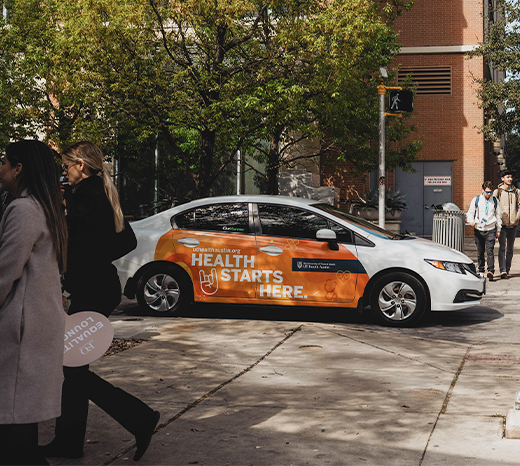
Healthcare and pharmaceutical marketers are facing a growing challenge in 2026: audiences are harder to reach, conferences are more competitive, and traditional media channels are becoming increasingly fragmented.
As a result, more brands are looking for ways to create visibility in the physical world, especially during high-intent moments where healthcare professionals, patients, caregivers, and decision-makers are already on the move.
One strategy seeing increased adoption is the “swarm” activation model: concentrated rideshare advertising and mobile OOH campaigns deployed around conferences, medical campuses, citywide healthcare events, and targeted geographic zones.
Based on campaign trends and advertiser demand across the healthcare and pharmaceutical industry, here are five healthcare marketing activation trends gaining traction in 2026.
1. Medical & Pharma Conference Takeovers
Healthcare conferences remain one of the biggest visibility opportunities of the year, but they have also become increasingly crowded.
Brands are extending their presence beyond the convention center by activating rideshare fleets around:
- Hotels
- Airports
- Networking dinners
- Offsite events
- Entertainment districts
- Convention corridors
This allows marketers to maintain visibility throughout the attendee journey, not just inside the expo hall.
High-priority events include:
- HLTH USA
- HIMSS (Healthcare Information and Management Systems Society)
- ASCO Annual Meeting
- RSNA Annual Meeting
- BIO International Convention
For healthcare conference marketing, repeated exposure outside the venue can often create stronger memory recall than a single booth interaction.
2. Healthcare System Brand Awareness Campaigns
Hospital systems and regional healthcare networks are increasingly using mobile OOH and rideshare advertising campaigns to build local market visibility.
Instead of relying solely on static placements, mobile campaigns allow healthcare brands to maintain presence across:
- Commuter corridors
- Residential neighborhoods
- Downtown districts
- Medical hubs
- High-density patient areas
This is especially valuable for:
- Health systems
- Urgent care providers
- Specialty care networks
- Insurance brands
- Regional healthcare organizations
The goal is not immediate conversion. It is long-term familiarity, trust, and community visibility.
For healthcare marketers, repeated exposure across local markets can help reinforce brand recognition before patients actively need care.
3. Product Launches & Disease Awareness Campaigns
Pharmaceutical marketers are also using swarm activations to support product launches and disease awareness initiatives in key metros.
Unlike broad national media buys, rideshare advertising campaigns allow brands to concentrate exposure around:
- Priority healthcare markets
- Research institutions
- Medical campuses
- Conference activity zones
- Targeted physician audiences
This approach works particularly well when paired with:
- Digital retargeting
- Mobile attribution
- Geofenced media
- HCP-focused event marketing
When paired with attribution and retargeting strategies, healthcare brands can also better understand campaign reach, visitation lift, and localized engagement trends.
4. Recruiting & Employer Brand Campaigns
Healthcare staffing shortages continue to affect hospitals and provider groups nationwide.
In response, healthcare employers are investing more heavily in localized recruitment marketing strategies.
Swarm campaigns can help healthcare systems stay visible around:
- Nursing schools
- Urban commuter routes
- University districts
- Medical campuses
- Healthcare conferences
For healthcare recruiters, visibility and repetition matter, especially in competitive metro areas where providers compete aggressively for talent.
Mobile OOH campaigns help healthcare employers maintain a consistent physical presence across the environments where prospective employees already spend time.
5. Community Health & Local Outreach Initiatives
Healthcare marketing is becoming more community-centered in 2026.
Brands are increasingly activating around:
- Wellness events
- Charity walks
- Community festivals
- Preventive care initiatives
- Public health awareness months
These campaigns help healthcare organizations position themselves as active participants within the communities they serve, rather than simply advertisers within them.
For hospitals, insurance providers, and healthcare systems, community visibility can play a major role in strengthening public trust and long-term brand perception.
Why Swarm Advertising Is Growing in Healthcare Marketing
Healthcare audiences are constantly moving between hospitals, offices, conferences, airports, hotels, and city centers.
Swarm advertising allows healthcare and pharmaceutical brands to meet those audiences in the real world, repeatedly and contextually.
For healthcare marketers, rideshare advertising creates several advantages:
- High-frequency local visibility
- Geographic precision
- Conference amplification
- Community presence
- Cross-channel attribution opportunities
- Stronger brand memory recall
- Increased share-of-voice around major healthcare events
Unlike static advertising, rideshare advertising campaigns move throughout the environments where healthcare professionals, patients, and decision-makers already spend time each day.
That repeated visibility can help healthcare brands remain top-of-mind long after an event, conference, or campaign interaction ends.
FAQ: Healthcare Swarm Advertising
What is swarm advertising in healthcare marketing?
Swarm advertising is a concentrated mobile OOH strategy where branded rideshare vehicles activate around healthcare conferences, hospitals, medical districts, or targeted geographic zones.
Why are healthcare brands using rideshare advertising?
Healthcare marketers use rideshare advertising to increase visibility, extend conference reach, improve local awareness, support recruiting initiatives, and maintain repeated exposure across high-traffic healthcare environments.
What healthcare events work best for swarm campaigns?
Major healthcare conferences like HIMSS, HLTH, ASCO, RSNA, and BIO International Convention are strong opportunities for rideshare advertising and conference takeover activations.
How does rideshare advertising help pharmaceutical brands?
Pharmaceutical marketers use rideshare advertising to support product launches, disease awareness initiatives, healthcare conference marketing, and targeted geographic visibility in key healthcare markets.
Bringing Healthcare Brands Into the Real World
As healthcare and pharmaceutical marketing becomes more competitive in 2026, brands are looking beyond traditional media to create visibility in the environments where healthcare audiences already move, commute, attend events, and make decisions.
Rideshare advertising swarms give healthcare marketers the ability to extend conference presence, increase local market visibility, support recruiting initiatives, and build repeated real-world exposure across high-priority markets.
At Carvertise, we help healthcare systems, pharmaceutical brands, and healthcare marketers activate targeted mobile OOH campaigns built around conferences, medical hubs, commuter corridors, and community engagement opportunities.
Whether you’re planning a healthcare conference activation, product launch, disease awareness initiative, or localized brand campaign, our team can help you build a rideshare advertising strategy designed for measurable visibility and real-world audience reach.
Request pricing, market availability, or healthcare swarm campaign examples to learn more.