

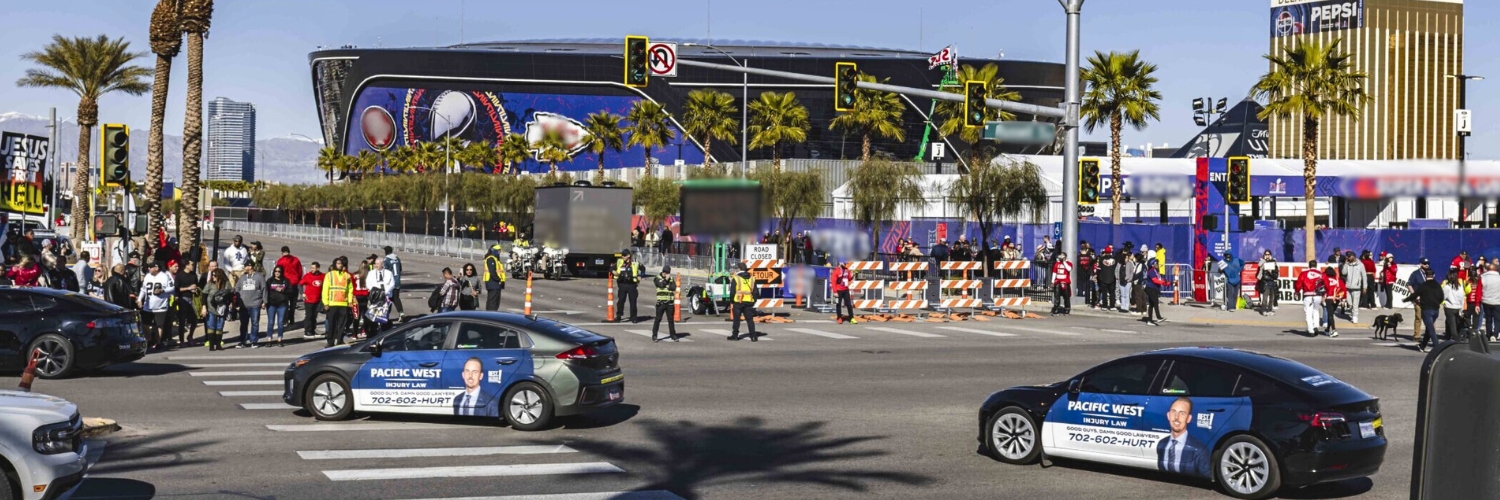
Riverside’s steady growth tells the story of a market in transition. The city grew from 303,871 residents in 2010 to 314,998 by 2020, spreading across 81.1 square miles. Traditional billboards dominate major arteries like I-215 and SR-91, digital screens rotate your message with multiple advertisers, and mobile billboards drive your brand directly to target neighborhoods.
This comparison breaks down what actually works in Riverside’s specific geography—verified cost data, traffic patterns on major routes, and performance metrics that matter for local campaigns.
Contact Carvertise to find out which outdoor advertising format delivers the best ROI for your Riverside business.
Riverside’s Outdoor Advertising Landscape
Geographic & Demographic Context
Riverside spans 81.1 square miles, and not all of them are created equal for advertising. With a median household income of $88,575, there’s real purchasing power here—you just need to know where to find it.
SR-91 is the heavy hitter, carrying over 280,000 vehicles daily through Riverside County. I-215 connects major employment hubs, while University Avenue and Magnolia Avenue cut east-west through residential and commercial areas.
Downtown’s Market Street gets busy during events and workday lunch hours. UC Riverside’s 26,400 students pack the Canyon Crest and University Village neighborhoods with young consumers.
The Arts District and government offices bring professionals downtown during business hours. Riverside Plaza and Canyon Crest Town Centre anchor the city’s retail activity.
Here’s where it gets interesting: the Mission Inn Festival of Lights pulls in roughly 500,000 visitors from late November through early January. That’s a massive seasonal audience that traditional billboards can’t chase around without locking into expensive year-long contracts.
Current Outdoor Advertising Inventory
Riverside Transit Agency runs 36 fixed routes serving about 6 million riders annually. Bus shelter ads line the major corridors, but they’re competing for attention with everything else on the street.
Traditional billboard space on SR-91 and I-215 is tough to secure. Municipal regulations and long-term leases have most premium spots locked up.
That’s great news for mobile billboards. While static signs sit in one place hoping the right audience drives by, mobile units go where the action is. They can park outside UC Riverside during move-in weekend, loop the Mission Inn during the holiday crush, and reach residential pockets that billboards will never touch.
Mobile Billboard Advertising in Riverside
How Mobile Billboards Work in Riverside
Mobile billboards thrive in Riverside’s sprawling geography where static signs struggle to reach diverse neighborhoods. University Avenue and Magnolia Avenue carry daily commuters through commercial zones, while Market Street downtown captures the lunch crowd and evening foot traffic that traditional billboards miss.
Event targeting creates concentrated exposure opportunities. The Mission Inn Festival of Lights draws 500,000 visitors over six weeks. UC Riverside’s move-in weekend packs 26,400 students and their families into campus neighborhoods. The Fox Theater district and White Park host concerts and community events throughout the year.
Time-of-day routing maximizes visibility where it matters. Morning campaigns target SR-91 feeder roads during rush hour when commuters sit in traffic. Lunch routes circle downtown office buildings and restaurants. Evening shifts move through Riverside Plaza and retail corridors when families shop.
Residential penetration reaches areas billboards simply can’t access. La Sierra, Canyon Crest, and Arlanza neighborhoods have minimal outdoor advertising presence. Mobile units bring brand messages directly to these communities without navigating complex zoning restrictions.
Mobile Billboard Advantages in Riverside
Geographic flexibility solves Riverside’s sprawl problem. One vehicle covers downtown, UC Riverside, Arlington, and Magnolia Center in a single day. Traditional billboards require multiple lease agreements across different zones to achieve the same coverage.
Traffic patterns work in your favor. SR-91 congestion means slow-moving visibility during peak hours—perfect for message absorption. Mobile units avoid notorious bottlenecks while capitalizing on high-visibility zones where cars idle at stoplights.
Demographic layering targets specific audiences with precision. Morning downtown routes reach professionals during their commute. Evening residential loops connect with families. Weekend campaigns focus on shopping districts and entertainment venues when purchase intent peaks.
Event amplification creates memorable brand moments. Physical presence at Riverside Dickens Festival, Riverside Airshow, or UCR sporting events puts your brand exactly where engaged audiences gather. Festival of Lights traffic alone justifies seasonal campaigns.
Mobile billboard campaigns offer flexible pricing without the 12-month commitments traditional billboards demand. Production costs cover vehicle wraps that serve multiple routes instead of single fixed locations, multiplying your geographic reach.
GPS tracking provides exact route verification and dwell time in target zones. QR codes and unique URLs track direct engagement. A/B testing lets you adjust routes, times, and creative mid-campaign based on real performance data.
Head-to-Head Comparison: Riverside Market Analysis
Cost Structure Comparison
Traditional billboards in Riverside require 12-month minimum commitments with monthly lease payments. Add production and installation costs, and you’re locked into a year-long financial commitment before seeing any performance data.
Digital billboards offer more flexibility but share screen time with multiple advertisers in rotation loops. Your message displays for seconds before cycling to the next advertiser. Monthly costs remain steady whether your ad performs or flops.
Mobile billboard campaigns eliminate long-term commitments entirely. Short-term tests let you evaluate performance before scaling. Production costs cover vehicle wraps that serve multiple routes instead of one fixed spot.
Performance Metrics
Riverside billboards average approximately 62,000 daily impressions. Location matters dramatically—SR-91 placements capture more eyeballs than residential arterials. But every billboard offers purely passive viewing with zero engagement tracking.
Digital billboards on major corridors like I-215 deliver similar impression volumes, split across multiple advertisers. If you’re sharing screen time with five other brands, divide those impressions accordingly.
Mobile billboards on optimized Riverside routes generate 30,000-70,000 daily impressions while moving through multiple high-value zones. The key difference: physical presence at events creates shareability. People photograph mobile billboards at the Festival of Lights. Nobody Instagram stories a static sign they pass daily.
Proven Results: Visit Cumberland Valley Case Study
The Campaign
Visit Cumberland Valley needed to drive awareness of their beer trail experience to craft beer enthusiasts in Philadelphia and Washington D.C.—both within two hours of Pennsylvania’s Cumberland Valley. The destination marketing organization faced a common challenge: limited budget but ambitious goals to attract visitors to 30+ breweries, cideries, and distilleries.
The solution involved deploying 20 Carvertise-wrapped rideshare vehicles across Philadelphia and Washington D.C. for three months. The wrapped vehicles featured the Cumberland Valley Beer Trail’s colorful branding and traveled through high-traffic urban areas where the target demographic—older millennials and Generation X craft beer enthusiasts—lived and worked.
The campaign generated 8.5 million impressions over three months. But impressions alone don’t tell the full story. Carvertise’s tracking technology measured actual website traffic lift to determine campaign effectiveness.
The Results
Results exceeded expectations significantly. Philadelphia residents showed a 201% increase in traffic to the Cumberland Valley Beer Trail website during the six-week tracking period following ad exposure. Washington D.C. residents demonstrated an even stronger response with a 215% increase in website traffic.
Visit Cumberland Valley’s marketing manager Ashley Kurtz noted that “Carvertise brought the best of OOH placements in terms of value, reporting and flexibility.” The campaign’s trackable ROI proved particularly valuable since measuring return on investment is historically difficult in the outdoor advertising space.
For Riverside businesses considering mobile billboard advertising, this case study demonstrates the format’s ability to drive measurable results. The tracking technology connects ad exposure to website visits, store traffic, and conversions—data traditional billboards simply cannot provide.
Real-World Scenarios: Which Format Fits Your Riverside Business?
Local Restaurant Promoting Downtown Location
Your downtown Riverside restaurant needs lunch traffic and evening diners. Mobile billboards circle Market Street during the 11:30 AM to 1:30 PM rush when office workers decide where to eat. During Festival of Lights season, the same vehicle parks near the Mission Inn when 500,000 visitors flood downtown over six weeks.
UC Riverside’s 26,400 students represent another audience segment. Mobile campaigns target Canyon Crest and University Village during move-in week and the start of each quarter when students explore dining options.
Traditional SR-91 billboards reach commuters, but most pass through Riverside without exiting downtown. You’re paying for impressions from people who won’t become customers.
Regional Service Business Covering Multiple Zones
HVAC companies, plumbers, and contractors serve the entire Riverside market—not just one corridor. One mobile billboard unit covers La Sierra in the morning, Canyon Crest at midday, Arlington in the afternoon, and downtown during evening hours. That’s four distinct neighborhoods in a single day.
Traditional billboards require separate leases for each zone. Want coverage in La Sierra, Canyon Crest, Arlington, and downtown? That’s four different billboard locations, four separate negotiations, and four 12-month commitments. The costs multiply while mobile units simply adjust their routes.
Event Promotion and Time-Sensitive Campaigns
Festival of Lights runs six weeks. Your grand opening lasts one weekend. Mobile billboards follow crowds to White Park concerts, UC Riverside sporting events, or downtown festivals. They park where foot traffic concentrates, creating physical presence exactly when and where it matters.
Traditional billboards sit in fixed locations hoping your target audience drives past during your narrow campaign window. For businesses with seasonal peaks or specific event tie-ins, that static approach wastes impressions on irrelevant timeframes.
VII. Getting Started with Mobile Billboard Advertising in Riverside
Carvertise simplifies mobile billboard campaigns for Riverside businesses. Instead of navigating complex billboard lease negotiations across multiple locations, you work with a single partner who understands local geography and traffic patterns.
Campaign planning starts with identifying your target zones and audience timing. Want to reach UC Riverside students during orientation? Focus routes on campus neighborhoods. Promoting a downtown restaurant? Concentrate on Market Street during lunch hours and Mission Inn area during Festival of Lights season.
Vehicle wraps are designed, produced, and installed by Carvertise’s team. GPS tracking shows exactly where your ads traveled, how long they spent in each zone, and which routes generated the most exposure. Real-time data lets you adjust strategy mid-campaign instead of waiting months to evaluate performance.
Most importantly, you’re not locked into year-long commitments. Test different Riverside neighborhoods, evaluate results, and scale what works. Mobile billboard advertising adapts to your business needs rather than forcing your business to adapt to static inventory limitations.
Ready to reach Riverside customers in La Sierra, Canyon Crest, downtown, and beyond—all in the same day? Carvertise‘s mobile billboard campaigns deliver the geographic flexibility and measurable results traditional outdoor advertising simply can’t match.
Frequently Asked Questions About Mobile Billboard Advertising in Riverside
How do mobile billboards differ from traditional billboards in Riverside?
Traditional billboards stay in one fixed location along corridors like SR-91 or I-215. Mobile billboards move throughout Riverside, reaching multiple neighborhoods in a single day. One mobile unit can cover downtown, UC Riverside, Arlington, and Canyon Crest—coverage that would require leasing four separate traditional billboard locations.
What’s the minimum campaign length for mobile billboards?
Mobile billboard campaigns typically start at one week, compared to the 12-month commitments most traditional billboards require. This flexibility lets Riverside businesses test different neighborhoods, evaluate performance, and scale what works without long-term financial commitments.
Can mobile billboards target specific Riverside events?
Yes. Mobile units can focus on the Mission Inn during Festival of Lights, UC Riverside campus during move-in weekend, downtown during lunch hours, or White Park during community events. This event-based targeting is impossible with static billboards locked into fixed locations.
How do you measure mobile billboard campaign performance?
GPS tracking shows exact routes, dwell time in target zones, and geographic coverage. Website lift analysis connects ad exposure to actual website traffic increases. QR codes and unique URLs track direct engagement. This measurable data surpasses traditional billboard metrics, which rely on estimated traffic counts.
Are there regulations for mobile billboard advertising in Riverside?
Mobile billboards operate under different regulations than static signs in Riverside. They can legally park in public spaces and outside competitor locations where traditional billboard placement faces zoning restrictions. Carvertise handles all regulatory compliance as part of campaign management.
What production timeline should Riverside businesses expect?
Vehicle wrap design, production, and installation typically takes 2-3 weeks. Once wrapped, campaigns launch immediately. This contrasts with traditional billboard leases, which often involve lengthy negotiations, production delays, and installation scheduling across multiple locations.
Which Riverside businesses benefit most from mobile billboards?
Restaurants promoting downtown or UC Riverside area locations see strong results during peak dining hours and events. Regional service businesses covering multiple Riverside zones gain efficiency over leasing separate billboards. Event promotions and seasonal campaigns benefit from the ability to follow crowds and adjust routes in real time.